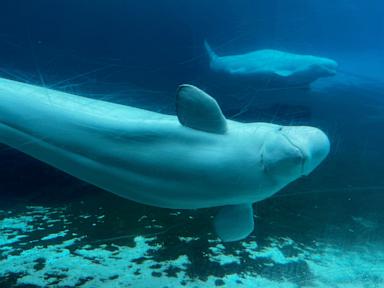
The Canadian government has quietly signed off on a massive, cross-border rescue plan to empty the remaining concrete tanks at Ontario’s shuttered Marineland. Thirty beluga whales and four dolphins are scheduled to be split up and flown across the Atlantic to Oceanogràfic València in Spain and to four major facilities in the United States. To the casual observer, this looks like a victory for animal welfare. The reality is far darker, exposing a systemic failure of policy, a high-stakes corporate standoff, and a brutal logistical nightmare that puts dozens of highly sensitive marine mammals at immediate risk.
This is not a triumphant rehabilitation story. It is an emergency evacuation driven by financial extortion and political panic.
The Euthanasia Ultimatum
When Marineland permanently closed its doors following the deaths of its long-time owners, John and Marie Holer, the ticking clock for the surviving animals began to accelerate. The facility quickly entered a financial death spiral. Facing crushing overhead costs just to keep the water filtration systems running, the park management attempted a desperate maneuver. They requested federal export permits to sell the remaining 30 belugas to Chimelong Ocean Kingdom in China.
The federal government blocked the deal. Giving the green light to ship captive whales to a Chinese entertainment mega-park would have been a public relations disaster, directly violating the spirit of Canada’s laws against whale exploitation.
The park's response was swift and merciless. Management informed the Department of Fisheries and Oceans (DFO) that it could no longer afford the upkeep of the animals. They demanded the federal government foot the bill for the whales' daily care. The alternative? Marineland explicitly threatened to euthanize all 30 healthy beluga whales.
Faced with the political nightmare of a mass whale slaughter on Canadian soil, the DFO blinked. The government prepared a massive financial relief package—rumored to be a state-funded subsidy in the tens of millions—to keep the animals alive while scrambling for a Western alternative. The resulting plan to distribute the whales to American and Spanish aquariums is less of an organized relocation and more of a forced extraction under duress.
The Lethal Cost of the Air Bridge
Moving a single whale is a monumental engineering feat. Moving 30 is unprecedented.
The logistics require a fleet of cargo aircraft, police escorts, heavy cranes, and custom-engineered, water-filled transport containers. Each whale must be suspended in a sling inside its tank, lifted by crane into a climate-controlled container, and kept stabilized so its own immense body weight does not crush its internal organs during transit.
The industry knows exactly how dangerous this is. We have a direct case study from 2021, when Marineland transferred five belugas to Mystic Aquarium in Connecticut. Within 18 months of that transfer, three of those five whales were dead.
Belugas are intensely social, acoustically sensitive animals. The stress of being ripped from familiar pod structures, loaded into roaring aircraft holds, and subjected to massive pressure changes can decimate their immune systems. The receiving institutions—including SeaWorld parks in San Diego and San Antonio, the Georgia Aquarium, and the Shedd Aquarium—insist they are ready to mobilize within weeks. But no amount of veterinary expertise can erase the intrinsic lethality of long-haul cetacean transport.
The Illusion of Sanctuary
The current crisis lays bare the fundamental lie of the anti-captivity movement's long-term planning. For a decade, activists and progressive politicians have championed the ban on breeding and displaying marine mammals, promising that "seaside sanctuaries" would be the ultimate retirement home for these animals.
Where are they?
The Whale Sanctuary Project in Canada remains incomplete, underfunded, and publicly stated it cannot accept these animals. Organizations involved in the European sanctuary space have largely failed to produce viable ocean pens. When the concrete tanks at Marineland dried up financially, the absolute lack of realistic ocean-based alternatives forced regulators right back into the arms of the traditional captivity industry.
The institutions taking these whales are commercial aquariums. While the Canadian government has urged the receiving facilities in the U.S. and Spain to honor the spirit of Canadian law by refraining from breeding the whales or using them in commercial entertainment, enforcement is a legal gray area once the animals cross international borders.
The U.S. National Oceanic and Atmospheric Administration (NOAA) must still issue import permits under the Marine Mammal Protection Act. Conservationists are fiercely lobbying for strict, non-negotiable anti-breeding stipulations to be attached to these permits. If those conditions are omitted, Canada will have effectively outsourced its captive breeding problem to foreign theme parks under the guise of a rescue mission.
A Fractured Regulatory Safety Net
Even with Canada’s conditional endorsement of the rescue plan, significant regulatory hurdles remain. The transfer cannot legally happen without rigorous individual health checks conducted by Canadian veterinarians to certify that each whale is fit to survive the flight.
The Spanish destination, Oceanogràfic València, was selected primarily because of its recent, highly publicized extraction of two belugas from a warzone aquarium in Kharkiv, Ukraine. Yet, European wildlife authorities remain deeply divided on the wisdom of importing more captive cetaceans. Spain's scientific authorities have previously balked at similar large-scale marine mammal transfers due to concerns over social destabilization and inadequate facility capacity.
Introducing dozens of new whales into existing populations risks triggering severe social stress and aggression within the receiving pools.
The modern regulatory landscape has successfully disrupted the business model of performing marine mammals, but it has completely failed to provide an exit strategy. Governments are adept at passing popular bans, yet utterly incompetent at managing the biological fallout of the businesses those bans destroy. The pending mass evacuation of Ontario’s belugas is a desperate, reactionary gamble, proving that when the music stops in the captivity business, it is the animals that pay the highest price.


