Canadian Prime Minister Mark Carney won his office by promising to stand up to Washington, but economic reality has a way of tearing up campaign scripts. Ahead of the G7 summit in France, Carney has abruptly abandoned the defiant, anti-protectionist rhetoric that made him a global political celebrity at Davos in January. The reason for this sudden shift is a looming July 1 deadline for the review of the U.S.-Mexico-Canada Agreement (USMCA). With Donald Trump threatening to let the deal expire or force annual reviews, Canada faces a catastrophic disruption to the trade pipeline that absorbs over 70% of its exports.
Carney’s initial grand strategy was to build a league of mid-level economic powers to bypass a protectionist United States. That strategy is now dead. Global corporations from Tokyo to Seoul are making it clear that they only invest in Canada to gain tariff-free access to American consumers. Without the USMCA, the foundation of the Canadian economy crumbles.
The Mirage of De-Risking from America
In January, Carney stood before the World Economic Forum and declared that the global rules-based order was dead. He positioned Canada as the vanguard of middle powers capable of resisting the economic coercion of superpowers. It was a spectacular speech that won international plaudits and solidified his domestic political base.
The applause did not last. Back in North America, the math remains undefeated. Canada exports roughly $2.5 billion worth of goods and services to the United States every single day.
When Carney’s trade officials traveled to Asia this year to court investment for mining and infrastructure, they encountered a cold truth. Foreign conglomerates are not interested in Canada as an isolated market of 40 million people. They view Canada as a stable, duty-free back door into the United States.
Lobbying records in Ottawa reveal the desperation of global capital. Toyota and Honda, which build three-quarters of all vehicles manufactured in Canada, have flooded government offices with urgent pleas to preserve the North American trade pact. Their integrated supply chains cross the Detroit River multiple times before a finished vehicle rolls off the assembly line. A 10% or 20% baseline tariff across that border turns Canadian manufacturing into a multi-billion-dollar graveyard.
The White House Squeeze
Washington knows it holds all the cards. Trump has spent the spring launching a barrage of trade provocations, including threats to block a major new border bridge, musings about making Canada the "51st state," and the introduction of new tariffs aimed at alleged forced labor.
U.S.-Canada Trade Exposure at a Glance:
- Total Canadian Exports to U.S.: >70%
- Bilateral Trade Remaining Tariff-Free: ~85%
- U.S. Unresolved Trade Issues with Canada: ~30
- U.S. Unresolved Trade Issues with Mexico: ~60
While Mexico quieted American complaints by quietly entering pragmatic, bilateral discussions with U.S. Trade Representative Jamieson Greer, Canada chose public resistance. Ontario Premier Doug Ford launched an aggressive anti-tariff advertising campaign last autumn that deeply irritated the White House. The consequence was immediate: Canada was frozen out of early, informal consultations, leaving Ottawa to watch from the sidelines as Mexico and Washington charted the future of North American commerce.
The costs of that isolation are mounting. Just days ago, the U.S. Chamber of Commerce abruptly canceled a scheduled reception with Premier Ford at the last minute, a move widely interpreted as direct pressure from the executive branch.
Capital Capitulation disguised as Sovereignty
Faced with a complete investment freeze, Carney has begun a rapid, quiet retreat. The aggressive rhetoric about standing up to hegemons has been replaced by a submissive marketing pitch centered on a sector-specific "Fortress North America."
To appease Washington before the G7, Ottawa has initiated a series of significant policy reversals:
- Digital Tax Scrapped: Carney abandoned a highly unpopular digital services tax that specifically targeted American tech giants like Meta, Netflix, and Amazon.
- Streaming Levies Reversed: The government rolled back a newly announced 15% tax on U.S. streaming platforms designed to fund domestic Canadian content.
- Tariff De-escalation: Canadian negotiators are desperately working behind closed doors to offer concessions on dairy quotas and intellectual property in exchange for the removal of Section 232 steel and aluminum tariffs.
During a recent press conference, Carney attempted to frame these retreats as domestic affordability measures, telling reporters that "this is not the time to raise costs for Canadians." It was a transparent political shield. The policy reversals are not about consumer prices; they are an admission that Canada cannot survive an economic war with its neighbor.
The Illusion of Alternatives
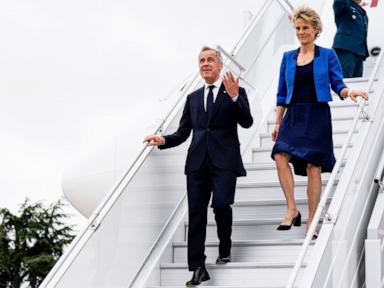
Carney's diplomatic itinerary this week highlights the weakness of his position. Before arriving at the G7 summit in Évian-les-Bains, he scheduled stops in Paris to meet Emmanuel Macron and in Dublin to seek alternative trade agreements. The objective is to signal that Canada has choices.
The reality is that Europe cannot replace the Midwest. Shipping green hydrogen, critical minerals, or automotive parts across the Atlantic is logistically complex and prohibitively expensive compared to moving goods across an open land border.
Furthermore, Europe is wrestling with its own structural stagnation and shifting alliances, leaving little appetite to absorb Canadian exports on a scale that would offset a rift with the United States.
Trump’s negotiators remain unswayed by Canada’s European overtures. They remember that Canada was one of the few nations to actively retaliate during the previous round of trade disputes, and trade officials in Washington still view those counter-tariffs as an unresolved insult. The U.S. administration’s goal is not a modernized partnership of equals; it is the total subordination of Canadian trade policy to American economic priorities.
The G7 summit will offer plenty of opportunities for choreographed handshakes and vague communiqués about democratic solidarity. But the real theater is happening in the briefing rooms, where Canadian negotiators are discovering that the price of admission to the American market is the total surrender of economic autonomy. Carney’s grand experiment in middle-power defiance has run aground on the geography of North American capitalism.