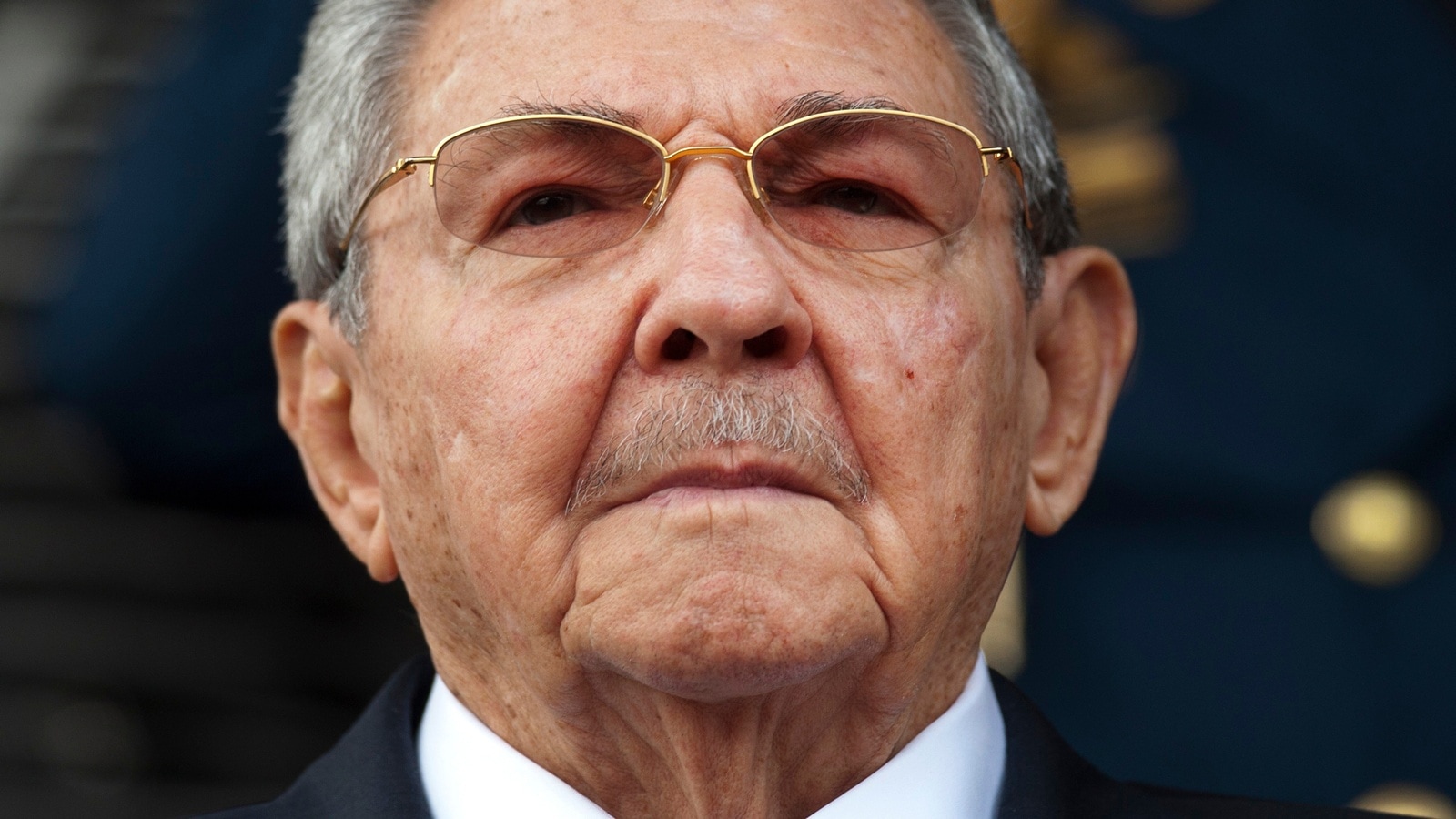
The federal indictment of 94-year-old former Cuban President Raúl Castro in a Miami court signals far more than a delayed pursuit of justice. While the charges tie directly to the 1996 shootdown of two civilian aircraft operated by the exile group Brothers to the Rescue, the timing reveals Washington's true objective. This is the legal foundation for an impending regime change. By charging Castro with conspiracy to kill US nationals and murder, the Trump administration is mirroring the exact doctrine used to justify the January military raid on Caracas that deposed Venezuelan President Nicolás Maduro.
With Venezuela’s oil subsidies gone and a tight maritime blockade causing total collapse of the island's power grid, Washington is openly signaling that Havana is the next target for a coordinated intervention.
The Caracas Playbook Comes to Havana
To understand why a 30-year-old cold case was suddenly unsealed in South Florida, one has to look at the current state of American foreign policy in the Caribbean. This is not a sudden breakthrough in investigative judicial work. It is geopolitics by indictment.
In January, US special forces executed a dramatic raid on Caracas, capturing Nicolás Maduro and flying him to New York to face drug-trafficking charges originally filed years prior. That operation shattered the regional status quo. It also severed Cuba’s primary economic lifeline.
For decades, Venezuela kept the Cuban experiment afloat via heavily subsidized oil. With Maduro now in a federal holding cell and interim Venezuelan President Delcy Rodriguez rewriting her country's energy policies to align with Washington, Cuba has been left completely exposed.
The White House quickly followed the Caracas raid by imposing a punishing naval blockade, choking off alternative fuel shipments to the island. The results inside Cuba have been catastrophic. Rolling blackouts have plunged Havana into near-total darkness, sparking rare, volatile street protests.
By unsealing indictments against Raúl Castro and five other regime officials—including military pilots involved in the 1996 MiG attacks—the Justice Department is establishing the necessary legal framework for potential military action. President Trump explicitly warned earlier this year that Cuba "is next" if the ruling Communist Party does not open its economy to American capital and expel foreign adversaries.
The 1996 Shootdown as a Legal Weapon
The specific charges brought forward by Acting Attorney General Todd Blanche rest on the tragic events of February 24, 1996. On that day, Cuban MiG-29 fighter jets intercepted and destroyed two unarmed Cessna Skymasters operated by Brothers to the Rescue, a Miami-based humanitarian group that searched the Florida Straits for fleeing rafters.
Four men died in international waters. Raúl Castro, then serving as Cuba's Minister of the Revolutionary Armed Forces, allegedly gave the direct order to fire.
1996 Brothers to the Rescue Incident:
├── Location: International airspace / Florida Straits
├── Casualties: 4 Cuban-American volunteers killed
├── Attackers: Cuban MiG-29 fighter jets
└── Order authorized by: Minister of Defense Raúl Castro
While the families of the victims have rightfully demanded accountability for three decades, the sudden resurrection of the case serves a distinct operational purpose. Under US law, an active federal indictment against a foreign official for the murder of American citizens grants the executive branch massive latitude regarding enforcement.
Current Cuban President Miguel Díaz-Canel immediately condemned the charges on social media, calling the indictment a fabricated political ploy designed to "justify the folly of a military aggression."
He is not entirely wrong about the strategy, even if his defense of the 1996 murders falls flat. Washington is no longer containing Cuba. It is actively squeezing it until the system breaks.
The Limits of Sovereignty in the New Caribbean
The administration’s strategy relies heavily on the internal leverage held by Secretary of State Marco Rubio and CIA Director John Ratcliffe. Rubio released a targeted video message explicitly urging the Cuban population to reject the current leadership in exchange for an immediate lifting of the economic embargo.
Behind the scenes, the pressure is even more direct. Intelligence officials confirm that Ratcliffe recently met with Raúl Guillermo Rodríguez Castro—Raúl Castro’s grandson and chief of security, widely known as "Raulito."
The message delivered to the younger Castro was uncompromising. The United States will help rebuild the shattered Cuban economy, but only if the old guard steps aside, transitions to a free-market system, and severs intelligence ties with Russia and China.
| Target Country | Legal Justification Used | Operational Outcome | Current Status |
|---|---|---|---|
| Venezuela | 2020 Narcotics Indictment | January Military Raid | Maduro deposed; transitional government allied with US |
| Cuba | 2026 Murder/Aircraft Destruction Indictment | Maritime Blockade / Ultimatum | Systemic energy collapse; regime transition demanded |
The Bloodbath Warning
Unlike Venezuela, where the military command fractured relatively quickly after Maduro’s capture, Cuba presents a far more entrenched ideological apparatus. The Cuban Revolutionary Armed Forces (FAR) are deeply embedded in every sector of the island's economy, from tourism to agriculture. They have spent 60 years preparing for an American invasion.
Díaz-Canel has warned that any attempt at a US-led "friendly takeover" or military extraction of regime figures would result in a bloodbath.
The strategy deployed by Washington is incredibly high-stakes. If the economic blockade and the threat of criminal prosecution fail to trigger an internal military coup or a peaceful surrender of power by the Castro family network, the White House will face a critical decision point.
They will either have to back down, destroying the leverage gained from the Caracas raid, or cross the Florida Straits by force to enforce a Miami grand jury's warrant. With Raúl Castro currently sitting safely in Havana at 94 years old, he will never voluntarily walk into a US courtroom.
Washington knows this. The indictment was never meant to end in a standard trial. It was written to serve as the opening salvo of a regime's forced end.