The maritime corridor of the Red Sea has officially ceased to be a mere logistical route. It is now a high-stakes geopolitical lever. While global headlines focus on the immediate threat of drone strikes and disrupted supply chains, the underlying reality is far more calculated. Yemen’s Houthi movement, known formally as Ansar Allah, has signaled its readiness to enter a full-scale regional conflict alongside Iran. This is not just a gesture of ideological solidarity. It is a strategic move designed to cement the group's status as a primary power broker in the Middle East while simultaneously strangling the economic arteries of the West.
The risk to global shipping is no longer a temporary side effect of regional unrest. It has become a permanent feature of the new maritime reality. By positioning themselves as the guardians of the Bab al-Mandab Strait, the Houthis have achieved what decades of conventional diplomacy could not. They have gained the power to dictate terms to the world's largest shipping conglomerates and, by extension, the sovereign nations that rely on them.
The Infrastructure of a Blockade
The Houthi capability to disrupt shipping is not a fluke of geography. It is the result of a sophisticated, years-long buildup of asymmetrical warfare tools. They are not using primitive equipment. The arsenal currently deployed includes anti-ship cruise missiles, sub-surface suicide drones, and long-range ballistic weapons that can reach deep into the Red Sea and even the Indian Ocean.
Most analysts miss the specific mechanics of how this threat operates. It is not about sinking every ship. It is about the insurance premium. When a single drone strike, costing perhaps $20,000 to produce, can force a billion-dollar cargo vessel to reroute around the Cape of Good Hope, the Houthis have already won the economic battle. The cost of fuel, the additional ten to fourteen days of travel time, and the skyrocketing maritime insurance rates act as a silent tax on the global economy.
This is "asymmetric dominance" in its purest form. The U.S.-led Operation Prosperity Guardian has struggled to provide a definitive solution because the cost of defense is exponentially higher than the cost of the attack. Launching a multimillion-dollar interceptor missile to take down a cheap plywood drone is a losing mathematical equation in the long run.
Why the Iranian Alliance is Shifting
The relationship between Sanaa and Tehran is often oversimplified as a master-and-puppet dynamic. That view is dangerously outdated. While Iran provides the technical blueprints and critical components for advanced weaponry, the Houthis operate with a high degree of local autonomy. Their recent declaration of readiness to join an Iranian-led "total war" reflects a domestic necessity as much as a foreign policy goal.
Inside Yemen, the Houthis face a crumbling economy and a population weary of a decade of civil war. By shifting the focus to a "holy struggle" against international shipping and the perceived enemies of the region, the leadership can deflect internal dissent. They are leveraging the Palestinian cause to gain a level of popular legitimacy that their domestic governance has failed to provide.
Furthermore, by integrating more deeply with the "Axis of Resistance," the Houthis are ensuring that any future peace negotiations for Yemen must include them as a sovereign, permanent entity. They are no longer a rebel group; they are a regional actor with a finger on the pulse of the global economy.
The Myth of the Limited Strike
There is a prevailing belief in some Western policy circles that limited retaliatory strikes against Houthi launch sites will eventually restore deterrence. This is a misunderstanding of the group’s psychological and tactical makeup. For the Houthi leadership, being bombed by the United States and its allies is a badge of honor. It reinforces their narrative of resistance.
The group’s infrastructure is highly mobile. They do not rely on large, vulnerable bases. They launch from civilian trucks, hidden tunnels, and mobile platforms that are moved minutes after a strike. This makes a conventional "degradation" campaign incredibly difficult to sustain without a massive, ground-based escalation that no Western power currently has the appetite for.
The Economic Shrapnel
The disruption in the Red Sea is hitting different sectors with varying levels of intensity. The automotive industry, which relies on "just-in-time" delivery of parts from Asia to Europe, has already seen temporary factory closures. Retailers are bracing for a future where seasonal goods arrive weeks late, forcing them to hold higher levels of inventory at a significant cost.
- Energy Markets: While oil prices have remained relatively stable due to global supply cushions, the risk of a "black swan" event—such as a successful hit on a major tanker—remains high.
- Suez Canal Revenue: Egypt is perhaps the biggest collateral victim. The Suez Canal is a vital source of foreign currency for Cairo. As traffic diverts, the economic stability of one of the region’s most populous nations begins to wobble.
- The Insurance Spiral: "War risk" premiums are now a standard line item for any vessel traversing the area. Some insurers have stopped covering ships with even a tenuous link to certain nations, creating a fragmented and chaotic shipping market.
The long-term danger is the normalization of risk. If the Red Sea remains a "no-go" zone for the majority of the global fleet for another year, the global supply chain will permanently shift. This will lead to higher structural inflation as the efficiency of the Suez route is replaced by the reliability—but higher cost—of the African circumnavigation.
The Strategy of Forced Neutrality
The Houthis are using their position to force a new kind of maritime neutrality. By selectively targeting ships, they are sending a message to global powers: your safety is contingent on your political stance. This is a direct challenge to the "freedom of navigation" principle that has governed the seas since the end of World War II.
China and Russia have, so far, enjoyed a relative degree of safety for their flagged vessels. This creates a two-tiered shipping system where the geopolitical alignment of a vessel's owner determines its safety. It undermines the idea of the high seas as a global common and turns maritime trade into a series of bilateral protection deals.
The Tactical Evolution
We are seeing the first real-world application of mass-produced, autonomous maritime technology in a conflict zone. The Houthis have moved beyond simple missiles. They are now deploying Uncrewed Surface Vessels (USVs) that can loiter near shipping lanes, waiting for a specific target. These "sea drones" are difficult to detect on radar due to their low profile and can inflict catastrophic damage on a ship’s hull.
This technological leap is not happening in a vacuum. It is a laboratory for asymmetrical warfare that other non-state actors are watching closely. If a group in Yemen can successfully hold the world's shipping hostage, the template will be copied elsewhere.
The defense against these threats is currently reactive. Navy destroyers are playing a game of "whack-a-mole" across thousands of square miles of ocean. The sheer scale of the area makes it impossible to guarantee 100% protection for every merchant vessel. The Houthis only have to be lucky once; the defenders have to be perfect every time.
The Brink of Escalation
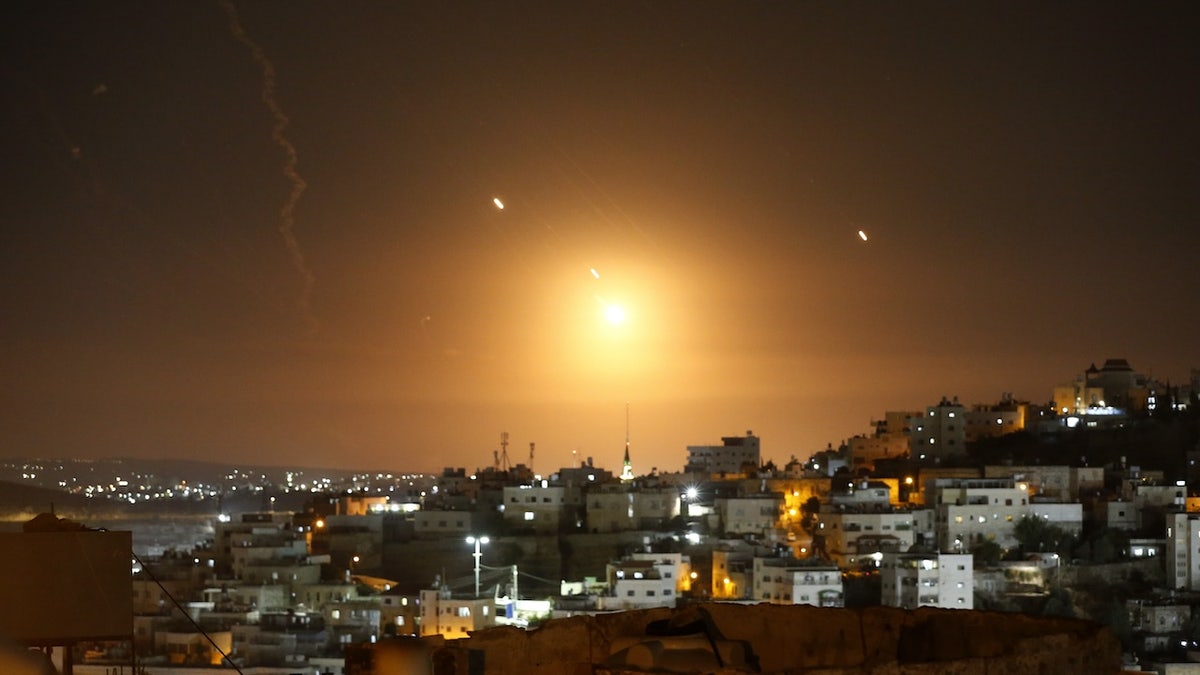
If Iran and its various regional partners move toward a coordinated conflict, the Red Sea will be the first theater to explode. The Houthis have already proven they can reach the port of Eilat and disrupt the flow of goods into the Mediterranean. Their readiness to join a "war of all fronts" suggests that they have stockpiled enough weaponry to withstand a prolonged air campaign.
The international community is currently stuck in a cycle of "calibrated response." They hit back just enough to show resolve, but not hard enough to spark a regional firestorm. The Houthis know this. They are operating within that gap, pushing the boundaries of what the West will tolerate.
The real question is no longer whether the Houthis can disrupt shipping. They have already done that. The question is what they will demand in exchange for stopping. We are looking at a future where a non-state actor effectively controls a global toll booth, backed by a sophisticated arsenal and a total lack of fear regarding conventional retaliation.
Shipping companies are not waiting for a political solution. Many are already signing long-term contracts for the Cape of Good Hope route, signaling a lack of confidence in the Red Sea's safety for the foreseeable future. This is the new baseline for global trade. The era of cheap, predictable maritime logistics through the Suez Canal is over.
Move your cargo. Pay the premium. Or take the long way around. Those are the only options remaining on the table.