Sarah clicks "Buy Now" on a $12 floral dress at 11:30 PM. She lives in a small apartment in London, unaware that her late-night dopamine hit just triggered a logistical nightmare ten thousand miles away. To Sarah, the dress is a weekend plan. To the global economy, that dress is a bundle of oil-derived polyester fibers currently trapped in a geopolitical chokehold.
The fabric of modern life is literally made of oil. We don't think about it when we pull on a pair of leggings or lace up synthetic sneakers, but we are wearing the byproduct of the very energy markets currently shivering under the threat of a widening Middle Eastern conflict. When tensions between Israel and Iran escalate, or when the Red Sea becomes a no-go zone for cargo ships, the price of Sarah’s dress doesn’t just go up—the entire system that put it there begins to fray.
The Invisible Pipeline
Polyester isn't grown in a field. It is born in a refinery. Most of the fast fashion industry relies on polyethylene terephthalate, a plastic resin derived from crude oil and natural gas. This makes the clothing industry a silent partner in every geopolitical tremor in the Persian Gulf.
When regional instability pushes oil prices toward the ceiling, the cost of the raw monomer—the "stuff" that makes the thread—spikes instantly. For a brand operating on razor-thin margins, a five-percent increase in raw material costs is catastrophic. They can’t eat the cost. They pass it to Sarah.
But the price of oil is only the first domino.
Consider the geography of a shipping container. The Suez Canal is the needle's eye of global trade, and the Red Sea is the thread. When Houthi rebels, backed by Iranian interests, launch drones at tankers, the thread snaps. Ships that once glided through the canal are forced to take the "long way" around the Cape of Good Hope.
This isn't just a longer scenic route. It adds ten to fourteen days to a journey. It burns thousands of extra tons of fuel. It creates a vacuum of empty containers in Asian ports because the boxes are stuck on the water for two weeks longer than planned.
A Tale of Two Ports
Imagine a dockworker in Ningbo named Chen. He is surrounded by stacks of shoes—synthetic leather boots, mesh trainers, foam-soled sandals. These items are ready. They are packed. But the ship that was supposed to take them to Rotterdam is currently battling fifteen-meter swells off the coast of South Africa because it had to avoid the Bab el-Mandeb strait.
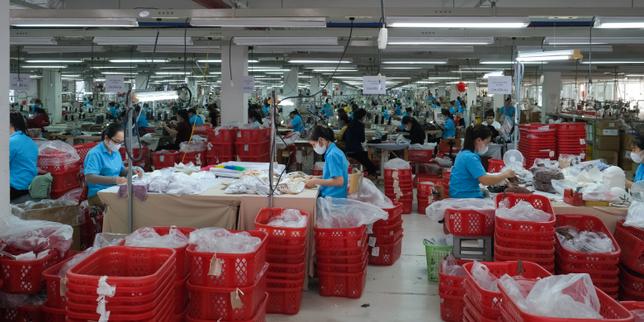
Chen’s warehouse is full. When the warehouse is full, the factory slows down. When the factory slows down, the workers lose shifts. This is the human friction of a "polyester war." The delay isn't just a number on a spreadsheet; it’s a disruption of lives from the manufacturing hubs of the East to the retail floors of the West.
Shoes are particularly vulnerable in this new reality. Unlike a t-shirt, which can be compressed and vacuum-sealed, shoes are bulky. They take up "cube" in a shipping container. As freight rates quintuple due to the Red Sea crisis, the cost of shipping a single pair of sneakers can jump from fifty cents to five dollars. On a fifty-dollar pair of shoes, that is a ten-percent hit to the bottom line before the shoelaces are even tied.
The Chemistry of Conflict
The link between a missile strike and a wardrobe isn't just about shipping lanes; it’s about the very molecules in the air. Iran sits atop one of the world's largest reserves of natural gas and oil. It is also a massive producer of petrochemicals.
If the conflict moves from a "shadow war" to a direct confrontation involving energy infrastructure, the global supply of paraxylene—a key ingredient in polyester—could vanish overnight. We aren't just talking about expensive clothes. We are talking about a total halt in production.
This creates a terrifying paradox for the "ultra-fast" fashion giants. Their business model relies on speed. They move from design to doorstep in under three weeks. When the transit time alone becomes six weeks due to rerouting, the "fast" in fast fashion dies. The clothes become obsolete before they even hit the warehouse. That floral dress Sarah bought? By the time it arrives, the season has changed, the trend has shifted, and the garment is destined for a landfill in Ghana or Chile.
The Synthetic Trap
We have spent thirty years building a global wardrobe based on the assumption of cheap, infinite oil and open, safe seas. We traded cotton for polyester because it was cheaper and more versatile. We traded local manufacturing for global logistics because shipping was reliable.
That era is over.
The "polyester fabric" is tearing because it was never designed for a world of persistent friction. We are seeing a shift where "just-in-time" delivery is being replaced by "just-in-case" hoarding. Brands are now over-ordering, trying to build mountains of inventory to buffer against the next drone strike or closed strait.
This hoarding drives up prices even further. It creates a false sense of demand. It hides the underlying rot in the supply chain until the bubble finally bursts.
The Human Weight of a Plastic Shoe
Behind every statistic about "Twenty-Foot Equivalent Units" (TEUs) is a person who can no longer afford the basics. The inflation we feel at the checkout counter is the end-product of a chain reaction that started with a geopolitical gamble in the Middle East.
Sarah looks at her dress. She notices a loose thread. She snips it off and throws it away. To her, it’s a tiny piece of plastic. To the world, it’s a fragment of a complex, volatile, and increasingly dangerous game of chess played with oil and oceans.
The shoes are next because they are the most "physical" thing we wear. They require the most oil, the most space, and the most complex assembly. They are the heavy hitters of the fashion world, and when the world gets heavy, they are the first to sink.
We are wearing the war. We are lacing up the conflict. Every time we choose the cheapest synthetic option, we are placing a bet on the stability of a region that has been anything but stable for a century. The shadow in the closet isn't a ghost; it’s the ghost of a supply chain that we took for granted, now haunting us through the price tag of a pair of sneakers.
The next time you hear about a tanker in the Red Sea, don't just think about the evening news. Walk over to your closet. Touch the sleeves. Feel the soles of your shoes. The connection isn't metaphorical. It is literal. It is chemical. It is unavoidable.
The fabric is ripping, and no amount of "Buy Now" clicks can stitch it back together.