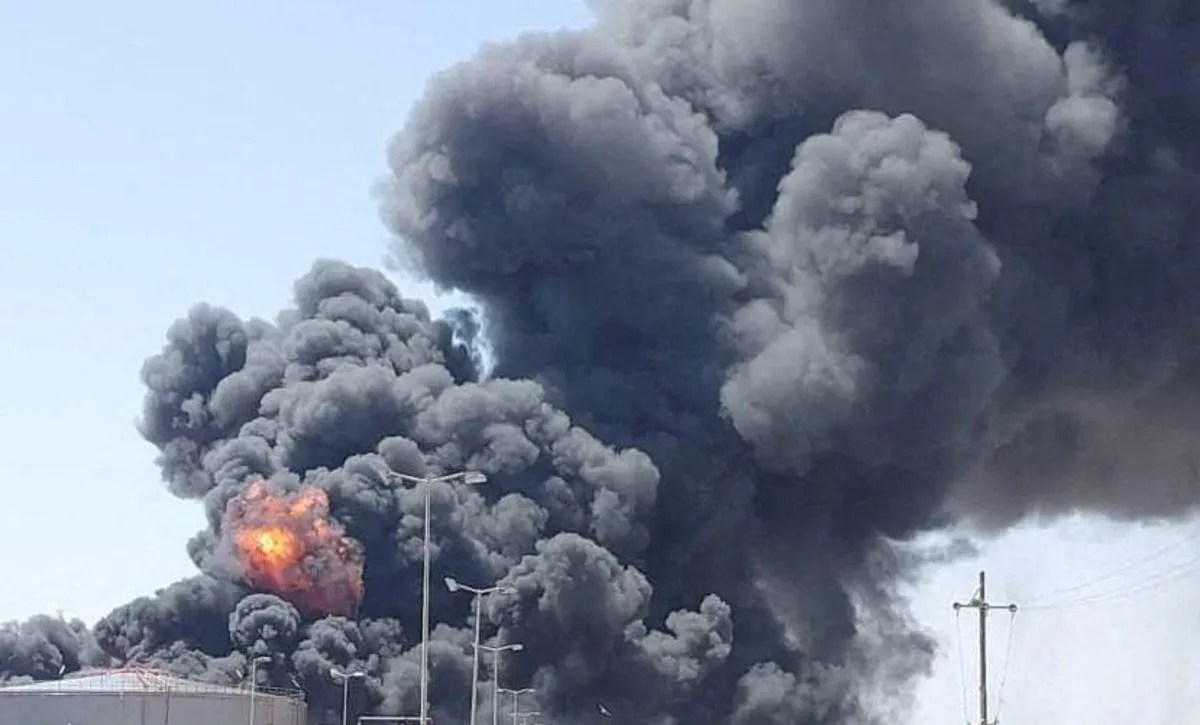
Somewhere on a sun-scorched patch of coral in the Persian Gulf, a man named Abbas watches a pressure gauge. He is not a politician. He is not a general. He is a technician on Kharg Island, a four-mile sliver of land that happens to be the jugular vein of the Iranian economy. More than 90% of Iran’s crude oil exports pass through the rusted manifolds and deep-water berths of this T-shaped terminal. If the gauge in front of Abbas drops to zero, the ripple effect doesn't just stop at the Iranian border. It hits a gas station in suburban Ohio. It rattles a boardroom in Tokyo. It changes the trajectory of a presidential election thousands of miles away.
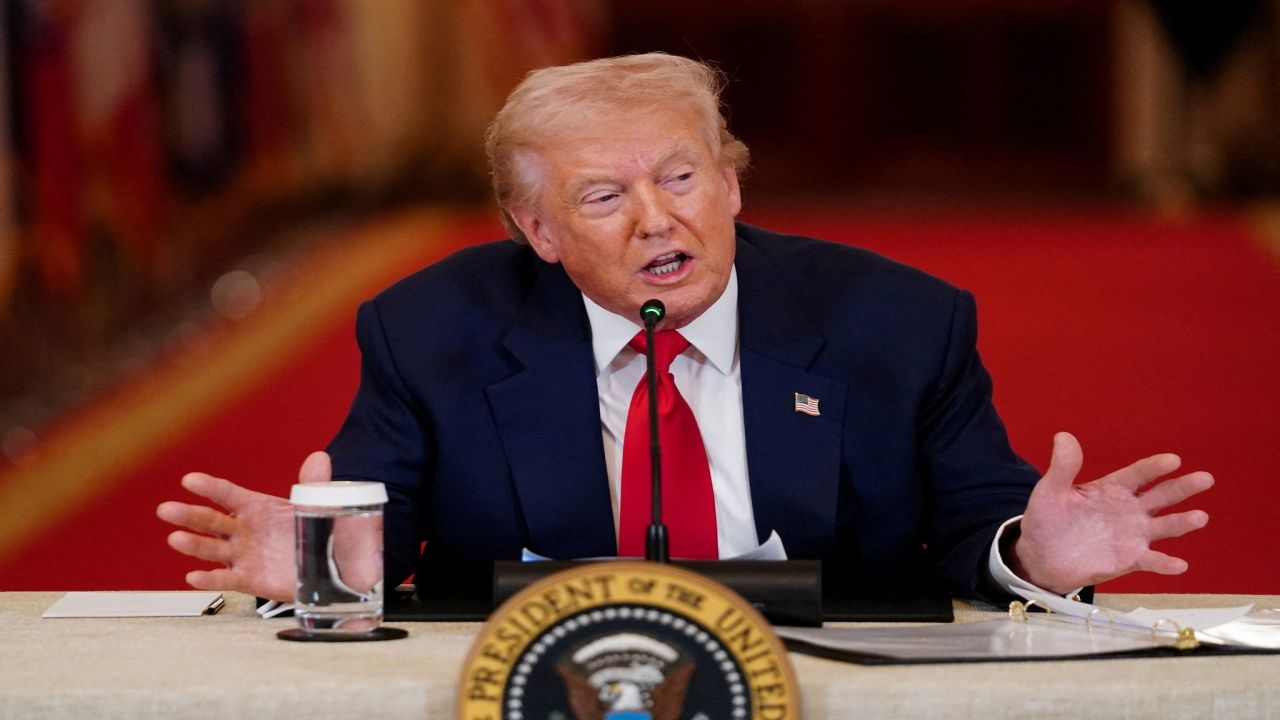
Kharg Island is a fortress of iron and salt. It is also a target. When Donald Trump leans into a microphone and hints at the destruction of Iran’s energy infrastructure, he isn't just talking about steel and fire. He is talking about the invisible tether that connects global stability to a single, vulnerable point in the sea.
The rhetoric feels like a throwback to a more chaotic era, but the stakes have never been more modern. To understand the threat, you have to look past the headlines and into the dark water of the Strait of Hormuz.
The Geography of a Nightmare
Imagine a straw. Now imagine that twenty percent of the world’s liquid energy moves through that straw every single day. That is the Strait of Hormuz. Kharg Island sits just inside the mouth of this narrow passage. It is the primary loading dock for a nation that relies on oil to keep its lights on and its government functioning.
When a leader mentions "hitting the oil," they are suggesting a surgical strike on a global nerve center. If those terminals go dark, the immediate result isn't just a lack of Iranian oil. It is the panic of what comes next. Markets hate a vacuum. They loathe uncertainty even more. The moment a missile—or even the credible threat of one—hovers over Kharg, the price of a barrel of Brent crude begins a frantic climb.
Economists call it the "risk premium." It is the tax we pay for living in a world where words can act as incendiary devices.
But there is a disconnect between the threat and the execution. Military experts who have spent decades staring at satellite feeds of the Gulf know that Kharg is not an easy kill. It is heavily defended by S-300 surface-to-air missiles and a swarm of fast-attack craft. To take it out is to invite a regional conflagration that no one, not even the most hawkish strategist, truly wants to manage.
The Psychology of the Bluff
Why say it, then? Why put the world on edge?
The answer lies in the art of the squeeze. Pressure is a physical force on Kharg Island, but in Washington, it is a psychological one. By signaling that the "oil option" is on the table, the goal is to force a collapse in Tehran’s internal confidence. It is a signal to the buyers—mostly refineries in China—that their supply chain is built on shifting sand.
If you are a shipping insurer in London, you hear that threat and you raise your rates. If you are a tanker captain, you look at your route and feel a cold sweat. The threat itself does the work of a dozen bombs without a single drop of blood being spilled. It chokes the economy by making the world too afraid to trade.
Yet, there is a ghost in the room. His name is 1979.
Anyone who remembers the long lines at gas stations and the crushing weight of stagflation knows that the oil weapon is a double-edged sword. If Trump or any commander-in-chief actually followed through, the resulting price spike would be a self-inflicted wound. A global economy struggling with the tailwinds of inflation cannot survive $150-a-barrel oil. The very voters a candidate seeks to win over are the ones who would be punished at the pump three weeks later.
The Invisible Actors
We often talk about these conflicts as if they are games of chess played by giants. We forget the people in the middle.
Consider the "Ghost Fleet." These are the aging tankers, often flying flags of convenience and operating with disabled transponders, that ferry Iranian crude to secretive ports. They are the lifeblood of the "resistance economy." For the crews on these ships, the threat against Kharg Island isn't a political talking point. It is a shadow that follows them across the Indian Ocean.
They operate in a gray zone where international law is a suggestion and survival is the only metric of success. If the terminal at Kharg is hit, these sailors become the first casualties of a disrupted world order. Their livelihoods vanish. Their ships become floating targets.
Then there is the average consumer. Most people couldn't find Kharg Island on a map if their life depended on it. But their life does depend on it. The plastic in your phone, the fertilizer for your food, and the fuel for the truck delivering your packages are all downstream from that T-shaped pier in the Gulf.
The Technical Reality of Ruin
If a strike were to happen, it wouldn't look like a movie. It wouldn't be a single explosion and a fade to black. It would be a catastrophic environmental and mechanical failure.
Kharg's infrastructure is old. It has been patched, repaired, and kept running through decades of sanctions and the brutal heat of the Gulf. A precision strike on the pumping stations or the "Sea Island" loading platforms would create an ecological disaster that could choke the desalination plants of the neighboring Gulf states.
The UAE, Qatar, and Saudi Arabia rely on that water. An oil spill of that magnitude is a weapon of mass destruction that doesn't need a nuclear warhead. It turns the sea into a desert. It makes the region uninhabitable for those who have nowhere else to go.
This is why the "experts" quoted in the dry news reports sound so measured. They aren't being cautious because they lack imagination. They are cautious because they understand the physics of the fallout. You cannot break Kharg Island without breaking a dozen other things you never intended to touch.
A Game of High-Stakes Chicken
We are currently watching a performance. It is a high-decibel negotiation played out in the media and on social platforms.
The threat is the leverage. By keeping the possibility of a Kharg strike alive, the U.S. maintains a "maximum pressure" stance that keeps Iran on the defensive. It forces the Iranian leadership to spend billions on defense and internal security that could have gone elsewhere. It keeps them isolated.
But the danger of the "pressure tactic" is that eventually, someone might feel forced to prove they aren't bluffing.
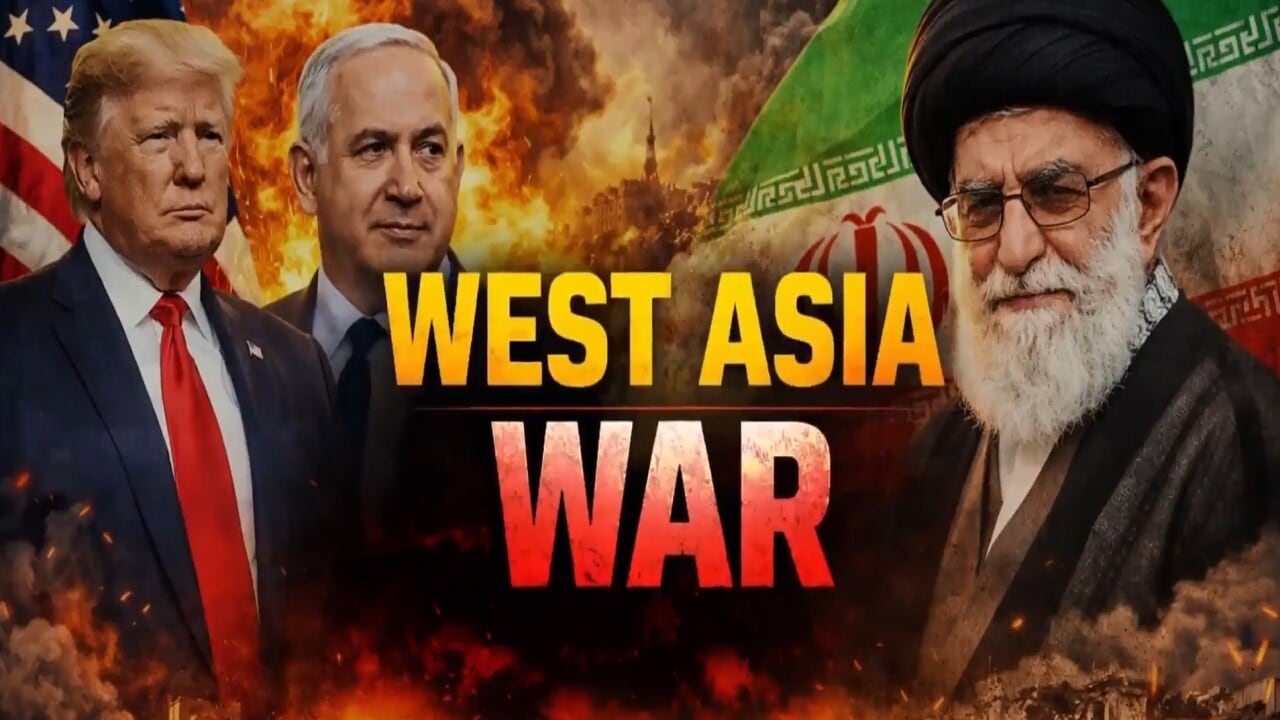
History is littered with "tactical" decisions that spiraled into "strategic" disasters because someone misread the room. If Iran believes a strike is truly imminent, they may decide to strike first—not at a military target, but at the global economy. They have spent years practicing how to sink tankers and mine the Strait.
They don't need to win a war. They just need to make the world hurt enough that we beg for it to stop.
The Silence After the Storm
Back on the island, the sun sets over the Gulf, turning the water the color of bruised plums. The flare stacks—the giant torches that burn off excess gas—flicker against the horizon. They are the eternal flames of a petro-state, visible from space, a constant reminder of what is at stake.
Abbas, our hypothetical technician, finishes his shift. He walks past the massive storage tanks, each one holding millions of gallons of potential energy and potential chaos. He goes home to a family that worries about the price of bread, not the rhetoric of men in suits three continents away.
The tragedy of the Kharg Island threat is that it treats the entire global energy system as a poker chip. We gamble with the stability of nations and the warmth in people’s homes to see who flinches first.
The real war isn't happening in the headlines. It’s happening in the quiet moments of calculation. It’s the sound of a pencil scratching across a ledger in a Singapore trading house. It’s the hum of a drone a hundred miles offshore. It’s the collective intake of breath when the world realizes that the distance between a "tactic" and a "tragedy" is often just one misunderstood command.
The gauge stays steady for now. The pressure holds. But the metal is tired, and the men holding the wrenches are beginning to wonder how much longer a sliver of coral can carry the weight of the world.