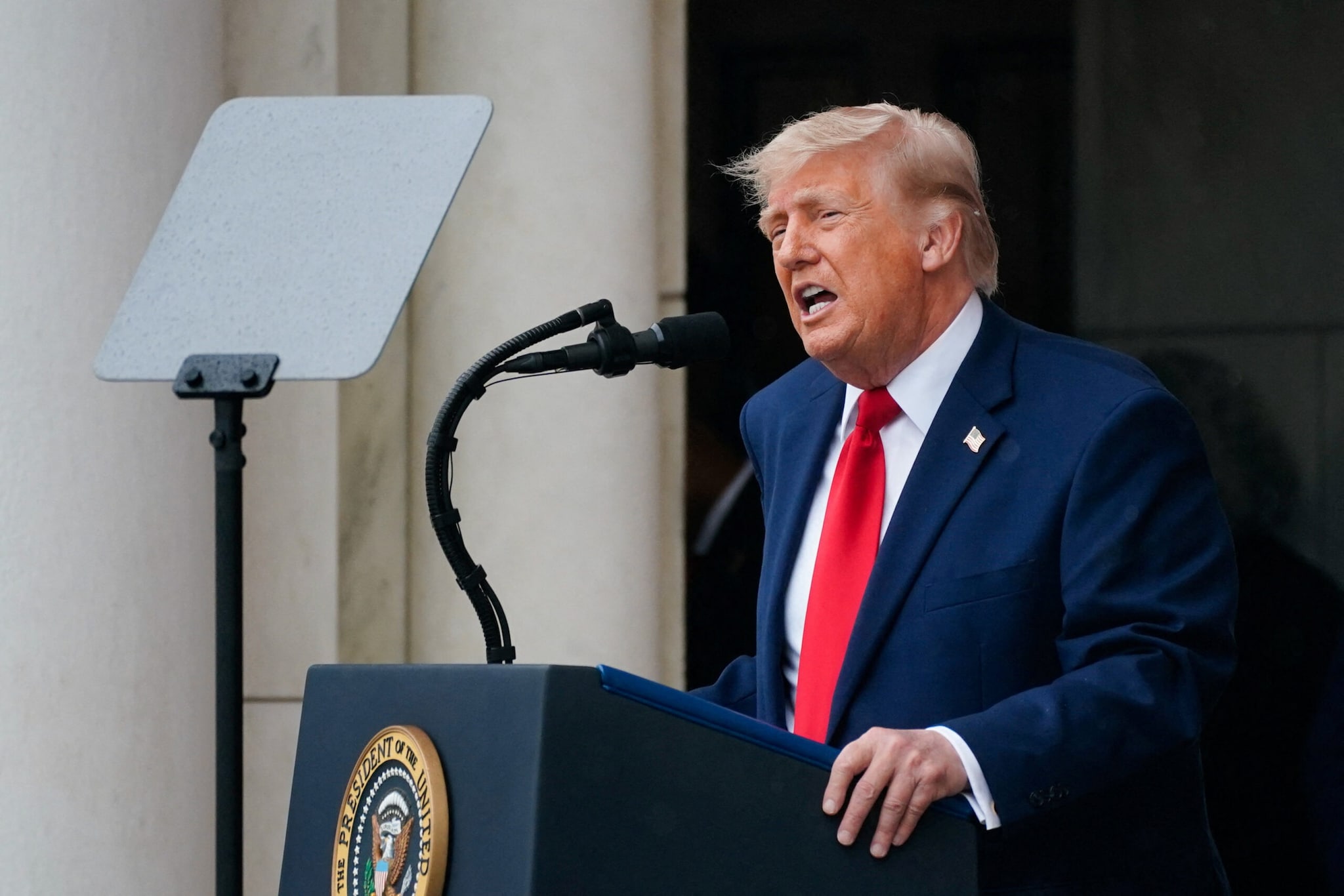
Capitol Hill is currently staging a masterclass in collective political amnesia. Senators are throwing tantrums, partisan commentators are clutching their pearls, and the defense establishment is weeping into its cocktails over the newly minted June 2026 Memorandum of Understanding between Donald Trump and Tehran. Outgoing Louisiana Senator Bill Cassidy claimed Ronald Reagan is rolling over in his grave, while others are calling the 14-point framework the worst foreign policy blunder in decades.
They are entirely wrong. The furious backlash from establishment Republicans does not expose a weak presidential deal; it exposes the structural bankruptcy of Washington’s foreign policy playbook.
For 110 days, the United States and Israel engaged in a direct military conflict with Iran. The lazy consensus in Congress held that a maximalist bombing campaign—dubbed Operation Epic Fury—would magically topple the mullahs, obliterate their nuclear ambitions, and force a total capitulation without economic pain.
Instead, the reality of modern warfare hit home. Iran shut down the Strait of Hormuz, choking off twenty percent of global energy supplies and triggering an economic crisis that US consumers felt directly at the gas pump. The establishment’s brilliant strategy yielded thirteen dead American service members, sky-high inflation, and a deeply destabilized global economy.
Trump did the only logical thing a transactional realist could do: he cut the circuit breaker.
The critics are howling because the interim agreement grants Iran conditional access to its frozen assets, temporary oil export waivers, and a theoretical $300 billion reconstruction fund. They claim Trump gave away the farm. They argue that because Iran’s nuclear program was not completely dismantled on day one, the entire war was fought for nothing.
This argument completely misunderstands how international conflict leverage actually operates.
I have watched successive administrations sink trillions of dollars into Middle Eastern regime-change fantasies, only to leave behind power vacuums and unmitigated disasters. The Beltway elite cannot comprehend a peace deal that does not involve the absolute, unconditional surrender of the adversary. But unconditional surrender is a myth when dealing with a regional power capable of collapsing global energy markets.
Let us look at the mechanics of what was actually signed in Geneva. The deal institutes a 60-day extension of the ceasefire, requires Iran to immediately open the Strait of Hormuz toll-free to commercial shipping, and mandates that the UN International Atomic Energy Agency oversee the down-blending and destruction of Iran's 60 percent highly enriched uranium stockpile.
The hawk faction is crying foul because the deal offers immediate economic relief via oil waivers before a permanent 20-year nuclear ban is fully finalized. They want the concessions to flow entirely one way. But that is not a negotiation; it is a fantasy.
Imagine a scenario where the United States walked away from this table, as Ted Cruz and Roger Wicker seemingly want. The naval blockade remains in place, the Strait remains closed, oil spikes past $150 a barrel, and the United States plunges into an engineered recession while entering a protracted ground war against a nation of 85 million people. Who wins that scenario? Not the American taxpayer. Not the global economy. Only the defense contractors.
The truth nobody admits is that Trump's transactionalist approach achieves what years of abstract "maximum pressure" never could: it forces verifiable compliance by tying immediate economic survival to immediate nuclear de-escalation. Vice President JD Vance put it bluntly: Iran does not get a dime of money unless they perform their obligations. The financial incentives are a leash, not a reward. If Tehran cheats during this 60-day window, the U.S. naval blockade is reinstated, and as Trump noted, the military can go back to dropping bombs.
There are real downsides to this contrarian approach. Relying on an interim framework means the United States is gambling on a highly volatile regime's willingness to play ball under intense economic pressure. It temporarily leaves regional allies like Israel in a deeply uncomfortable defensive posture regarding Hezbollah and the long-term status of Lebanon. It is messy, it is transactional, and it lacks the moral clarity of a cinematic victory.
But statecraft is not Hollywood.
The Republican establishment's revolt against the Iran deal is a desperate attempt to protect a failed neoconservative doctrine that prioritizes endless, unachievable military objectives over domestic economic stability. Trump’s deal recognized that an open shipping lane and a verified reduction in enriched uranium are worth more to American security than a permanent, unwinnable war of attrition.
Washington wants to keep fighting a ghost. Trump decided to settle the tab and secure the asset.