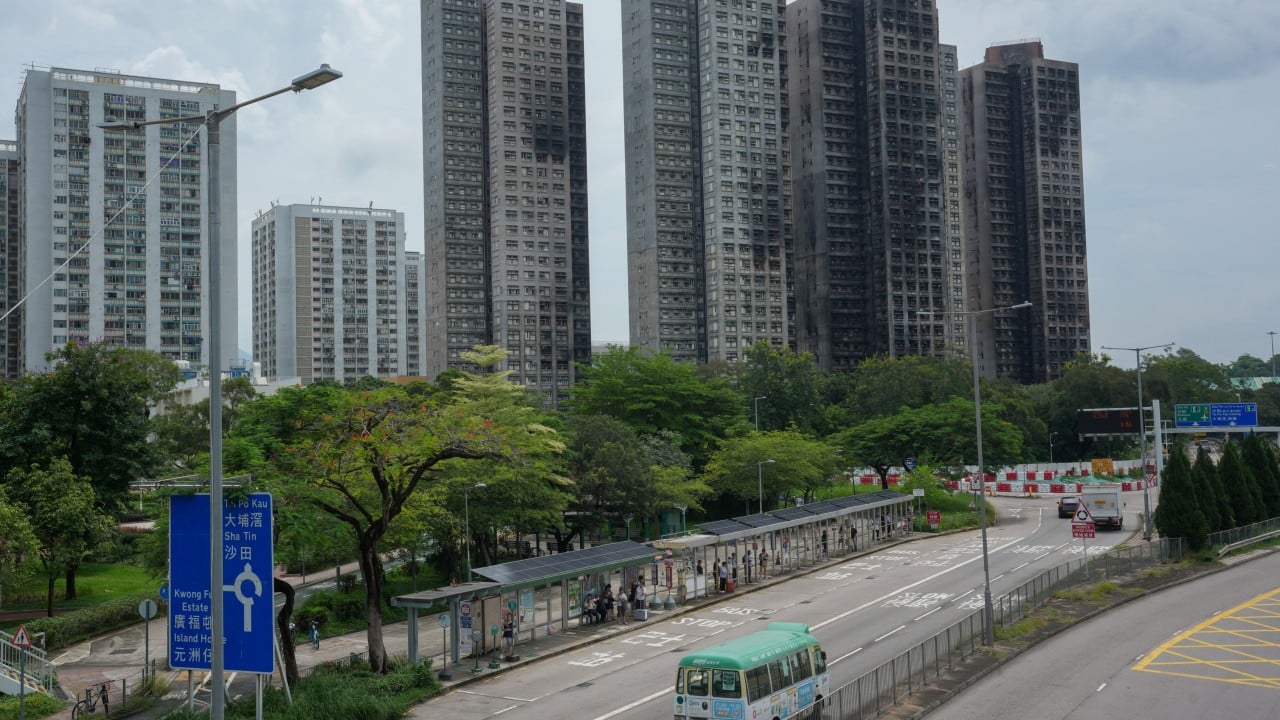
Mainstream financial media loves a good corporate villain. They see a headline about a bid-rigging trial over an HK$700 million residential renovation project pushed back to 2028, and the collective sigh is deafening. The immediate, lazy consensus forms: the courts are too slow, the regulatory teeth are too dull, and the property owners are helpless victims of a shadowy cartel.
They are looking at the wrong problem.
The real tragedy of the Garden Vista case isn’t that justice is delayed. The tragedy is that our entire approach to anti-competitive behavior in high-value property management is built on an obsolete premise. We treat bid-rigging like a sudden, opportunistic crime committed by rogue actors. It isn't. It is an inevitable, rational economic response to a fundamentally broken procurement framework that practically begs to be exploited.
Deferring this trial for years doesn't just stall accountability. It ensures that the exact same systemic vulnerabilities will keep draining millions from residential estates while everyone waits for a verdict that changes absolutely nothing.
The Illusion of Competition in High-Value Renovations
When an estate needs an HK$700 million facelift, the general public assumes a free market takes over. Subcontractors line up, bids go into sealed envelopes, and the best offer wins.
I have spent decades analyzing procurement structures. Let me tell you how it actually works in major metropolitan property hubs. The pool of Tier-1 contractors capable of indemnifying, managing, and executing a project of that scale isn’t vast. It is incredibly tight. When you have a massive capital requirement paired with hyper-specific compliance mandates, you don't create a competitive arena. You create an oligopoly.
[High Capital/Compliance Entry Barriers]
                 │
                 ▼
     [Ultra-Small Pool of Tier-1 Bidders]
                 │
                 ▼
[High Frequency of Interaction Across Projects]
                 │
                 ▼
    [Natural Structural Alignment / Cartelization]
When the same five or six players meet on every major tender year after year, formal collusion isn't even necessary to distort the market. The structure itself breeds alignment. Game theory dictates that in repeated games with the same participants, cooperation yields higher long-term payouts than aggressive price competition.
The media focuses on the sensational allegations: the secret meetings in restaurants, the kickbacks, the rigged voting blocks among property management committees. Those are just symptoms. The root cause is a procurement model that forces massive, monolithic contracts onto a market that cannot structurally support genuine competition.
Why 2028 Matters (And Not For The Reason You Think)
Pushing the trial of the former management officials and contractors out by years is widely decried as a failure of judicial efficiency. Critics argue that evidence goes stale, memories fade, and the public loses faith in regulatory bodies like the Competition Commission.
That view is incredibly naive.
The delay isn't just a bureaucratic inconvenience; it is an active economic subsidy for the status quo. For the next several years, the entire property renovation industry receives a massive green light to continue operating exactly as it always has. Why? Because the legal precedent remains unwritten.
When a trial is delayed for years, it creates a regulatory vacuum. Companies don't stop bidding. Estates don't stop decaying. Renovations must go ahead. But instead of fixing the procurement mechanisms, stakeholders operate in a state of suspended animation. They use the same flawed tender processes, rely on the same consulting firms, and cross their fingers that they don't get caught in the next sweep.
If you want to stop bid-rigging, you don't do it by making an example of someone a decade after the fact. You do it by destroying the economic incentives to rig the bid in the first place.
Dismantling the "Victim" Narrative
Let’s talk about the property owners. The common narrative paints them as completely innocent, defenseless individuals blindsided by greedy syndicates.
Here is the uncomfortable truth: property owners routinely set themselves up for this.
The vast majority of residential building blocks operate on a culture of profound apathy. Annual General Meetings (AGMs) rarely hit quorum without proxy votes being aggressively hunted down. Most owners treat property management as an annoying utility bill rather than an active asset management responsibility.
When an estate management committee is left to run a multi-million-dollar procurement process with zero independent oversight, total technical illiteracy, and a complete lack of professional project management representation, disaster is guaranteed. They rely entirely on a single consultant who writes the tender specifications. If that consultant is compromised, the entire project is compromised from day one.
Choosing to remain ignorant about where your money goes isn't a defense strategy. It is an open invitation to predation.
The Failed Playbook of Regulatory Whack-A-Mole
The standard response to cases like Garden Vista is always the same: call for higher fines, demand criminal liability for directors, and set up hotlines for whistleblowers.
This approach is fundamentally flawed. It is regulatory whack-a-mole. You smash one cartel, and two more form in the shadows using more sophisticated communication methods. Signal chats replace paper trails. Third-party intermediaries replace direct handshakes.
We need to stop trying to police bidder behavior and start rewriting the rules of the tender itself.
Break Up the Monolith
Instead of tendering a massive HK$700 million project as a single, all-encompassing contract, estates must slice the work into distinct, manageable phases and components. Separate the scaffolding from the concrete repair. Separate the electrical upgrades from the cosmetic painting.
By shrinking the scale of individual tenders, you instantly lower the barrier to entry. You break the oligopoly of the Tier-1 contractors and allow specialized Tier-2 and Tier-3 firms to compete directly. More players means higher risk for anyone attempting to coordinate a bid-rigging scheme.
Mandate Blind, Multi-Stage Tendering
The current system allows consultants and committee members to see who is bidding early in the process. This is fatal. Tendering should be entirely anonymous and split into two stages: a technical qualification phase based purely on capabilities and past performance, followed by a blind financial bid. If a contractor doesn't know who else has qualified for the final round, they cannot calculate how to split the margin with their competitors.
Enforce Independent Technical Audits
Never let the firm that designs the renovation project be the sole entity that evaluates the bids. Independent, third-party quantity surveyors—completely disconnected from the local property management ecosystem—must be brought in to benchmark material costs and labor rates against objective market data before a single vote is cast.
The Cost of the Counter-Intuitive Approach
Implementing these changes isn't free. Breaking up contracts increases administrative overhead. Multi-stage tendering takes longer. Independent auditors require real fees.
Many estate committees will look at these upfront costs and balk. They prefer the cheap, simple, single-source tender because it requires less work and looks cheaper on paper.
That is the trap. You either pay for independent professional representation upfront, or you pay the cartel tax at the backend. There is no third option.
The legal system will slowly grind its way toward 2028. Lawyers will argue over technicalities, fines might eventually be levied, and a few individuals might even see the inside of a courtroom. But if the property market spends the next few years waiting for that verdict to save them instead of aggressively changing how they buy services, the HK$700 million headline won't be a cautionary tale from the past. It will be the blueprint for the future.
Stop waiting for the courts to fix a market design problem. Fix the design. Or keep paying the price.