Hubble gave us the "Deep Field," a tiny, pinhole look at the universe that changed everything. James Webb gave us the heat of the first stars. But the Nancy Grace Roman Space Telescope, recently fully assembled at NASA’s Goddard Space Flight Center, is doing something different. It isn’t looking through a straw; it’s looking through a wide-angle lens.
If you’ve followed space news lately, you’ve likely seen the headlines. NASA’s latest flagship is ready for its 2026 launch. While the media loves to call every new satellite a "game-changer," Roman actually earns the title by solving a specific, frustrating problem in astronomy: we’re currently trying to understand a massive universe by looking at it one tiny pixel at a time. You might also find this similar coverage interesting: BANDIT X Drone Interception by the Numbers What Most Analysts Miss.
Roman changes the math. It has the same 2.4-meter mirror as Hubble, but its field of view is 100 times larger. Imagine trying to see a beach. Hubble shows you a beautiful, high-res photo of a single grain of sand. Roman shows you the entire coastline in that same level of detail.
The 100x Problem and Why It Matters
Most people assume that more power means "seeing further." That’s Webb’s job. Roman’s job is seeing more. When it launches aboard a SpaceX Falcon Heavy in late 2026, it’ll head to Lagrange Point 2, a stable gravitational spot about a million miles from Earth. As extensively documented in recent reports by The Verge, the implications are widespread.
From there, it’ll start the most ambitious mapping project in human history. Because it can scan the sky 1,000 times faster than Hubble, it’ll collect more data in its first year than Hubble did in over 30 years. We’re talking about 11 terabytes of data beamed back to Earth every single day.
This isn't just about pretty pictures. It’s about the "Dark Universe."
Chasing the 95 Percent
We only understand about 5% of the universe—the stuff made of atoms. The rest is dark matter and dark energy. We don't know what they are, only that they’re there because they pull on galaxies and push the universe apart.
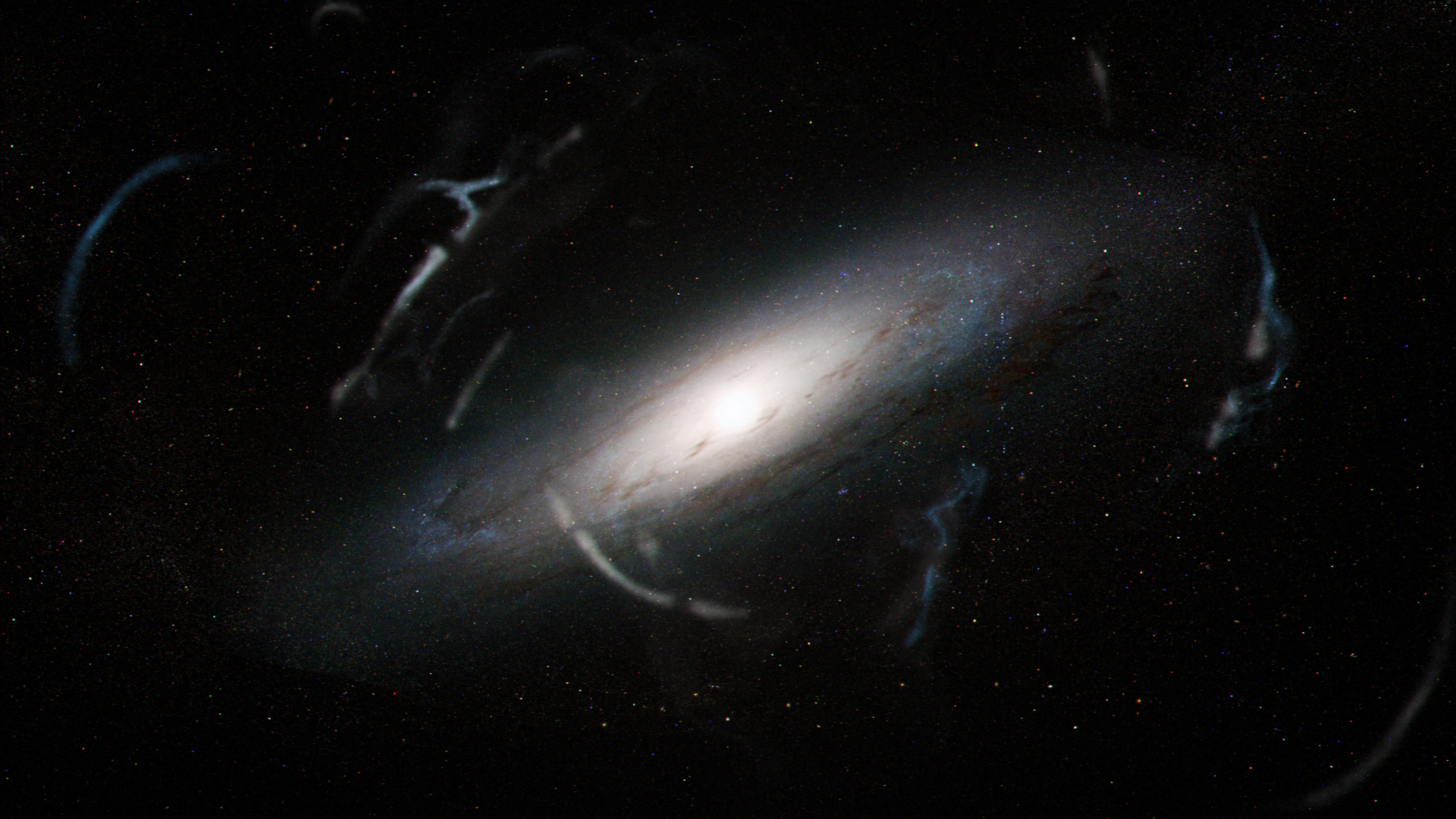
Roman is designed to map these invisible forces by looking at how they warp the light from 200 million galaxies.
- Weak Gravitational Lensing: Roman will watch how the gravity of dark matter subtly distorts the shapes of distant galaxies.
- Supernovae Sprints: It’ll find thousands of Type Ia supernovae, using them as "standard candles" to measure exactly how fast the universe is expanding.
- Baryon Acoustic Oscillations: It'll look for "ripples" in the distribution of galaxies left over from the Big Bang.
By layering these three methods, we might finally figure out if dark energy is a constant property of space or something that changes over time. If it changes, our entire understanding of physics is effectively toast.
The Planet Hunter We Didn’t Know We Needed
While dark energy gets the H2s, the exoplanet census is where things get wild. Roman uses a technique called gravitational microlensing.
When one star passes in front of another, its gravity acts like a magnifying glass, brightening the distant star. If a planet is orbiting that foreground star, it creates a tiny extra blip in the light.
Because Roman’s field of view is so wide, it can monitor hundreds of millions of stars in the crowded center of our galaxy simultaneously. It’s expected to find:
- Roughly 2,600 new exoplanets.
- Earth-mass planets orbiting at "normal" distances from their suns (unlike many we've found that are scorched "hot Jupiters").
- "Rogue planets" that aren't attached to any star at all, drifting through the dark alone.
It also carries a Coronagraph Instrument. This is a high-tech "mask" that blocks out the blinding light of a star so we can see the dim planets orbiting it. It’s a tech demo for now, but it’s the bridge to future missions that will actually search for oxygen and water in those atmospheres.
Why You Should Care
We’ve spent decades looking at the "what" of the universe. Roman is the "where" and the "how much."
It’s easy to get lost in the $4 billion price tag or the technical jargon, but the reality is simpler: we’re building a 3D map of the cosmos. Most of what we think we know about the evolution of galaxies is based on small samples. Roman gives us the whole dataset.
It’s currently sitting in a cleanroom, fully integrated and awaiting the "shake and bake" tests—vibration and thermal vacuum cycles—that ensure it won't fall apart during launch. Once it passes those, it heads to Florida.
Don't expect the immediate, colorful "wallpaper" images Webb produces. Expect a flood of data that will keep supercomputers busy for the next fifty years.
If you want to keep tabs on the mission, watch the Goddard Space Flight Center's updates as they move into the final testing phase this winter. The launch window is firming up for late 2026. Get ready for the atlas to be rewritten.