Bucharest Shuffles the Deck While the Economy Burns
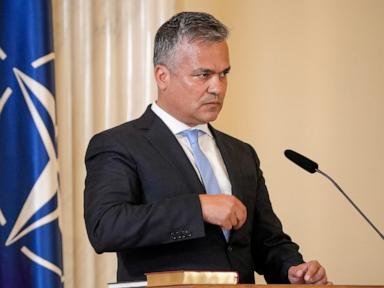
Romania has entered a dangerous new phase of political instability. Following the abrupt withdrawal of his initial prime minister-designate, President Klaus Iohannis nominated Adrian Vestea to form a new government. This rapid pivot underscores a deeper structural crisis within the country’s ruling coalition rather than a routine administrative transition. The sudden change in leadership threatens to stall crucial economic reforms and delay billions of euros in European Union recovery funds.
The political calculus in Bucharest has broken down. For months, the uneasy alliance between the Social Democrats and the National Liberals has teetered on the edge of collapse. When the first nominee stepped back, citing a lack of parliamentary support, it exposed the profound fractures within the legislative majority. Adrian Vestea, a veteran administrator known for his regional governance rather than ideological fire, inherits a fractured political landscape that demands immediate financial stabilization. Don't miss our earlier post on this related article.
The Mechanism of a Backroom Collapse
To understand how the initial nomination imploded so spectacularly, one must look at the hidden leverage points within the Romanian parliament. Prime minister-designate selections in Romania are rarely about policy alignment. Instead, they function as high-stakes patronage negotiations.
The previous nominee discovered that his proposed cabinet list was dead on arrival. Behind closed doors, powerful regional barons demanded control over key ministries—specifically the Ministry of Development and the Ministry of Transport. These departments oversee the distribution of national infrastructure budgets. When the nominee attempted to assert independence by appointing technocrats, the coalition partners quietly informed him that his government would not survive a vote of confidence. If you want more about the history here, The New York Times offers an in-depth summary.
Rather than face a public humiliation in parliament, the nominee chose a strategic retreat. This left the president with a dwindling pool of viable candidates who could command a majority while satisfying the appetites of competing political factions.
Enter Adrian Vestea
Adrian Vestea is not a conventional choice for a national crisis. His political capital was built far from the capital city, serving as a regional leader where success is measured in paved roads and local budget surpluses rather than geopolitical maneuvering. This regional profile is precisely why he was selected.
The Logic of the Regional Administrator
By appointing Vestea, the president is attempting to placate the powerful local factions that doomed the previous nomination. Vestea understands the language of municipal funding. He speaks directly to the needs of the county council bosses who control the grassroots party machinery.
- The Local Power Base: Vestea’s primary strength lies in his ability to unite regional leaders who feel ignored by the Bucharest elite.
- The Technocratic Facade: While a career politician, his focus on infrastructure gives him the appearance of a pragmatic doer rather than a partisan knife-fighter.
- The Vulnerability: He lacks deep relationships within the national security apparatus and foreign policy circles, areas where Romanian prime ministers must tread carefully.
This appointment is a calculated gamble that local patronage can buy national stability. If Vestea can satisfy the financial demands of the regional barons, he may secure enough parliamentary votes to form a government. However, this strategy carries a severe long-term cost.
The Price of Political Compromise
Every concession made to secure a parliamentary vote dilutes the new government’s ability to implement fiscal discipline. Romania is currently under an excessive deficit procedure by the European Commission. The country’s budget deficit has expanded beyond safe limits, driven by public sector wage increases and a bloated administrative state.
Vestea’s mandate requires him to cut spending while keeping the very people who voted for him happy. It is an impossible mathematical equation. To receive the next tranches of the National Recovery and Resilience Plan funds, Bucharest must reform its pension system and eliminate tax loopholes. Yet, doing so will alienate the political base Vestea needs to survive.
The Looming Economic Reckoning
While politicians bicker over cabinet seats, the macroeconomic indicators are flashing red. Inflation remains stubbornly high, eroding the purchasing power of ordinary citizens. International bond markets are watching the political theater with growing skepticism, raising the borrowing costs for the Romanian state.
The Threat to European Funding
The true battlefield for the Vestea administration will not be the parliament floor, but the negotiating tables in Brussels. The European Union has made it clear that financial disbursements are strictly conditional on structural reforms.
[European Union Milestone Deadlines]
       │
       ├──► Pension Reform Legislation (Overdue)
       │
       ├──► Fiscal Deficit Reduction Plan (Current Focus)
       │
       └──► Anti-Corruption Statutory Framework (Imminent)
If Vestea prioritizes political survival over these milestones, the funding stops. A sudden halt in EU funds would trigger a currency depreciation, driving up the cost of imported goods and pushing the country into a recession. The business community is already pricing in this risk, with foreign direct investment slowing down as executives wait to see if a stable government can actually emerge from this chaos.
Counter-Currents and the Opposition
The current crisis has provided fertile ground for opposition parties. On one side, the reformist factions argue that the nomination of Vestea is proof of a stagnant political class incapable of systemic change. They view him as a continuity candidate designed to protect the status quo and shield corrupt networks from accountability.
On the other side, ultranationalist movements are capitalizing on public frustration. They point to the gridlock in Bucharest as evidence that the democratic institutions are failing, advocating for a more authoritarian approach to governance. Their rhetoric is gaining traction among voters tired of constant government collapses and empty promises of economic modernization.
The Security Dimensions
This political instability occurs at the worst possible geopolitical moment. Sharing a massive border with Ukraine, Romania is a vital frontline state for NATO. The country serves as a critical transit hub for grain exports and military logistics.
A weak, distracted government in Bucharest compromises the efficiency of these international corridors. While western allies expect predictable decision-making regarding regional defense infrastructure and airspace security, they are instead forced to deal with a rotating carousel of ministers who require months to get up to speed on complex defense dossiers.
A Systemic Design Flaw
The recurring nature of these crises suggests that the problem is not the individuals involved, but the constitutional architecture itself. Romania’s semi-presidential system inherently creates friction between the presidency and the prime minister's office, particularly when they represent different political families or factions within a fractured coalition.
The Conflict Built into the Constitution
The president directs foreign policy and defense, while the prime minister controls the purse strings and domestic administration. When cooperation breaks down, the entire state apparatus grinds to a halt. Agencies stop making decisions, public tenders are frozen, and civil servants adopt a defensive posture, refusing to sign off on projects for fear of future political retribution.
Adrian Vestea must now navigate this institutional minefield. He has to assemble a cabinet that satisfies the president's strategic priorities while meeting the raw financial demands of the parliamentary majority.
The coming days will reveal whether Vestea is a genuine statesman capable of rising above the factional warfare, or merely a temporary placeholder designed to delay an inevitable early election. The market will not wait indefinitely for Bucharest to fix its self-inflicted wounds. If the vote of confidence fails, or if the resulting cabinet proves unworkable within its first ninety days, the economic consequences will be felt far beyond the halls of parliament, altering the country's financial trajectory for the rest of the decade.