The Washington establishment is back at its favorite podium, taking victory laps over an economic illusion. The U.S. Treasury Department just announced a sweep of sanctions targeting a massive smuggling network transferring Iranian liquefied petroleum gas (LPG) to South and East Asia. The official narrative from the Office of Foreign Assets Control (OFAC) reads like a geopolitical thriller: front companies in the United Arab Emirates and China, a shadow fleet of tankers like the LPG Sevan and the Mile, and complicit exchange houses like Mehrdad Geramian Nik and Partners altering paperwork to disguise Iranian fuel as Omani origin.
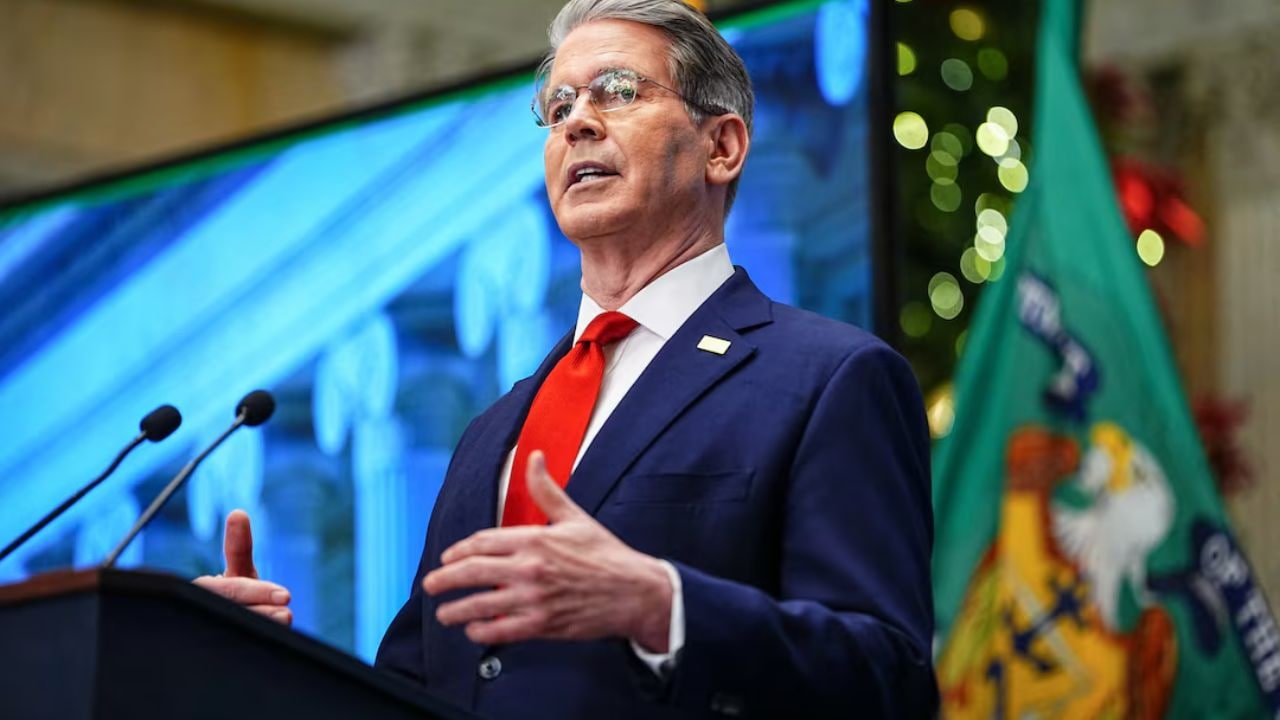
Treasury Secretary Scott Bessent proudly declared that the administration's "Economic Fury" campaign is severing Iran’s access to global trade. Discover more on a connected issue: this related article.
It is a masterful press release. It is also an absolute fantasy.
The lazy consensus among mainstream financial analysts is that blacklisting twelve entities, six vessels, and a handful of front men will choke off Tehran's revenue. This view completely misunderstands the mechanics of global energy arbitrage, the fluid nature of shadow banking, and the reality of demand in developing Asian economies. I have watched commodities traders circumvent Western trade restrictions for two decades. The hard truth nobody in Washington wants to admit is that these sanctions do not eliminate the trade; they merely increase the risk premium, making the network more sophisticated, more decentralized, and ultimately more resilient. More analysis by Reuters Business explores comparable perspectives on the subject.
The Mirage of Maximum Pressure
The foundational flaw of the Economic Fury strategy is the belief that a shadow fleet operates like a corporate supply chain. When you sanction a legitimate entity, it dies. When you sanction a shadow network, it mutates.
The Treasury targeted front companies such as Sahel Star Oil and Gas and Shanghai Qianye Energy, alongside individuals like Sarbaz Abdul Zada. The establishment view assumes that by blacklisting these names, you halt the flow of gas. In reality, creating a shell company in Dubai or Hong Kong takes forty-eight hours and a nominal registration fee. By the time a vessel like the LPG Sevan is designated by OFAC for a shipment that happened months ago, the operators have already spun up three new corporate entities, secured new nominal owners in different jurisdictions, and re-flagged the ships to alternative maritime registries.
Consider the actual mechanics of the LPG trade. Unlike crude oil, which requires massive refineries, LPG (propane and butane) is a vital utility fuel used for cooking and heating across developing nations like Bangladesh and India. Demand is inelastic. The buyers do not care about Treasury press releases; they care about keeping the lights on at a price their populations can afford. Iranian LPG trades at a deep, forced discount due to its legal status. That discount creates an irresistible margin for regional distributors. The U.S. is fighting an economic law of gravity: as long as Iran has excess hydrocarbons and Asia has an insatiable energy deficit, the spread will ensure the commodity moves.
The Fuel Laundering Paradox
The mainstream media hyper-focuses on the deception—specifically, the practice of transshipping Iranian LPG and relabeling it as Omani. The consensus view treats this as a fragile criminal conspiracy. It is not a conspiracy; it is a permanent infrastructure.
When a tanker engages in a ship-to-ship (STS) transfer in the Gulf of Oman, blending cargoes and turning off its Automatic Identification System (AIS) transponder, it is participating in a highly fluid, decentralized market.
- The Paperwork Swap: The cargo receives a fresh bill of lading from a non-sanctioned jurisdiction.
- The Commodity Blending: Chemically, propane from Iran's South Pars field is identical to propane from Qatar or Saudi Arabia. Once blended or transferred, it is untraceable by molecular analysis.
- The Local Compliance: Customs officials in importing nations frequently look the other way because their priority is national energy security, not enforcing American foreign policy.
By forcing this trade underground, Western sanctions have inadvertently created a highly specialized, hyper-profitable logistics sector. The "shadow fleet" is no longer an ad-hoc collection of rust buckets; it is a commercial apparatus funded by international capital that operates entirely outside the SWIFT banking system.
The Broker Illusion
The parallel action taken by OFAC against the Iranian exchange house Mehrdad Geramian Nik and Partners exposes another massive blind spot in Western economic warfare. The Treasury believes that shutting down these specific brokers cuts off the regime's ability to repatriate funds.
This ignores the structural reality of the Hawala system and decentralized ledger tech. Modern shadow banking does not rely on a centralized wire transfer that can be blocked at a correspondent bank in New York. It runs on trusted, informal networks of ledger balances, trade-based money laundering (where physical goods like electronics or textiles are exchanged instead of cash), and increasingly, privacy-focused digital assets.
When the U.S. boasts about freezing half a billion dollars in regime-linked cryptocurrency, it sounds impressive. But in the grand scheme of a multi-billion-dollar annual energy trade, that is a minor cost of doing business. For every exchange house the Treasury blacklists, three informal clearinghouses step up to absorb the volume. The margins are too lucrative for them to do otherwise. The enforcement is playing an endless game of whack-a-mole against a financial system built precisely to withstand structural disruption.
The Unintended Cost of Enforcement
To understand why this contrarian view is correct, we have to look at the collateral damage of the U.S. approach. The aggressive deployment of secondary sanctions on foreign financial institutions and shipping registries has a shelf life.
Every time Washington weaponizes the U.S. dollar to police a transaction between two sovereign Asian nations involving Middle Eastern gas, it accelerates global de-dollarization. China, Russia, and Iran are actively building alternative financial architectures. By forcing major buyers in South and East Asia to choose between compliance with Washington and cheap energy to prevent domestic unrest, the U.S. is systematically eroding the long-term utility of its own sanctions apparatus.
The downside to this reality is grim for Western policymakers. If sanctions are structurally incapable of stopping the flow of Iranian LPG due to the realities of Asian energy demand and corporate mutations, the only way to truly halt the trade would be physical maritime interdiction—a naval blockade in the Strait of Hormuz. That is an escalatory step that would send global energy prices into a tailspin, hurting Western consumers far more than the targeted sanctions hurt Tehran.
The current policy remains a toothless political theater. It allows Washington to look tough on state-sponsored terror and weapons proliferation while the actual molecules of gas continue to flow smoothly to Asian ports under a different name. The network isn't broken; it just changed its corporate letterhead.