The dust on the lunar surface doesn't behave like the dirt in your backyard. It is jagged, microscopic glass, forged by eons of celestial bombardment. When a boot hits that gray powder, the footprint doesn't just sit there. It stays. For a million years, if nothing disturbs it, that indentation remains a perfect, silent witness to the moment a human being stepped out of the cradle.
For fifty years, those footprints were exclusively American. They were the ultimate "we were here" carved into the orbital neighborhood. But the silence of the South Pole is about to get very crowded, and the stakes have shifted from national pride to the cold, hard physics of survival. We aren't just talking about flags anymore. We are talking about ice.
The Geography of Survival
Imagine a desert so vast and empty that finding a single well determines who lives and who dies. That is the lunar South Pole. Unlike the equatorial regions where the Apollo missions landed—bathed in fourteen days of searing light followed by fourteen days of freezing dark—the poles contain "peaks of eternal light" and "craters of eternal darkness."
In those shadows, the temperature drops to levels that make Pluto look cozy. But tucked inside that darkness is the solar system’s most precious currency: water ice.
If you have water, you have oxygen to breathe. You have liquid to drink. Most importantly, you have the raw ingredients for liquid hydrogen and liquid oxygen. Fuel. The South Pole isn't a destination; it is the gas station for the rest of the galaxy. If a single power controls the "shackleton" craters or the ridges with constant sunlight for solar power, they don't just own a piece of the Moon. They own the gateway to Mars and beyond.
The New Tenant
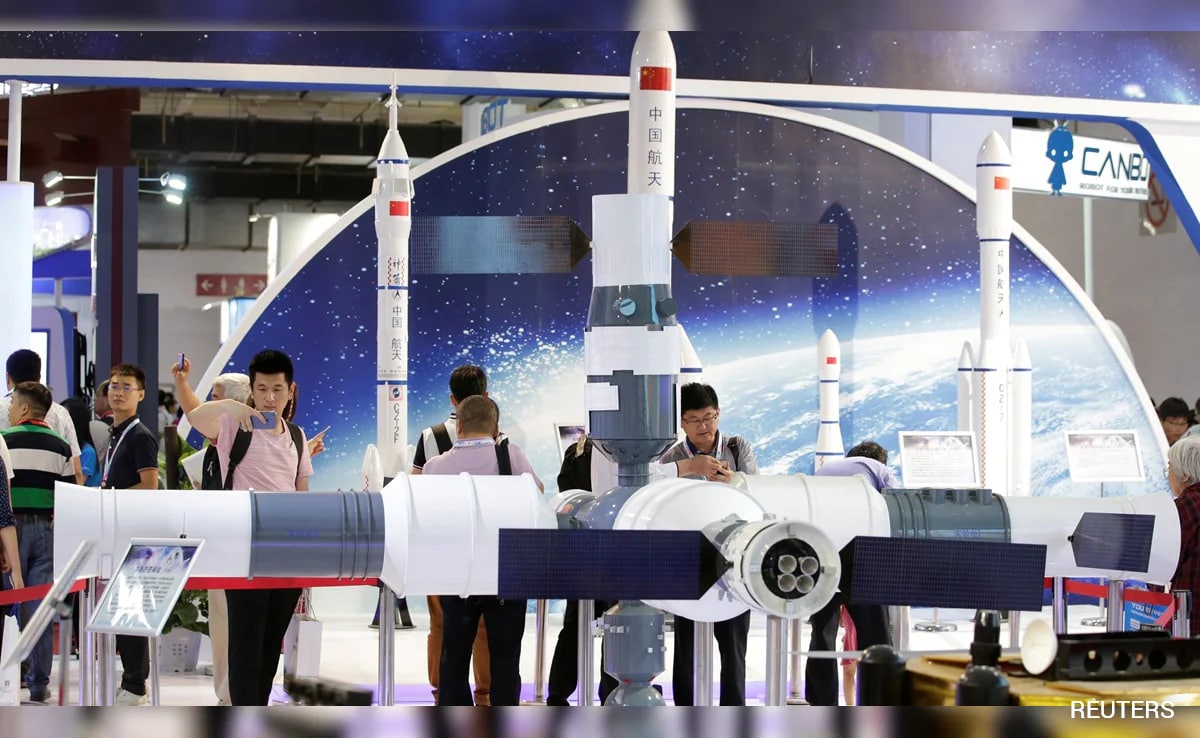
While the West spent decades debating budgets and pivoting between Mars and the Moon, China moved with the quiet, terrifying precision of a clockmaker. They didn't shout. They just arrived.
In 2019, they did what no one else had ever dared: they landed a rover, the Yutu-2, on the far side of the Moon. Because the Moon’s bulk blocks direct radio signals to Earth, they had to park a relay satellite in orbit just to talk to the thing. It was a masterclass in long-term engineering. It signaled to the world that the "Middle Kingdom" no longer viewed space as a frontier to be explored, but as a province to be managed.
Consider the hypothetical, yet scientifically grounded, scenario of a technician named Chen in a control center in Beijing. Chen isn't looking for "glory." He is looking at a telemetry feed from the Chang’e-7 mission, scheduled for 2026. His job is to find the exact coordinates where a Chinese lander will deploy a "flying mini-probe" to hop into a shadowed crater and sniff for water.
If Chen finds it first, the international legal framework—the 1967 Outer Space Treaty—starts to look very thin. The treaty says no one can "own" the Moon. But it also says you have a right to "undisturbed operations." If China sets up a base around a water-rich crater, and says they need a five-mile "safety zone" to prevent interference, they have effectively claimed the territory.
Possession, as it turns out, is nine-tenths of the law, even 238,000 miles up.
The American Scramble
The United States responded with Artemis. It is a beautiful, ambitious, and wildly expensive program. But it is built on a foundation of shifting political sands. Every four to eight years, the American space vision tends to undergo a mid-air correction. One administration wants the Moon; the next wants an asteroid; the third wants Mars.
China’s advantage isn't necessarily better tech. It is a singular, unwavering timeline. They plan in decades. We plan in election cycles.
This creates a visceral tension within NASA. For the engineers at Marshall Space Flight Center, the pressure isn't just about the physics of the SLS rocket. It’s the haunting knowledge that the next time an American looks through a telescope at the lunar south, they might see the lights of a base that doesn't fly the Stars and Stripes.
Why the High Ground Matters
Some skeptics ask why we should care. Why spend billions on a rock when there are bridges collapsing and forests burning here?
The answer is found in the history of the sea. In the 18th century, the British Empire didn't control every square inch of the ocean. They controlled the "choke points"—Gibraltar, the Cape of Good Hope, the Strait of Malacca. If you controlled the points where ships had to pass, you controlled global trade.
The Moon is the ultimate choke point.
If China establishes a permanent presence at the lunar south pole, they gain "situational awareness" over everything in the space between Earth and the Moon—Cislunar space. They can see every satellite launch. They can potentially intercept communications. They can move assets in the dark. It is the ultimate high ground.
The Human Cost of the Void
Beyond the geopolitics, there is a psychological weight to this race. We are a species defined by our frontiers. For the last fifty years, we lived in a comfortable delusion that the Moon was "ours" by default. We grew complacent. We treated the Apollo era as a finished chapter in a history book rather than the prologue it was meant to be.
The prospect of losing supremacy on the Moon is a jarring wake-up call to the American psyche. It forces a confrontation with the reality that leadership is not a birthright. It must be maintained.
Imagine a young girl in Ohio looking up at the Moon tonight. For her entire life, she’s been told that humans went there once, and they were Americans. Now, she hears news of the International Lunar Research Station—a joint project between China and Russia. She sees animations of lunar bases that look nothing like the sketches in her schoolbooks. She realizes that the future might not speak her language.
The Empty Table
The most concerning part of this story isn't the rockets. It is the lack of a shared rulebook. The Artemis Accords, led by the U.S., attempt to establish "safety zones" and transparent mining rules. But China isn't a signatory. They are building their own club.
We are currently heading toward a "Wild West" scenario where two different sets of laws govern the same small, icy patches of dirt. When two groups with different rules try to occupy the same vital resource, the result is rarely a polite conversation. It is friction.
NASA Administrator Bill Nelson hasn't been shy about his fears. He has openly stated that we are in a "space race" and that we need to "watch out" that China doesn't get to a place on the Moon under the guise of scientific research and then say, "Keep out, we're here, this is our territory."
It sounds like science fiction. It feels like the plot of a Cold War thriller. But the metal is being bent in factories in Shanghai and Alabama right now. The engines are being tested. The heat shields are being cured.
The Fragile Bridge
We often think of space as a vacuum, a place where Earthly problems don't apply. But we carry our baggage with us. Our greed, our fears, and our tribalism are all packed into the cargo holds of our spacecraft.
The Moon is a mirror. It reflects the state of our planet. Right now, it reflects a world that is deeply divided, staring at a limited pool of resources and wondering who will be the first to plant a fence.
The footprints of Neil Armstrong and Buzz Aldrin are still there, undisturbed in the Sea of Tranquility. They are a monument to what happens when a species decides to do something "not because it is easy, but because it is hard." But those prints are in the past. They are static.
The new footprints, the ones heading for the dark ice of the South Pole, will be different. They will be the start of a permanent residency. They will mark the moment the Moon stopped being a destination and started being a home.
The only question left is whose face will be in the helmet of the person looking back at the blue marble of Earth, wondering if they are an explorer, or a soldier, or a tenant. The gray dust is waiting. It doesn't care about our politics. It only cares about who has the will to stay.
Would you like me to analyze the specific technological differences between the Chinese Chang'e landers and the American Starship HLS to show how each nation plans to tackle the lunar landing?