The plastic flamingo wobbled against the heavy June air, its neon pink plumage casting a bizarre shadow onto the gray concrete outside the Prime Minister’s office in Tirana. It was held aloft by a university student whose knuckles were white. Around her, thousands of voices rose in a rhythmic, furious cadence. “Shqipëria nuk është me qira.” Albania is not for sale.
Just days ago, this was a story about a barefoot swim.
In a recent interview, Ivanka Trump recounted a moment of pure, cinematic serendipity. She and her husband, Jared Kushner, were on a friend’s boat when they stopped for a dip in the turquoise waters of the Ionian Sea. They swam ashore to an uninhabited island, hiked unburdened to its highest ridge, and looked out over a landscape untouched by the frantic hyper-development of the modern Mediterranean. They were captivated. It was beautiful.
But beauty is rarely neutral. One person’s blank canvas is another person’s sanctuary.
What began as a romantic island excursion has materialized into a multi-billion-dollar corporate footprint. Through Kushner's private equity firm, Affinity Partners, and a web of development entities, plans have emerged for an ultra-luxury mega-resort. The scale is staggering: a €1.4 billion transformation spanning Sazan Island—a former secret communist military outpost—and the pristine coastal wetlands of Zvërnec. The project promises over 10,000 rooms, private villas, and high-end marinas designed to position Albania as the "next Dubai."
To understand why this vision has brought thousands of citizens into the streets, chanting "Ivanka, go home," one must leave the yacht and stand in the mud of the Vjosa-Narta lagoon.
The Value of the Wild
Consider a hypothetical fisherman named Ilir, whose family has cast nets off the coast of Vlora for generations. To Ilir, the coastline is not an underutilized asset waiting for its potential to be realized. It is a clock. The arrival of the Dalmatian pelicans signals the change of the season. The nesting patterns of the loggerhead sea turtles dictate when to pull the boats high onto the sand.
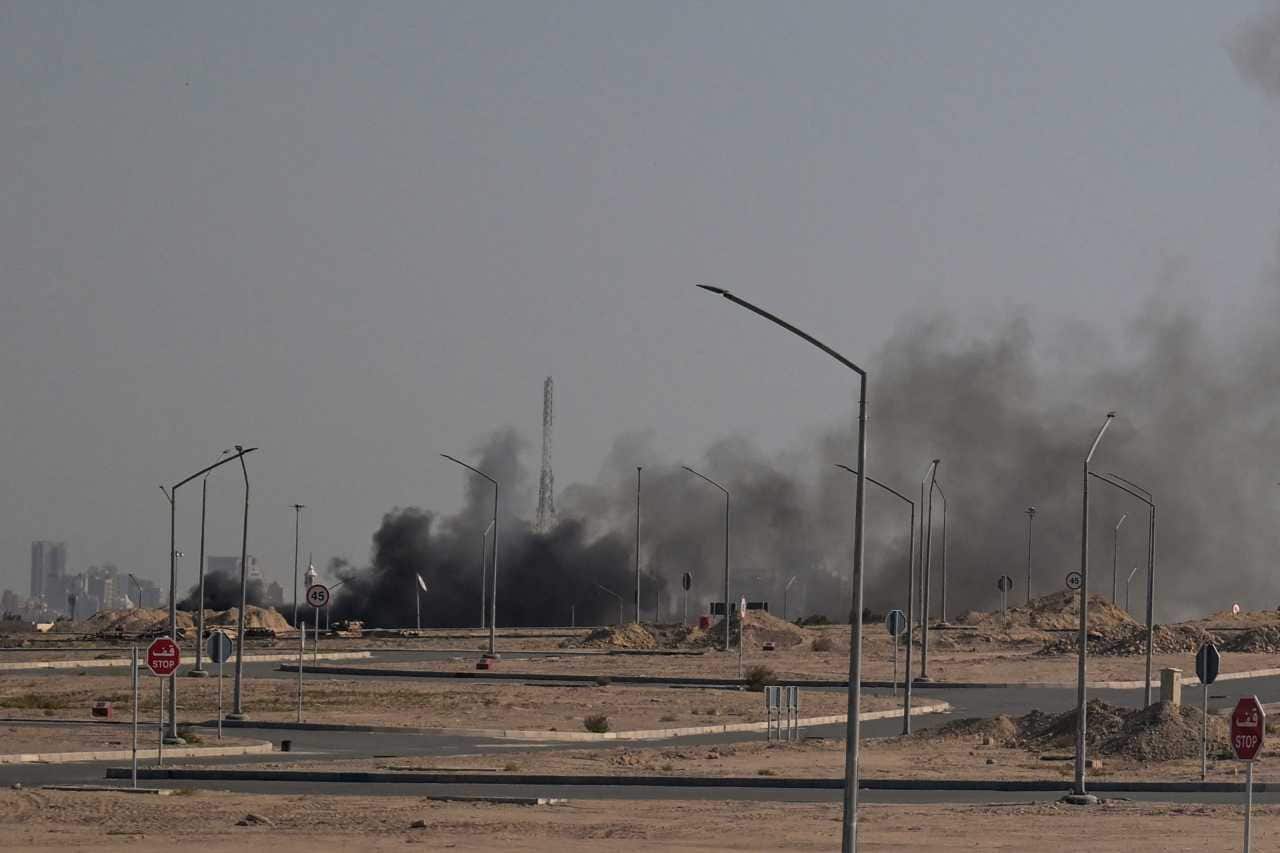
This coastal ecosystem is one of Europe’s last wild frontiers. The Vjosa-Narta protected landscape is a critical sanctuary, a vital rest stop for millions of migratory birds traveling the Adriatic flyway. When heavy machinery began rolling into Zvërnec at the end of May, it didn't just clear brush. It broke the clock.
Excavators tore into the sand dunes. Pine trees were felled. Then came the barbed wire.
Public access to the local beaches was severed overnight. For the residents of Vlora and Zvërnec, the sudden appearance of private security guards and wire fencing felt less like economic development and more like an occupation. On Saturday, May 30, the tension snapped. Local activists and residents who gathered to protest the closure clashed with private guards. Video footage surged across Albanian social media, showing an environmental activist being dragged across the ground by security personnel.
The outrage was instantaneous. The state immediately revoked the licenses of two private security firms and suspended several local police officials, but the damage was done. The conflict was no longer abstract. It had a human face, a bruised back, and a frontline marked by rusted steel wire.
The Calculus of Sovereignty
Prime Minister Edi Rama views the situation through a lens of macroeconomic survival. Albania spent decades locked in the suffocating dark of a paranoid communist dictatorship, its beaches mined and dotted with concrete bunkers to repel imaginary foreign invasions. When the regime collapsed, economic isolation lingered.
Rama’s argument is simple, pragmatic, and unyielding: Albania must grow. The government granted Kushner’s project "Strategic Investor" status, a designation that effectively bypasses standard bureaucratic hurdles, offering expedited permits and financial incentives. Rama publicly declared that the investment would not be halted under any circumstances while he remains in office, arguing that turning away a multi-billion-dollar injection from high-profile American investors would brand the country as hostile to global capital.
But the speed of the approval has triggered alarm bells within the country's legal institutions.
Albania’s Special Structure Against Corruption and Organized Crime, known as SPAK, has officially opened an investigation. Prosecutors are probing the rapid legislative maneuvers executed in 2024 that quietly stripped these coastal zones of their protected environmental status, paving the way for corporate acquisition. The inquiry is looking into the legitimacy of land titles and the transparency of the privatization process—a notoriously murky legal arena in post-communist Albania.
The stakes extend far beyond the immediate preservation of wetlands. The real question confronting the nation is one of identity.
Does a developing nation have the right to protect its natural heritage, or is environmental preservation a luxury that can be sold to the highest bidder?
The Ghost of Belgrade
This is not Kushner’s first foray into the complex geopolitical landscape of the Balkans. A similar multi-million-dollar luxury development planned for the Serbian capital of Belgrade collapsed under the weight of intense public protests and legal scandal. There, the project aimed to replace a historic, bombed-out military headquarters. Late last year, Serbian prosecutors charged four individuals, including a government minister, with abuse of office and falsified documents related to the deal. Kushner ultimately withdrew.
The parallel is not lost on the protestors in Tirana. They see the Belgrade retreat as proof that corporate momentum can be checked by collective will.
On Tuesday night, when Prime Minister Rama offered to meet with a small delegation of twenty protestors to discuss "solutions," the crowd flatly refused. They did not want a compromise. They did not want the architecture to be "fully integrated" into the landscape, as Ivanka Trump envisioned. They wanted the heavy machines out. They wanted the wire cut.
The protest organizers have called for continued mobilization. The inflatable flamingos carried through the streets are not just whimsical props; they are symbols of a fragile ecosystem that cannot negotiate its own survival.
The conflict over the Albanian coastline reveals the inherent fiction of frictionless global investment. Land is never empty. Beaches are never just beaches. Behind the pristine imagery of a billionaire's barefoot hike lies a complex tapestry of local history, community dependence, and ecological balance. You cannot build a ten-thousand-room playground for the global elite without displacing the quiet, intricate world that made the land beautiful in the first place.
The chants in Tirana eventually faded as midnight approached, leaving the square empty. But the barbed wire in Zvërnec remains, humming quietly in the coastal wind, waiting for dawn.