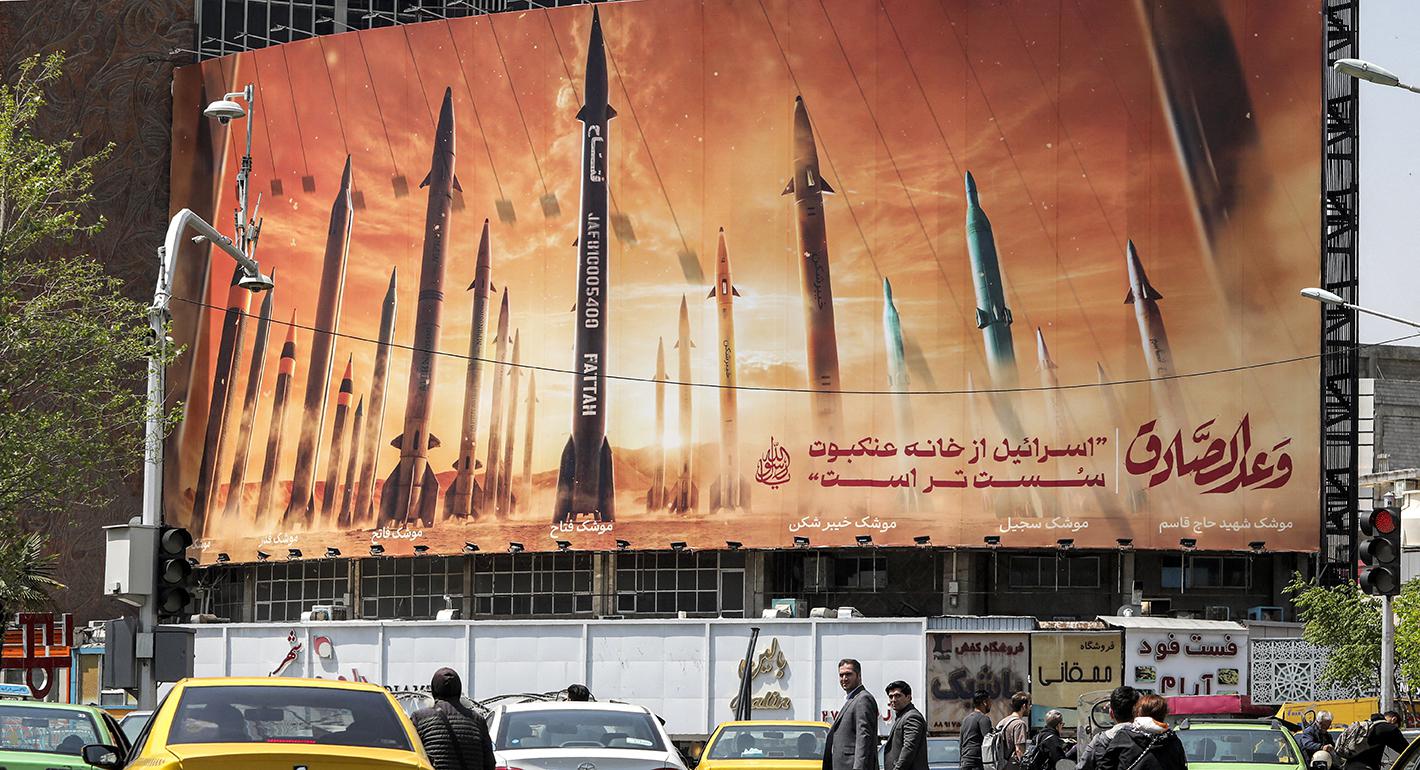
In the predawn humidity of Tehran, a shopkeeper named Arash rolls up the metal shutters of his spice stall. The sound is a violent, rhythmic clatter that echoes through the empty street. For a moment, he freezes, his hand still gripping the cold steel. In this city, any sudden roar from above or sharp metallic crack against the pavement isn't just noise anymore. It is a question.
Will today be the day the air turns to fire?
The world sees a headline about a peace proposal and a deadline. They see two aging lions, Donald Trump and the Iranian leadership, circling a map. But for Arash, and the millions like him, the geopolitical chess match is felt in the tightening of a chest and the fluctuating price of a bag of turmeric. Peace isn’t a document signed in a gilded room. Peace is the ability to breathe without wondering if the roof will hold.
The Weight of a Digital Ultimatum
The ultimatum arrived not by courier, but through the relentless, buzzing glow of smartphone screens. Donald Trump, back in the seat of power, has laid a choice on the table that feels less like an invitation and more like a ransom note. The terms are heavy, demanding a wholesale retreat from regional influence and a dismantling of nuclear ambitions that Tehran has spent decades building into its national identity.
The clock is ticking. It isn't a metaphor.
There is a specific kind of atmospheric pressure that settles over a country when a superpower threatens to resume bombing. It is a heavy, invisible fog. In the government offices of North Tehran, officials sit behind mahogany desks, nursing glasses of black tea that have gone cold. They are reviewing the American proposal, a document thick with the scent of "maximum pressure" reborn.
They know the math. They know the range of the bombers stationed across the water. They also know the cost of pride.
To accept the deal is to admit that the last forty years of defiance were a detour that led back to the same starting line. To reject it is to invite a rain of steel that the crippled Iranian economy can no longer absorb.
The Ghost of 2015 and the Reality of 2026
Memory is a jagged thing in the Middle East. Consider the 2015 nuclear deal, a moment when the streets of Tehran were filled with people dancing, believing the shadow of war had finally lifted. That memory now feels like a cruel joke, a ghost that haunts every current negotiation.
When the United States walked away from that table years ago, it didn't just break a contract. It broke the Iranian public’s belief in the utility of a handshake.
Now, the rhetoric has shifted from the elegant prose of diplomacy to the blunt force of a street fight. Trump’s strategy remains consistent: create a crisis, amplify the threat, and then offer himself as the only architect of the solution. It is a high-stakes gamble where the chips are human lives.
If the Iranian leadership bows now, they risk a domestic uprising from hardliners who view any concession as a betrayal of the revolution. If they stand firm, they risk a total collapse of the infrastructure that keeps the lights on for people like Arash.
The Invisible Stakes of the Power Grid
Imagine a hospital in Isfahan.
This is a hypothetical scenario, but the physics behind it are documented and real. In this hospital, a neonatal unit relies on a steady flow of electricity to keep incubators humming. The "peace proposal" currently under review includes clauses that would see sanctions lifted on specific industrial sectors. Conversely, the threat of "resuming bombing" specifically targets dual-use infrastructure.
If the talks fail and the bombers are cleared for takeoff, the targets aren't just missile silos. They are the power stations and the refineries.
When the grid goes dark, the incubators stop. The "strategic targets" of a military campaign are never as surgical as the briefing videos suggest. The shrapnel of a failed peace deal travels through the economy, through the healthcare system, and into the very kitchen tables where families are trying to decide if they should buy bread or medicine.
The Language of the Threat
There is a chilling efficiency in the way the current U.S. administration communicates. The threats are not buried in subtext. They are broadcast in all-caps, designed to be digested by global markets and frightened populations alike.
"Resume bombing."
The words are chosen for their kinetic energy. They imply that the engines are already warm. It suggests that the peace being offered is not a partnership, but a stay of execution.
Inside the Iranian Revolutionary Guard, the response is a mirrored aggression. They move hardware. They conduct "drills." They speak of a "crushing response." This is the choreography of a collision. Each side is performing for its own audience, desperate to look like the one holding the leash, while the world watches the fraying rope in the middle.
The Merchant’s Calculation
Back in the market, Arash watches a customer weigh a handful of dried limes. The customer looks at the price, sighs, and puts half of them back. This is the "maximum pressure" in practice. It isn't a cloud of smoke on the horizon; it is the slow, agonizing erosion of a middle class.
The Iranian Rial has become a leaf in a storm. Every time a new headline drops regarding Trump’s latest "deadline," the currency shivers. People aren't just tracking the news for political interest; they are tracking it to see if their life savings will be worth a loaf of bread by sunset.
The tragedy of the current standoff is that both sides believe they have the upper hand. Washington believes the Iranian economy is a house of cards ready to fall with one more push. Tehran believes that the American public has no appetite for another long-term conflict in the desert and that the threats are a bluff from a man who prefers the art of the deal to the carnage of the trench.
But what if they are both wrong?
What if the "peace proposal" is too toxic for the Iranian leadership to swallow, and the "bombing" is a promise that Trump feels he must keep to maintain his image of strength?
The Narrow Corridor
There is a very small, very dark corridor through which peace can travel. It requires the U.S. to offer a "win" that doesn't look like a surrender, and it requires Iran to accept a "limit" that doesn't look like a leash.
Currently, the proposal on the table doesn't seem to offer that narrow path. It looks like a wall.
The Iranian Supreme Leader faces a choice that will define his legacy. He is an old man, and the weight of a nation’s survival sits on his shoulders. He knows that his people are tired. He knows the protests of recent years were not just about headscarves, but about the fundamental desire for a life that isn't defined by siege.
Yet, the ideology of the Islamic Republic is built on the pillars of "Neither East nor West." To lean into a deal written by the "Great Satan" is to pull a foundational brick out of the wall.
On the other side, Trump is driven by a desire to undo everything his predecessors did and to prove that his brand of "peace through strength" is the only one that works. He isn't interested in the nuances of Persian history or the complexities of the Shia-Sunni divide. He wants a signature on a page. He wants the cameras.
The Sound of the Clock
The sun begins to set over Tehran, casting long, orange shadows across the Alborz mountains. The city is beautiful at this hour, the smog catching the light in a way that makes the chaos look peaceful.
But the silence is deceptive.
In the bunkers and the boardrooms, the review continues. The U.S. bombers remain on the tarmac, their crews waiting for a word that hasn't come yet. The proposal sits on a table, a stack of white paper that holds the power to either restart the world for eighty million people or end it for thousands.
Arash finishes his day. He pulls the metal shutters back down. Clatter. Clatter. Clatter.
He walks home, his shadow stretching out before him. He doesn't look at the sky. He knows that if the light changes, if the roar begins, there will be no time to look. He simply hopes that the men in the rooms, the men with the pens and the men with the triggers, remember that the "targets" on their maps have names, and spice stalls, and children who are afraid of the dark.
The world waits for a notification. A tweet, a press release, a flash of red on a news ticker.
The sky remains empty for now. But in the stillness of the Iranian night, the air feels thin, as if the oxygen itself is being sucked out of the room to feed a fire that hasn't started yet.
The shutters are closed. The city holds its breath. The lion stares at the page. The dragon stares at the lion. And somewhere in the distance, the first engine begins to cough to life.
It is 2026, and the world is still learning that the most expensive thing on earth is a peace that looks like a threat.