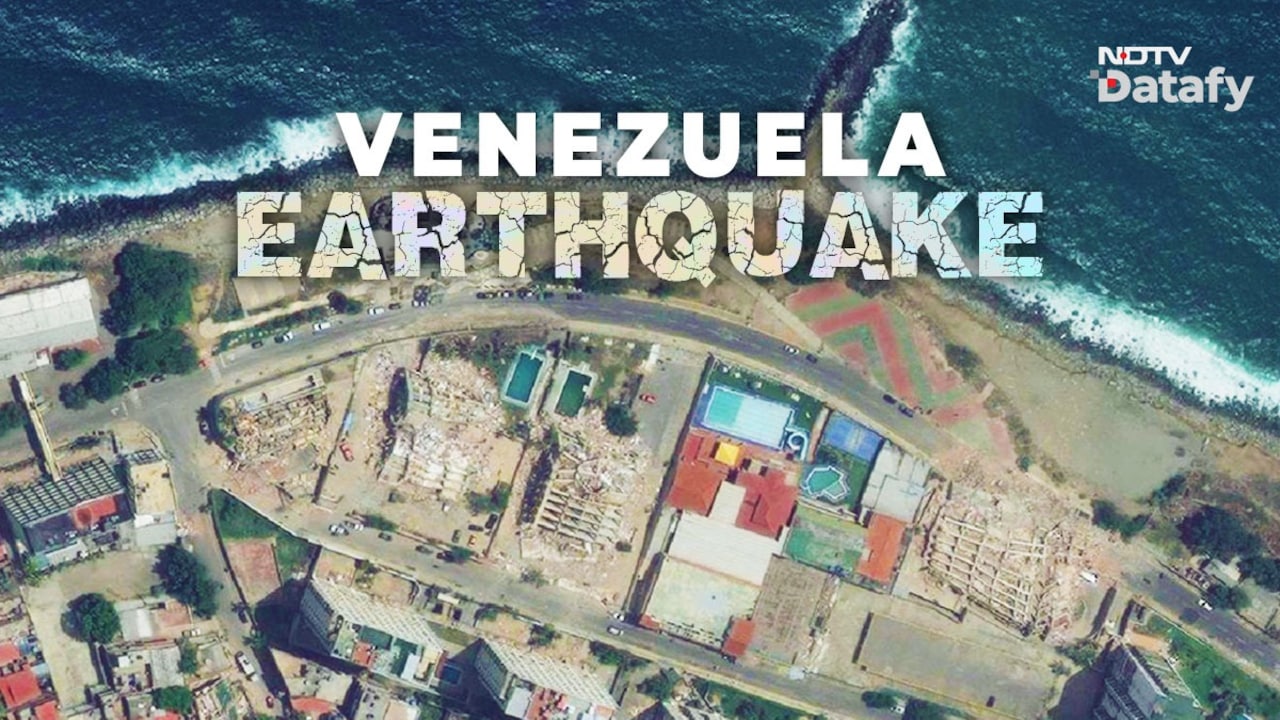
The dust settles long before the spreadsheets are ever filled.
When the earth violently shifts beneath Venezuela, the immediate sound is a deafening roar—a brutal symphony of tearing concrete, shattering glass, and the guttural cries of neighborhoods folding in on themselves. But the aftermath? The aftermath is completely silent. It is the quiet of a mother staring at a crack in her living room wall that wasn't there yesterday, wondering if the ceiling will hold until morning. It is the stillness of an entire street suddenly rendered unlivable, waiting for a rescue that might never arrive.
In the old days of disaster relief, we measured catastrophes by what we could see from the road. Convoys would roll out, blocked by landslides or stymied by broken infrastructure, guessing at the scale of the ruin. We relied on frantic phone calls, patchy radio dispatches, and the agonizingly slow process of door-to-door assessments.
Today, the true scale of devastation is captured by cold, unblinking eyes orbiting hundreds of miles above our heads.
Recent radar and optical satellite data analyzed by international damage-assessment teams revealed a staggering number: more than 58,000 buildings have been damaged or entirely destroyed across the hardest-hit regions of Venezuela following the recent sequence of powerful earthquakes.
Fifty-eight thousand.
It is a number so massive it slips right past the human brain. We hear a statistic like that and our eyes glaze over. It becomes a data point, an abstract metric in a geopolitical briefing or a funding request. But let us stop looking at the spreadsheets for a moment. Let us look at what that number actually represents.
Imagine a single street. Let’s call it Calle Miranda, a hypothetical but entirely accurate representation of a block in the towns outside Caracas or along the coast. On this street lives Elena. She spent thirty years saving money to build a modest concrete-block home for her children and grandchildren. When the tremors struck, her house didn’t collapse into rubble like a house of cards. Instead, the foundation snapped. The walls sheared diagonally. To a casual passerby, the house is still standing. But to an engineer—and to Elena—the home is dead. It is unsafe to enter, a concrete trap waiting for the next minor aftershock.
Now, multiply Elena’s broken foundation by fifty-eight thousand.
That is the reality of this crisis. It is not just fifty-eight thousand piles of debris; it is fifty-eight thousand displaced families, fifty-eight thousand collapsed livelihoods, and fifty-eight thousand structural nightmares scattered across a landscape already strained by severe economic hardship.
The View from the Exosphere
To truly comprehend how we arrived at this staggering count, we have to look at how modern crisis mapping works. It is an intricate dance between raw orbital physics and human intuition.
When a major earthquake strikes, orbital satellites are immediately tasked to alter their schedules, training their lenses on the affected coordinates. These aren't just taking standard photographs. They utilize Synthetic Aperture Radar (SAR), a technology that bounces radar signals off the earth’s surface to create highly detailed three-dimensional maps of the terrain.
Think of it like taking a digital fingerprint of a city before the disaster, and then taking another one immediately after. By overlaying these two images, sophisticated algorithms can detect shifts as small as a few millimeters. A roof that has tilted, a wall that has buckled, or a structure that has dropped even slightly shows up on the analyst's screen as a bright, neon scar.
This satellite tracking is incredibly vital because it bypasses the physical barriers that keep humanitarian aid locked out. When roads are split in half and communication towers are dark, the sky still sees.
But relying strictly on technology presents its own dangers. Algorithms can easily mistake a shadow or a pile of discarded construction materials for a collapsed roof. That is where human analysts step in, meticulously cross-referencing the automated alerts with high-resolution optical imagery to verify the damage. They look for the telltale signs of human displacement: blue tarps stretched over ruins, cooking fires in open courtyards, and makeshift tent settlements springing up in public parks.
The Invisible Structural Wound
The data reveals a deeply troubling pattern. The vast majority of the 58,000 affected structures are not high-rise apartments or commercial hubs. They are informal housing structures, built by hand over decades in precarious hill towns and densely packed barrios.
In many of these regions, building codes are a luxury that poverty simply cannot afford. Houses are constructed incrementally—a room added when a child is born, a second story balanced precariously on top when a sibling needs a place to live. They are built with unreinforced masonry, brittle concrete, and heavy corrugated iron roofs.
When seismic waves ripple through this kind of architecture, the results are catastrophic. The rigid walls cannot flex with the earth's movement. They shatter.
Consider what happens next: a community is hit by an earthquake, and the immediate medical emergencies are treated within the first seventy-two hours. The broken bones are set, the minor fires are extinguished, and the initial shock wears off. But then week two arrives. Then month three.
This is where the secondary crisis begins—the slow-motion emergency of mass displacement. When 58,000 buildings are compromised, you are looking at hundreds of thousands of individuals who are suddenly homeless or living in extreme peril. Where do they go? They crowd into the undamaged homes of relatives, straining local water and sewage systems. They sleep in cars. They construct flimsy shanties on unstable hillsides, creating a terrifying vulnerability to the upcoming rainy season, when mudslides can easily sweep those makeshift shelters away.
The satellite images show us the physical damage, but they also hint at this profound societal fracture. Whole neighborhoods show zero activity at night. No lights, no movement. They have become ghost sectors, evacuated because the structures are teetering on the edge of collapse.
Bridging the Gap Between Space and Concrete
The sheer volume of the destruction has overwhelmed local recovery efforts. In an environment where resources are already painfully scarce, prioritizing where to send building materials, engineering teams, and medical aid is a matter of life and death.
This is where the macro view from orbit must translate into micro action on the ground. International relief agencies are utilizing these satellite-generated damage maps to create a triage system. By identifying clusters where the destruction is most concentrated, they can direct scarce heavy machinery to clear critical transit routes, ensuring that aid pipelines remain open.
But the real problem lies elsewhere. It is the thousands of homes classified as "moderately damaged." These are the structures that look fine from a distance but are fundamentally compromised. Without a massive, coordinated effort to conduct physical structural audits, families will eventually creep back into these dangerous spaces out of sheer desperation. They will cook, sleep, and raise children beneath roofs that are structurally dead.
We often view disasters through the lens of dramatic rescue footage—dogs sniffing through rubble, survivors pulled miraculously from the dust. But the true story of a disaster is found in the grueling, unglamorous months that follow. It is found in the logistics of rebuilding fifty-eight thousand ruined lives.
The satellites will continue to pass overhead, snapping their silent photos, documenting a landscape forever altered by the violent movements of the earth. The data tells us exactly what was lost. The remaining question is whether the world can look at those neon scars on a map and see the human hearts beating beneath them.
A woman stands on a cracked hillside at dusk, looking down at the outline of her neighborhood. In her hand, she holds a flashlight, its beam cutting through the gathering dark, illuminating a doorway that no longer fits its frame.