The wind in the Samba sector of Jammu and Kashmir doesn’t just blow; it whispers. It carries the scent of dry earth, the distant sound of a barking dog, and, for those whose lives depend on it, the constant, low-frequency hum of an invisible war. For a soldier stationed at a forward post, the landscape is a familiar map of scrubland and ravines. Every bush is cataloged. Every shadow is a potential threat. But recently, the threat stopped hiding in the shadows. It started hiding in plain sight, powered by the sun.
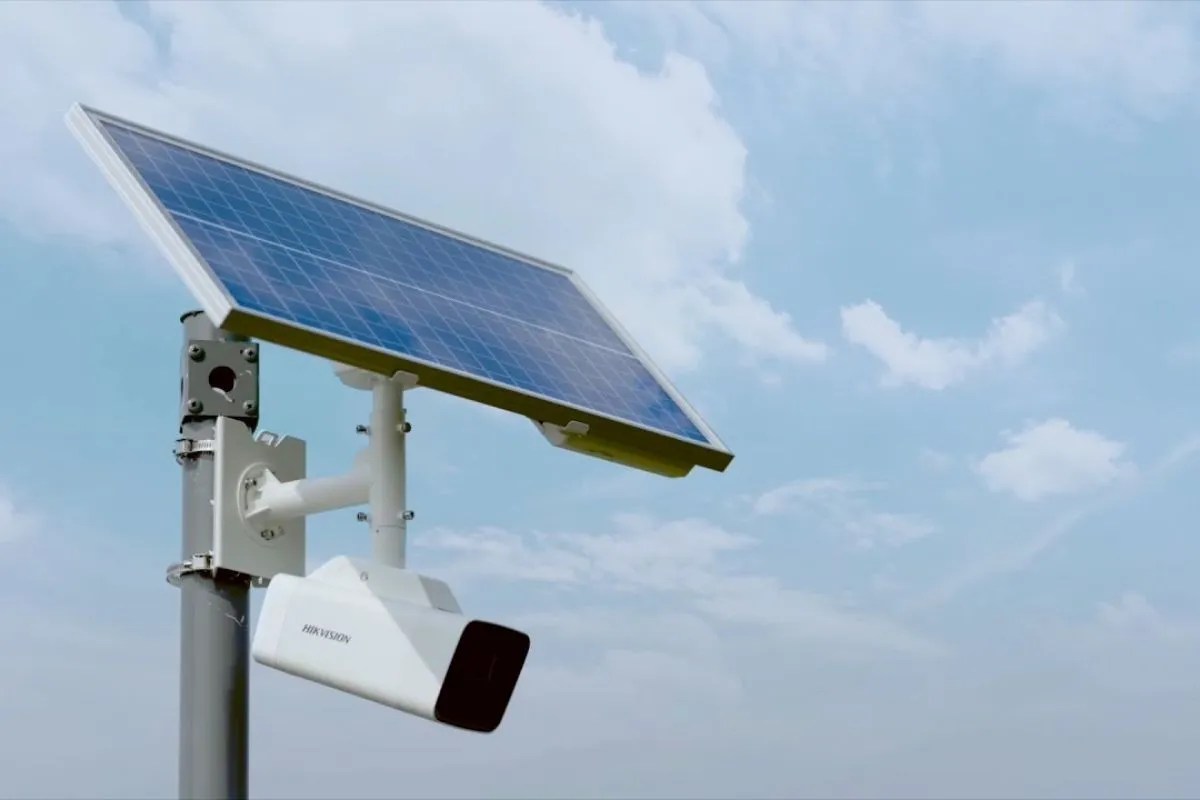
Security forces recently dismantled a sophisticated lattice of surveillance that didn’t belong to the Indian state. It wasn’t a high-altitude drone or a deep-cover operative with a long-range lens. Instead, it was a series of high-definition CCTV cameras, mounted on poles, humming quietly with the energy harvested from small, sleek solar panels.
This wasn’t just a random act of trespass. It was a cold, calculated engineering of proximity.
The Anatomy of an Unseen Eye
Imagine a local villager walking his livestock near the International Border. To him, a pole with a small box might look like a government initiative for rural electrification or perhaps a new cellular tower. This ambiguity is the primary weapon of modern espionage. The Pakistani operatives who orchestrated this setup didn't need to cross the wire. They simply used the sun—the one thing no border can block—to power a persistent, 24-hour gaze into the heart of Indian tactical movements.
The setup was deceptively simple. A high-resolution camera, a solar power unit to ensure it never went dark, and a transmitter to send the feed back across the line.
While traditional spying relies on "human intelligence"—the classic, gritty world of double agents and whispered secrets—this was "technical intelligence" stripped of its usual complexity. By placing these units in strategic locations, the handlers across the border gained a live, high-definition feed of troop rotations, supply convoys, and the daily rhythms of the Border Security Force. They were looking for patterns. In the world of security, a pattern is a target.
The Human Stakes of a Digital Feed
Security is often discussed in the abstract, using words like "sovereignty" and "perimeter integrity." But on the ground, security is a heartbeat. It is the young sub-inspector who realizes that the camera he’s looking at is looking back at him.
When the police in Samba began investigating these installations, they weren't just looking for hardware. They were looking for the betrayal of the landscape. To plant such devices, one needs more than just a map; one needs local access. This is where the narrative turns from high-tech spying to the messy, complicated reality of border life.
Who climbed the pole? Who checked the battery?
The psychological impact of being watched by an enemy you cannot see, through a medium as benign as a solar panel, creates a unique kind of tension. It turns the sun against the soldier. It makes the very infrastructure of progress—renewable energy and digital connectivity—feel like a Trojan horse.
The Logistics of the Invisible
To understand why this is a significant escalation, we have to look at the math of surveillance.
$T_{surveillance} = \frac{Energy}{Detection}$
If the energy source is a traditional battery, the spy must return to the site, risking capture. If the detection risk is high, the equipment must be bulky and hidden. By using solar power, the Pakistani handlers solved the energy equation, allowing for infinite uptime. By using standard commercial CCTV equipment, they blended into the "technological noise" of the 21st century.
The police didn't find these through a grand satellite sweep. They found them through the instinct of boots on the ground—officers who noticed something that felt off. A piece of tech that didn't have a permit. A wire that led nowhere. It was a victory of human intuition over digital persistence.
The Shifting Frontier
We often think of borders as lines drawn in the sand, guarded by men with rifles. But the Samba incident proves that the border has moved. It is now a digital frequency. It is a data packet being sent over a rogue Wi-Fi signal.
The strategy used here is a form of "Grey Zone" warfare. It isn't a direct attack, but it erodes the advantage of the defender. Every time a soldier moves, a frame is captured. Every time a new vehicle arrives at the base, its license plate is logged. Over weeks and months, this data builds a terrifyingly accurate picture of Indian defense capabilities.
It is a quiet, bloodless siege.
The recovery of these cameras has sparked a wider sweep. The authorities are now looking at the entire border through a different lens. They are asking: what else is watching? In an era where you can buy a 4K camera for the price of a pair of shoes, the "wall" is no longer enough. The wall has eyes, and sometimes, those eyes aren't ours.
The Silence After the Discovery
There is a specific kind of quiet that follows the dismantling of a spy ring. It’s the sound of a gap being closed. But the gap in Samba was more than physical. It was a reminder that the tools we use to build a modern world—solar energy, wireless networks, cheap optics—are the same tools being used to dismantle our safety.
The operatives across the border didn't need a sophisticated satellite or a stealth jet. They needed a sunny day and a lapse in our suspicion. They relied on the fact that we are so used to seeing technology everywhere that we have stopped questioning why it is there.
As the sun sets over the Samba sector, the scrubland returns to its natural state of shadow and light. The poles are bare now. The cameras are in an evidence locker, their lenses dark, their solar cells no longer drinking the light. But the lesson remains etched into the dust. The most dangerous weapon isn't always the one that makes the loudest noise. Sometimes, it’s the one that just sits there, perfectly still, waiting for the sun to rise.
The sentinel on the border looks out into the distance, his eyes scanning the horizon. He knows now that the landscape is never just a landscape. It is a conversation. It is a contest. And in this contest, the most important thing you can possess isn't a better camera, but the wisdom to know when you are being watched.
The wire still hums in the wind. The dogs still bark in the distance. But the silence in Samba feels a little heavier now, weighted with the knowledge that the enemy is no longer just across the line—they are trying to live inside our sightlines.