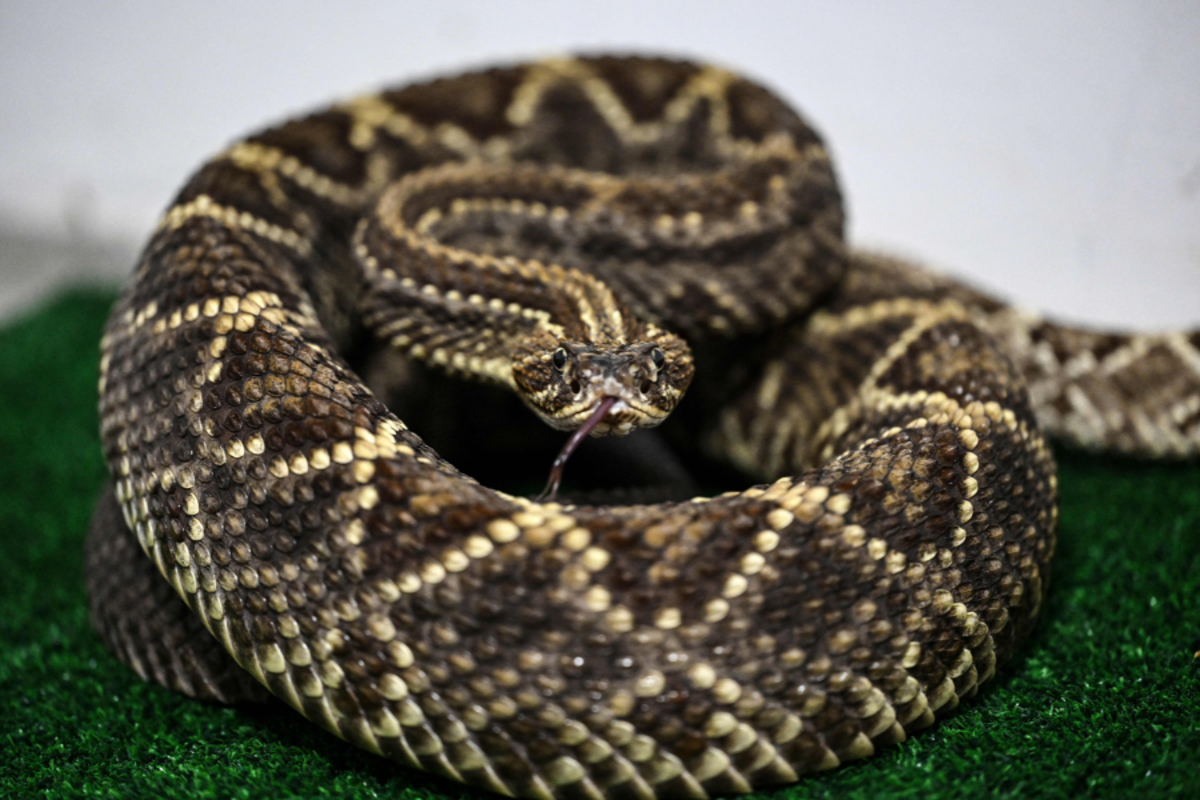
The dry heat of the California foothills doesn't usually scream of danger. It whispers. It sounds like the crackle of dehydrated scrub oak and the rhythmic crunch of hiking boots on sun-baked granite. But lately, that silence has been fractured by something sharper, a sound that signals a primitive, lethal shift in the local ecosystem.
Consider Elias. He isn't a statistic yet, but he represents the growing anxiety of every weekend warrior from Redding to San Diego. Elias was clearing brush behind his home in the Sierra foothills—a chore he had performed for a decade—when the world tilted. There was no rattling warning. There was no slow coil. Just a blur of movement from beneath a discarded plywood sheet and a searing heat in his calf that felt like a cigarette being pressed into his skin with the force of a hammer blow. Meanwhile, you can explore other stories here: The Congo Trap and the Dangerous Failure of US Deportation Policy.
He is one of the lucky ones. He made it to the ER. Others haven't been as fortunate.
California is currently grappling with a surge in rattlesnake encounters that has defied the usual seasonal logic. Within a matter of months, three people have died. In a state where snakebite fatalities typically average out to roughly one per year, three deaths in such a short window isn't just an anomaly. It is a crisis. To see the complete picture, we recommend the detailed report by USA Today.
Researchers are currently operating in a state of controlled friction. They are looking for a singular "why" in a world that rarely offers one. The facts are cold and jagged: hospital admissions for envenomation are up, the strikes are occurring in areas previously considered low-risk, and the snakes themselves seem to be behaving with a newfound, erratic aggression.
The Geography of Fear
To understand the spike, we have to look at the ground. California’s weather has spent the last few years oscillating between extremes—punishing, bone-dry droughts followed by atmospheric rivers that dumped record-breaking precipitation. This isn't just a meteorologist's talking point. It is a radical redesign of the food chain.
Heavy rains mean more vegetation. More vegetation means a boom in the rodent population. When the hills are crawling with mice and ground squirrels, the predators follow. Rattlesnakes are effectively the cleanup crew of the grasslands. But as the summer sun bakes that lush growth into tinder, the snakes are forced out of the drying hills and toward the only places left with moisture and shade: our backyards, our golf courses, and our poolside patios.
We have built our sanctuaries in their hunting grounds. Now, the boundaries are dissolving.
The biological reality of a snakebite is far more complex than a simple puncture. It is a chemical assault. Rattlesnake venom is a cocktail of hemotoxins and neurotoxins designed to pre-digest prey. It breaks down tissue, destroys blood cells, and prevents clotting. In the most severe cases, it causes the body’s own systems to turn against themselves.
The Shadow of the Three
The three lives lost this year serve as a grim reminder that our medical advancements are only as fast as our reaction times. While we have sophisticated antivenoms like CroFab, they are not magic bullets. They are expensive, often requiring dozens of vials, and they must be administered before the systemic damage becomes irreversible.
The mystery the "scrambling" researchers are trying to solve isn't just about the frequency of the attacks, but the potency. There is a quiet, terrifying hypothesis circulating among herpetologists: the venom might be changing. In some populations of the Northern Pacific Rattlesnake and the Mojave Green, scientists have observed a shift toward more neurotoxic components. Instead of just local tissue damage, these bites can cause respiratory failure and paralysis.
If the "recipe" of the venom is shifting, the standard treatments might need to shift with it. We are chasing a moving target that moves through the tall grass without making a sound.
The Psychology of the Encounter
Fear is a blunt instrument. When we hear about three deaths, we want to retreat. We want to clear-cut the brush and pave the hills. But the human element of this story is actually about coexistence and the loss of our predatory intuition.
We have become a society of "heads-down" explorers. We hike with noise-canceling headphones. We scroll through phones while walking the dog through trailhead paths. We have outsourced our awareness to our devices, forgetting that we live in a state that is still, at its core, a wild and unforgiving terrain.
A rattlesnake doesn't want to bite you. You are not food. You are a giant, lumbering threat that is about to crush it. A bite is an act of desperate, final-resort self-defense. The tragedy of the current spike is that many of these encounters are preventable through nothing more than a return to basic, ancestral vigilance.
The Invisible Stakes
The pressure on local healthcare systems is the invisible part of this narrative. Antivenom is not stocked in every small-town clinic in unlimited quantities. Each bite triggers a logistical scramble—transporting patients to Level 1 trauma centers, flying in extra vials from regional hubs, and monitoring the patient in an ICU setting for days.
The cost of a single encounter can easily soar into the hundreds of thousands of dollars. For a family in rural California, a split-second mistake in the garden can lead to a lifetime of medical debt, or worse. The "mystery" of the spike is a matter of public health, yes, but it is also a story of economic vulnerability.
There is no evidence of a "super-snake" or a coordinated uprising. Nature doesn't work that way. What we are seeing is the friction of a changing climate meeting an expanding human footprint. We are pushing further into the wild, and the wild is being squeezed by the heat.
The Weight of the Heat
As the mercury climbs, the snakes become more active. They are ectothermic; their energy comes from the sun. But even a snake has a limit. On the hottest days, they seek the same things we do—cool, dark, damp spaces. This is why a person reaching for a garden hose or moving a potted plant is suddenly at the center of a life-and-death struggle.
The researchers will eventually find their data points. They will map the rodent cycles, the rainfall totals, and the venom protein structures. They will publish papers in journals that few of us will read.
But for the families of the three who didn't come home, the data is irrelevant. For them, the story is about a quiet afternoon that turned loud with the sound of a helicopter's blades. It’s about the empty chair at the dinner table and the sudden, sharp realization that we are never as in control as we think we are.
The hills are still beautiful. The sun still sets in a bruised purple haze over the Pacific. But there is a new tension in the air. We are being asked to pay attention again. To look where we step. To listen for the warning that might not come.
The brush is dry. The rodents are moving. And somewhere in the shade of a cracked rock, a coil of muscle and scales is waiting for the world to cool down.