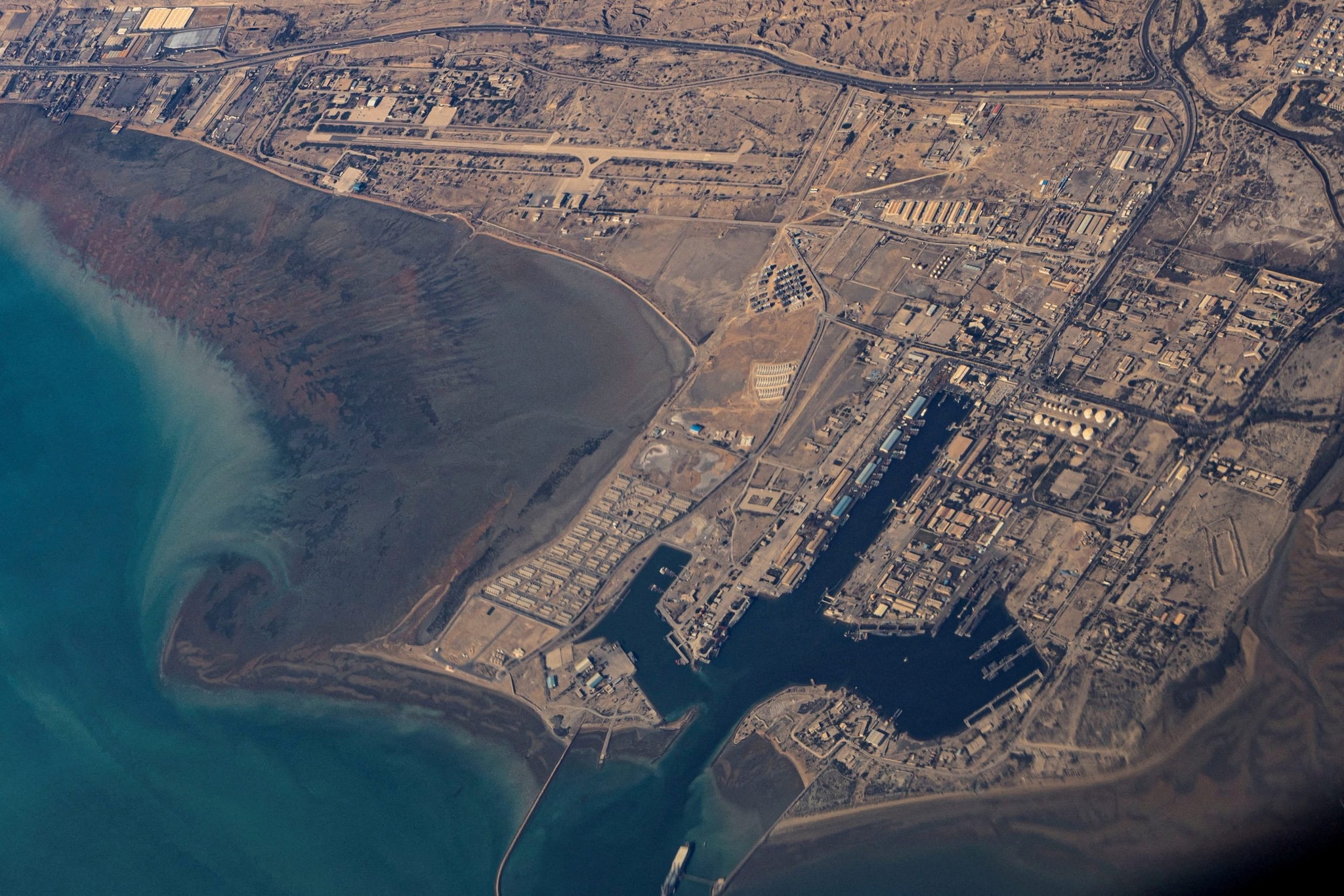
The sea is never truly quiet, but in the Strait of Hormuz, the silence feels heavy. It is a thick, salt-crusted tension that settles into the marrow of every sailor passing through this narrow ribbon of blue. On one side, the jagged, sun-bleached cliffs of Oman; on the other, the sprawling, watchful coast of Iran. Between them lies a waterway barely twenty-one miles wide at its pinch point. Through this needle’s eye flows the lifeblood of the modern world.
Captain Aris knows the weight of that water. He isn't a politician or a strategist. He is a man who worries about hull integrity, the price of low-sulfur fuel, and whether his crew will get home for the holidays. But as he stands on the bridge of a massive crude carrier, he is acutely aware that he is sailing through a geopolitical minefield.
Recent reports from the Fars news agency have signaled a shift in the gravity of these waters. Iran is now officially allowing the transit of Chinese vessels through the Strait with a level of cooperation that feels less like standard maritime protocol and more like a handshake behind closed doors. For the rest of the world, it is a headline. For men like Aris, it is a change in the wind.
The Geography of Anxiety
To understand why a few Chinese ships moving through a Persian waterway matters, you have to look at the map. It looks like a throat. If you squeeze it, the global economy gasps for air.
Roughly one-fifth of the world’s total oil consumption passes through this strait every single day. That is millions of barrels of oil, thousands of tons of liquefied natural gas, and an endless stream of consumer goods. When the Strait is "stable," the world functions. When it isn't, gas prices in Ohio spike, manufacturing in Germany slows, and the stock tickers in Tokyo turn red.
For years, the Strait has been a theater of "shadow wars." We have seen limpet mines attached to tankers in the dead of night. We have seen drones buzzing overhead like persistent, metallic insects. We have seen seizures of vessels that turn merchant sailors into accidental pawns in a game they never asked to play.
The new arrangement between Tehran and Beijing isn't just about logistics. It is about a new kind of insurance. By granting Chinese vessels a smoother, protected passage, Iran is effectively carving out a "safe lane" for its most powerful ally. It is a signal to the West that while the throat can be constricted for some, it will remain wide open for others.
A Tale of Two Tankers
Imagine two ships sitting side-by-side in the Gulf of Oman, waiting for their turn to enter the corridor.
The first is the Spirit of Rotterdam, a European-owned vessel. Its captain is checking the latest security advisories. He is worried about the Islamic Revolutionary Guard Corps (IRGC) speedboats that often swarm larger ships to "inspect" them. He knows his vessel is a target for political leverage. If a diplomatic row breaks out in Brussels or Washington, his ship might be the one "detained" for a technicality that doesn't exist.
The second ship is the Guangzhou Star. It carries the same cargo. It moves at the same speed. But as it nears the Strait, the radio chatter changes. There is no looming threat of seizure. There is no sudden detour to a port in Bandar Abbas. It moves with the invisible shield of a superpower’s blessing.
This isn't just an advantage in speed; it’s an advantage in cost. In the shipping industry, time is money, but risk is the real killer. When insurance companies look at a ship passing through Hormuz, they see a liability. If Chinese ships are perceived as "safe," their insurance premiums drop. Their delivery schedules become reliable. Their dominance in the region hardens from a trend into a permanent reality.
The disparity is jarring. It creates a tiered system of maritime rights where your safety depends on the flag flying from your mast and the diplomatic weight of the capital behind it.
The Invisible Handshake
Why would Iran do this? The answer isn't found in maritime law, but in survival.
Tehran has been suffocated by years of sanctions. Its oil exports have been hampered, its banking systems severed from the global grid. China has been the ventilator keeping the Iranian economy breathing. By buying Iranian oil—often through "dark fleet" transfers that involve turning off transponders and swapping cargo in the middle of the ocean—Beijing has provided a crucial financial lifeline.
This transit agreement is the public face of a private debt. Iran isn't just "allowing" Chinese ships through; it is prioritizing them. It is an admission that the Strait of Hormuz is no longer just an international waterway—it is a piece of strategic real estate being used to reward friends and punish enemies.
The "human element" here is often lost in the talk of barrels and billions. Consider the deckhand on a non-Chinese vessel. He isn't thinking about the "Pivot to Asia" or the nuances of the 25-year cooperation program between China and Iran. He is looking at the horizon for the white wake of a fast-attack craft. He is wondering if his ship will be the next one featured in a grainy propaganda video.
Fear is a powerful economic tool. When you make it clear that some are safe and others are not, you don't need to fire a single shot to win a war. You simply make it too expensive and too terrifying for anyone else to compete.
The Ripple Effect on the Shore
The stakes extend far beyond the salt spray. We live in a world of "just-in-time" supply chains. The components for the phone in your pocket, the medicine in your cabinet, and the fuel in your car are all part of a delicate, synchronized dance.
When a major power like China secures a proprietary lane through the world's most vital choke point, it gains more than just energy security. It gains leverage over every country that relies on that same water. If Beijing can ensure its goods move while others are stalled by "security concerns," it can dictate terms to markets across the globe.
We have spent decades believing that the "Freedom of Navigation" was a universal constant, guaranteed by international law and the presence of global navies. We assumed the oceans were a neutral commons.
That illusion is evaporating.
In its place, we are seeing the rise of "maritime feudalism." A world where sea lanes are controlled by regional powers who grant passage based on fealty and finance. It is a return to an older, more brutal way of doing business.
The Weight of the Watch
Back on the bridge, Captain Aris watches the Guangzhou Star pull ahead. He sees the Iranian patrol boats sitting idle as the Chinese vessel passes. They don't approach. They don't signal. They simply watch.
When his own ship approaches the line, the radio crackles. The voice on the other end is cold, asking for coordinates, cargo manifests, and crew nationalities. The delay is only twenty minutes, but in the heat of the Gulf, those twenty minutes feel like hours. Every second is a reminder that he is a guest in someone else’s house, and the host is currently in a very foul mood.
This is the true cost of the shift in the Strait. It is the erosion of the idea that the world’s resources belong to the world. It is the slow, grinding realization that the path to the future is being paved by those who control the narrowest gates.
The sun sets over the Strait of Hormuz, turning the water the color of bruised plums. The lights of the tankers begin to flicker on, a constellation of industry drifting through a space that has become a chessboard. The facts tell us that shipping volumes are steady and that the "transit" is being managed. But the sailors know better. They can feel the shift in the current. They know that when the gates of the world begin to swing shut for some while staying wide for others, the world itself is becoming a much smaller, much more dangerous place.
The silence on the water isn't peace. It is the sound of the world’s balance shifting, one ship at a time, under the watchful eyes of the cliffs.
:max_bytes(150000):strip_icc():focal(819x186:821x188)/Murdaugh-Family-e90854a716884d608fb6fd925e18d840.jpg)
