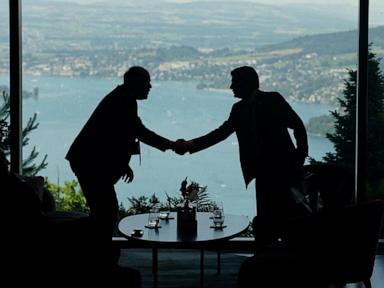
The ink on a diplomatic draft does not smell like peace. It smells like cheap office coffee, laser toner, and the distinct, metallic tang of exhaustion. For months, negotiators in windowless Viennese suites have traded verbs like poker chips, arguing over the precise weight of a clause, while six thousand miles away, a mother in Tehran watches the price of cooking oil climb another ledger line.
Geopolitics is often taught as a chess match played by giants. We stare at maps splashed with red and blue, tracking the movements of aircraft carriers and centrifuges. But statecraft is not abstract. It is a vice grip on the carotid artery of ordinary life.
The announcement that the United States and Iran have locked hands on a strict sixty-day roadmap toward a final nuclear deal is being broadcast as a triumph of bureaucratic stamina. The tickers on the news networks format it neatly into bullet points: sanctions relief timelines, uranium enrichment caps, verification protocols.
They miss the heartbeat.
To understand what a sixty-day countdown actually means, you have to leave the press briefings behind. You have to look at the people living in the margins of the mathematics.
The Cost of the Freeze
Consider a hypothetical shopkeeper named Reza. He runs a small electronics repair business off Enghelab Street. For eight years, his life has been dictated by the erratic breathing of international fiat. When a new round of economic restrictions hits, the components he needs to fix basic medical equipment or university laptops don't just become expensive; they vanish.
Reza does not think about regional hegemony. He thinks about copper wiring. He thinks about the asthma medication his daughter needs, which fluctuates in price based on the daily valuation of the rial against the dollar.
When Washington and Tehran freeze each other out, Reza’s world shrinks. The invisible walls close in.
On the other side of the ledger, consider an American logistics coordinator in Norfolk, Virginia. Let's call her Sarah. Her brother is deployed on a destroyer patrolling the tense waters of the Persian Gulf. For Sarah, the words "escalation of tensions" aren't a headline phrase. They are a cold knot in the stomach every time her phone buzzes after midnight. Every drone intercept or intercepted tanker is a potential spark that could turn her brother's deployment into a regional conflagration.
This roadmap is not just a triumph of policy. It is a temporary release of the vice.
The core of the agreed framework relies on a delicate, staggered dance. Iran commits to halting its highest-level uranium enrichment and allowing international inspectors back into facilities that have been dark to western eyes for months. In return, the United States offers targeted, incremental waivers on oil exports and frozen assets.
It is a transaction built entirely on mutual suspicion.
Optimism here is a dangerous currency. We have been on the precipice of stabilization before, only to watch the scaffolding collapse under the weight of domestic political pressures in both capitals. Hardliners in Tehran view any concession as a betrayal of the revolutionary posture; skeptics in Washington see the roadmap as a naive gamble on an untrustworthy adversary.
But cynicism is easy. It requires no imagination.
The real friction of the next two months will not happen at the high-level summits. It will happen in the grinding implementation of the details. Mechanics matter. How quickly can banking channels reopen to allow humanitarian goods through? How permanently can a centrifuge cascade be disabled without destroying the technical knowledge inside the minds of the scientists who built it?
The Sixty-Day Mirage
Time operates differently under the shadow of an ultimatum. Sixty days is an eternity in modern media cycles, yet it is a terrifyingly brief window for rewriting decades of hostility.
The architecture of this interim agreement is designed to create a momentum that neither side can easily abandon. By linking specific Iranian technical rollbacks directly to the release of specific escrow accounts, the negotiators have built a machine out of carrots and sticks.
If Iran slows its centrifuges, a portion of its frozen oil revenue is unlocked. If the money moves, the temptation to break the freeze diminishes. It is behavioral psychology masquerading as international law.
Yet, the risk of sabotage is constant. A single miscalculation in the Strait of Hormuz, an unannounced inspection dispute, or a rogue cyber-attack could shatter the glass house before the sixty days expire.
That is the terrifying truth of this moment. The peace we are chasing is incredibly fragile, held together by nothing more than the temporary alignment of exhausted self-interests.
And yet, for the shopkeeper in Tehran, those sixty days represent something that hasn't been seen in years. A pause. A moment where the cost of living might plateau rather than skyrocket. For the family in Virginia, it means the Gulf might remain quiet through the summer.
We measure the success of these deals by what doesn't happen. The missiles that aren't launched. The sanctions that aren't triggered. The lives that aren't disrupted.
The negotiators will return to their tables tomorrow, squinting at the fine print under the harsh glare of conference room lights. They will argue over commas. They will draft addendums.
Meanwhile, the rest of the world waits, watching the clock tick down from sixty, hoping that this time, the ink stays dry.