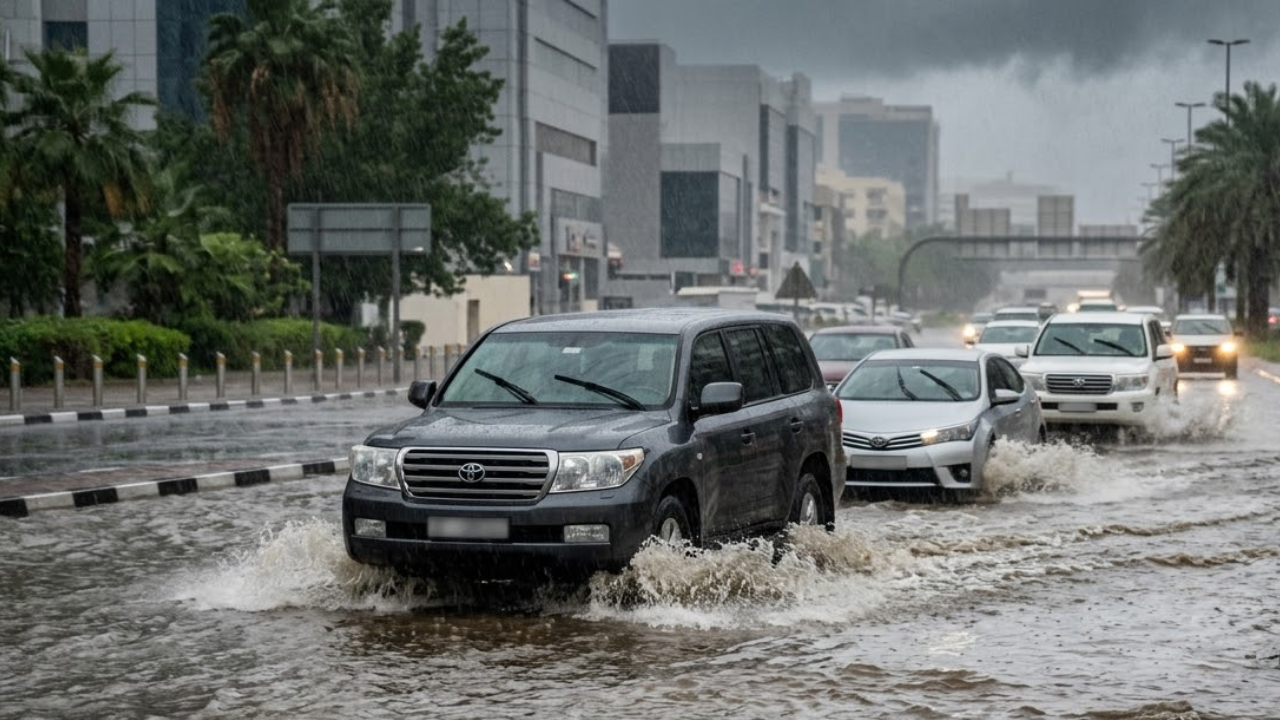
The air in Muscat usually smells of frankincense and the dry, toasted heat of the Al Hajar Mountains. It is a predictable heat. It is a heat that stays in its lane. But on a Tuesday that started like any other in March 2026, the atmosphere curdled. The sky didn't just turn gray; it turned a bruised, heavy purple, hanging so low you felt you could reach out and touch the belly of the storm.
Then the water came.
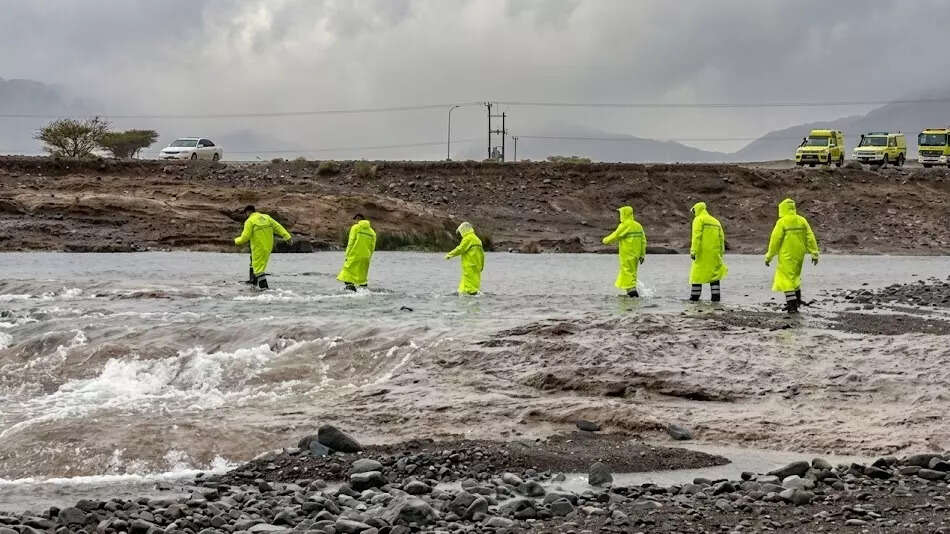
In the Sultanate of Oman, rain is often a blessing, a rare guest celebrated with poems and open palms. This was not that. This was a sky-borne invasion. Within hours, the wadis—the ancient, bone-dry riverbeds that vein the Omani landscape—transformed from dusty hiking trails into churning, chocolate-colored torrents of destruction.
Four lives are gone. That is the official tally as the search teams pick through the debris in the wake of the North Al Batinah and Muscat governorates' deluge. But a number like "four" is a cold, clinical thing. It doesn't capture the frantic grip of a father trying to hold a door against a rising tide, or the terrifying silence of a car submerged in a flash flood where a road used to be. It doesn't tell you about the rescuers wading through waist-deep sludge, their eyes stinging with salt and exhaustion, looking for signs of the missing.
The Anatomy of a Desert Deluge
To understand why water is so lethal in a desert, you have to understand the ground itself. In a forest, the earth acts like a sponge. In Oman, the sun-baked soil is often as hard as concrete. When a year’s worth of rain falls in a single afternoon, the earth doesn't drink. It recoils. The water stays on the surface, gathering speed, gathering mass, and gathering every loose stone and vehicle in its path.
Consider a hypothetical traveler named Omar. He knows these roads. He has driven the path between Sohar and Muscat a thousand times. He sees a bit of water crossing the blacktop—maybe only six inches deep. It looks like a puddle. But in a flash flood, six inches of fast-moving water can knock an adult off their feet. Two feet of it can carry away an SUV. Omar hesitates, and in that heartbeat of indecision, the wadi behind him swells. Suddenly, he isn't on a road anymore. He is in the middle of a river that didn't exist ten minutes ago.
This isn't just bad luck. It is the physics of a changing climate meeting a geography that wasn't built for it. The 2026 storms have been fueled by abnormally warm sea surface temperatures in the Arabian Sea, pumping moisture into the atmosphere like a broken steam pipe. When that moisture hits the cold front descending from the north, the result is a vertical wall of water.
The Invisible Stakes of the Search
As the Civil Defense and Ambulance Authority (CDAA) continues its grim work, the tension in the Sultanate is thick. Search and rescue isn't just about helicopters and sirens. It is a quiet, painstaking process of checking every overturned truck and every choked drainage pipe. It is about the families waiting on the edges of the cordoned-off zones, their phones clutched in trembling hands, hoping for a ringtone that never comes.
The infrastructure of a nation is being tested in real-time. Bridges that have stood for decades find their foundations gnawed at by the sheer kinetic energy of the floodwaters. Power grids flicker and die as substations are inundated. In the blink of an eye, a modern, high-tech city is forced back into a primal struggle against the elements.
But there is a human resilience here that the headlines often miss. While the storms raged, videos began to surface on social media—not just of the destruction, but of the bravery. Neighbors forming human chains to pull a stranger from a trapped vehicle. Youth groups in 4x4s heading into the mud to deliver bread and clean water to isolated pockets of the city. The tragedy is the headline, but the solidarity is the heartbeat of the story.
The Warning in the Clouds
We often treat "natural disasters" as freak occurrences, glitches in the system. But the 2026 Oman floods are part of a louder, more persistent message the planet is sending. The desert is getting wetter, and the storms are getting angrier. The traditional knowledge of the wadis, passed down through generations, is being overwritten by weather patterns that don't follow the old rules.
Authorities had issued warnings. They had told people to stay home, to avoid the low-lying areas, to respect the power of the clouds. Most listened. But for the four who didn't make it, and for those still being sought by the dive teams, the warning came too late or the water moved too fast.
The search continues because it has to. Because in a country where every citizen is viewed as part of a wider family, you do not leave anyone behind in the mud. The helicopters continue to bank over the jagged peaks of the Hajar mountains, their thermal cameras scanning the silt for a flicker of life.
The rain has stopped for now, leaving behind a landscape that looks like it was scrubbed by a giant, violent hand. The sun is out again, shining off the standing pools of water with a cruel, shimmering beauty. The smell of frankincense will return soon. But for the families of the lost, and for the rescuers with mud under their fingernails, the air will always carry the heavy, metallic scent of the day the sky broke open.
Beneath the blue, the desert is still damp, and the silence in the mountains feels less like peace and more like a breath being held.