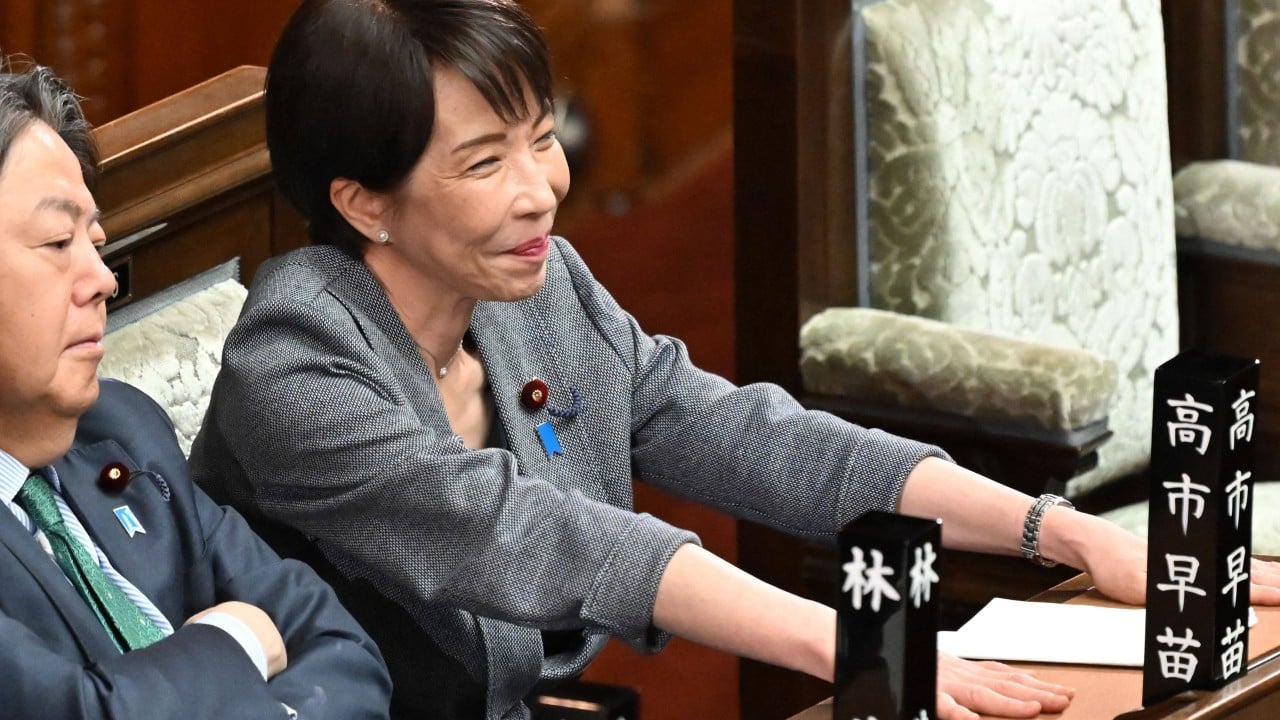
When Sanae Takaichi recently told a fellow politician they looked like they needed "more sleep," it wasn't a moment of grandmotherly concern. It was a cold, calculated exercise in power dynamics within the most rigid political hierarchy on earth. In the Diet, Japan’s parliament, exhaustion is often worn as a badge of honor, a physical manifestation of "ganbaru" or "doing one's best." By publicly highlighting a peer's fatigue, Prime Minister Takaichi wasn't just commenting on health; she was subtly questioning their fitness for the grueling pace of Japanese governance.
This interaction serves as a window into a broader shift in how leadership is performed in Tokyo. For decades, the Liberal Democratic Party (LDP) operated on a stamina-based meritocracy. The message from the Kantei—the Prime Minister's official residence—is changing. Takaichi, the first woman to lead the nation, is navigating a minefield where her every word is scrutinized for "feminine" softness or "masculine" aggression. By framing her dominance through the lens of wellness and care, she effectively disarms critics while asserting her own superior stamina.
The Weaponization of Fatigue in Japanese Politics
The culture of overwork in Japan, known as karoshi when it turns fatal, is nowhere more visible than in the halls of Nagatacho. Politicians frequently endure eighteen-hour days, fueled by cheap green tea and the constant pressure of constituent demands. When Takaichi points out a colleague's lack of sleep, she is identifying a vulnerability. In a high-stakes environment, being "tired" is synonymous with being "unprepared."
Historically, male leaders used late-night drinking sessions (nomikai) to forge bonds and make backroom deals. Takaichi, who has long stood outside these traditional circles, uses a different set of tools. Her comment reflects a shift toward a "managerial" style of leadership. She positions herself as the disciplined executive observing a faltering subordinate. It is a masterful inversion of the traditional "office lady" trope; instead of serving the tea, she is auditing the productivity of those around her.
The biological reality of sleep deprivation is well-documented, but in the Diet, it is a political variable. Chronic sleep loss impairs decision-making and emotional regulation. By making this a public talking point, the Prime Minister forces her opposition to choose between admitting weakness or doubling down on an unsustainable work ethic. It is a trap hidden in a platitude.
Breaking the Iron Triangle of Stamina
The "Iron Triangle"—the cozy relationship between bureaucrats, politicians, and big business—has always relied on physical endurance. To keep up with the bureaucracy, a politician must be able to outlast the paper-shufflers. Takaichi’s administration is under pressure to modernize this aging machinery. However, the optics of her comment suggest that while the rhetoric might be about health, the underlying metric remains performance.
Consider the data on legislative productivity. Japan’s parliament often stays in session until the early hours of the morning simply to debate minor technicalities in the budget. This is not efficiency; it is theater. Takaichi knows this theater well. Her "more sleep" comment could be interpreted as a critique of the system itself—a suggestion that the current pace is producing diminishing returns for the Japanese public.
If a leader suggests that their peers are failing due to exhaustion, they are implicitly promising that their own administration is running on a different, more sustainable fuel. Yet, there is little evidence that the Takaichi cabinet has actually reduced the workload of its ministers. Instead, the Prime Minister has maintained a blistering schedule of diplomatic tours and domestic policy rollouts. She is leading by example, which in this case, means being the last one to close their eyes.
The Gendered Double Standard of Care
A male Prime Minister telling a female subordinate she looked tired would be labeled a sexist dismissal. When Takaichi says it, it carries the weight of a "Mother of the Nation" archetype—a role she has carefully curated to appeal to conservative voters. She occupies a unique space where she can use the language of care to execute the tactics of a hawk.
This isn't just about sleep; it's about who is allowed to define what "healthy" looks like in a workspace dominated by elderly men. Many of Takaichi's peers are in their 70s and 80s. For them, sleep is a luxury they have spent decades sacrificing. To have a younger, female leader suggest they go to bed is a profound disruption of the seniority-based respect system. It suggests that their experience is being undermined by their declining physical capacity.
The Productivity Myth and the Kantei’s New Direction
The economic implications of this cultural shift are significant. Japan’s labor productivity has trailed the G7 for years. The government has tried various "Work-Style Reform" initiatives, but these rarely penetrate the top levels of leadership. If the Prime Minister is serious about a more rested Japan, it must start with the legislative calendar.
Instead, we see a focus on "resilience." This is the buzzword currently circulating in the Ministry of Economy, Trade and Industry (METI). Resilience implies an ability to bounce back, but it doesn't necessarily mean working less. It means working smarter. Takaichi’s comment fits this mold perfectly. She isn't telling her colleague to quit; she is telling them to optimize.
This optimization is part of a larger strategy to make the LDP appear modern and responsive to the needs of a shrinking workforce. If the ruling party can show it cares about the "human capital" of its own members, it can theoretically sell those same policies to a skeptical corporate sector. The reality, however, is that the pressure to perform remains absolute.
Biological Capital as Political Leverage
In the 21st century, health is the new currency of the elite. A leader who looks fit, rested, and sharp has a distinct advantage over one who appears haggard. Takaichi’s public image is one of intense discipline. By highlighting the fatigue of others, she emphasizes her own vitality.
We should look at this through the lens of "Biological Capital." In a graying society like Japan, the ability to maintain peak cognitive function is a prerequisite for power. The Prime Minister is effectively saying that she is the most biologically capable person in the room. It is a subtle form of ageism that bypasses the traditional barriers of Japanese society by framing it as a matter of public health.
Navigating the Minefield of Public Perception
The Japanese public is notoriously sensitive to "power harassment" (pawa-hara). If Takaichi’s comments are perceived as bullying, she loses her advantage. This is why the phrasing—telling someone they need "more sleep"—is so effective. It is virtually impossible to criticize someone for being concerned about another's well-being. It is the ultimate "polite" insult.
The opposition parties have struggled to find a counter-narrative. If they complain that Takaichi is being patronizing, they look defensive. If they ignore it, they allow her to set the tone for what constitutes a "capable" politician. This is the hallmark of a veteran political operator who understands that in Japan, what is unsaid is often more important than what is shouted.
The real test for Takaichi will be whether she can translate this focus on individual wellness into systemic change. Japan’s birthrate continues to plummet, and the "103,000 yen wall" for part-time workers remains a major hurdle for women entering the workforce. Sleep is a personal issue, but it is driven by systemic pressures. If the Prime Minister wants a rested nation, she needs to address the reasons why people aren't sleeping in the first place.
The Hidden Cost of the 24-Hour Government
There is a financial cost to the sleeplessness of Nagatacho. Mistaken figures in budget proposals, poorly drafted legislation, and diplomatic gaffes can often be traced back to a staff that hasn't slept in two days. The "more sleep" comment might be the most honest piece of policy advice Takaichi has given all year.
The bureaucracy is watching. For the elite civil servants at the Ministry of Finance, the Prime Minister’s words are a signal. If the boss says people need sleep, perhaps the culture of staying in the office until the last train—or beyond—might finally be under review. But don't bet on it. The LDP’s grip on power is maintained through a level of micro-management that leaves little room for REM cycles.
Reforming the Culture of the Long Shadow
True reform in Japanese politics requires moving away from the "Stamina Model" of leadership. This means shorter sessions, more digital integration, and a move away from the ritualistic "face-to-face" meetings that consume so much time. Takaichi has championed digitalization, but the physical reality of the Diet remains stubbornly analog.
Until the structures change, comments about sleep will remain nothing more than tactical barbs. The Prime Minister has proven she can play the game as well as, if not better than, the men who preceded her. She has mastered the art of the subtle put-down disguised as a helpful tip. This is not just a change in leadership; it is a change in the language of power.
The next time a politician in Tokyo is told they look tired, they shouldn't reach for a coffee. They should look at who is telling them, and ask themselves what that person stands to gain from their exhaustion. Takaichi isn't just a Prime Minister; she is an auditor of energy, and in her administration, being tired is a liability you can't afford to display.
The strategy is clear: maintain your own composure while quietly pointing out when the masks of others begin to slip. It is a high-wire act that requires nerves of steel and, ironically, very little sleep of one's own. The Kantei is now a place where concern is a weapon, and the most dangerous person in the room is the one who looks the most refreshed.
Stop checking the clock and start checking the room. In the new era of Japanese politics, the first person to yawn loses the argument. Takaichi knows this. She is waiting for the next blink.