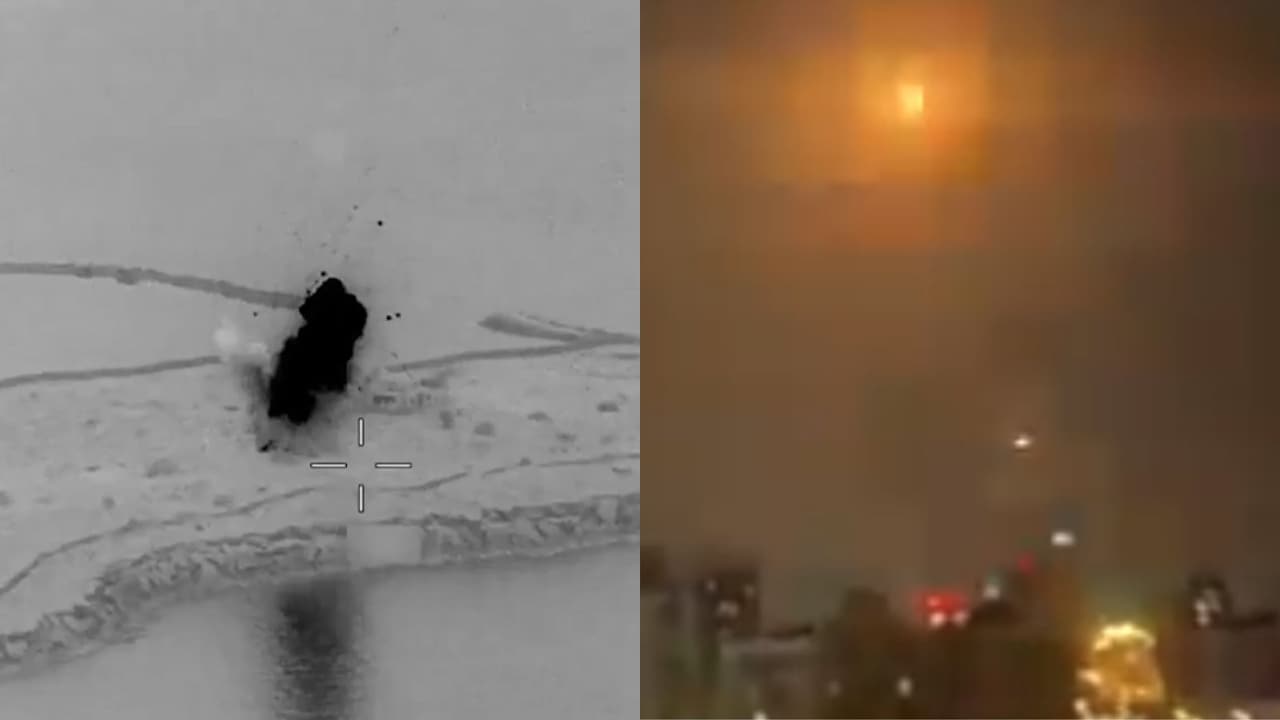
You don't need to look at a military map to understand how precarious the Middle East ceasefire is right now. Just look at the social media feeds coming out of Kuwait City and Manama. Over the weekend, the night sky across the northern and western Gulf lit up with the violent streaks of surface-to-air missiles chewing through incoming targets. Sirens blared five times overnight in Kuwait. Air raid alerts echoed across Bahrain, instructing terrified residents to drop everything and sprint to the nearest safe room.
This isn't an isolated border skirmish. It's a terrifying glimpse into what happens when a fragile truce between global superpowers snaps, and the smallest neighbors get caught in the teeth of the machinery. Recently making headlines in this space: The Anatomy of Sovereign Leverage: Decoupling Hungary's Capital Allocation from EU Migration Constraints.
The immediate catalyst was a fresh round of tit-for-tat violence between Washington and Tehran. The U.S. military shot down four Iranian attack drones over the Strait of Hormuz and followed up by pounding Iranian coastal surveillance radar sites in Goruk and on Qeshm Island. Iran's response wasn't a direct hit on the American homeland, obviously. They took aim at America's backyard outposts, raining down seven ballistic missiles and a swarm of attack drones on Kuwait and Bahrain.
If you're wondering why these specific nations are taking the brunt of the fire, it comes down to a harsh geographic and political reality. They host the muscle. Further insights into this topic are covered by Associated Press.
The Cost of Hosting America's Military Might
Kuwait and Bahrain aren't random targets. They houses the infrastructure that keeps the U.S. footprint firmly planted in the Persian Gulf.
The Islamic Revolutionary Guard Corps (IRGC) isn't even hiding its strategy. Iranian state media openly confirmed they targeted the Ali Al Salem Air Base in Kuwait, a massive hub for American air power, alongside the U.S. Navy's Fifth Fleet headquarters in Bahrain.
- Ali Al Salem Air Base (Kuwait): Operates as a vital staging area and logistical heart for U.S. forces in the region.
- U.S. Fifth Fleet Headquarters (Bahrain): Oversees more than 2.5 million square miles of maritime space, including the crucial chokepoints of the Strait of Hormuz and the Red Sea.
Iran's Foreign Ministry basically told its neighbors that if you let the Americans use your airspace, your dirt, and your territorial waters to bottleneck or attack Iran, you lose the right to complain about good neighborliness. It's a brutal, mafia-style ultimatum.
[Iran Coastline]
       │ (Drone & Missile Launches)
       ▼
 ┌───────────┐       ┌───────────┐
 │  KUWAIT   │       │  BAHRAIN  │
 │ (Ali Al   │       │  (U.S. 5th│
 │  Salem)   │       │   Fleet)  │
 └───────────┘       └───────────┘
The Pentagon insists that six of the seven ballistic missiles were swatted out of the air by air defense systems, and the seventh completely missed its mark. They claim no American personnel were harmed and that Iranian reports of smoking ruins at the Fifth Fleet base are pure fiction. But even when interceptions work, the physics of war don't just disappear. What goes up must come down.
Shrapnel, Fire, and Shattered Hubs
When an advanced air defense system hits a ballistic missile or a loitering drone, the threat doesn't vanish into thin air. It turns into hundreds of pounds of jagged, burning metal raining down on whatever happens to be underneath.
The Kuwait Fire Force had to scramble to extinguish multiple blazes across the country directly caused by falling missile debris. Just days prior, a similar barrage saw Iranian drones smash through a passenger terminal at Kuwait International Airport, killing an Indian national, wounding 63 people, and forcing emergency surgeries on seven patients in critical condition. The airport had to freeze flights, tearing apart a phased reopening plan that had been underway since previous attacks in February.
Videos filmed by motorists on the ground capture the sheer chaos. You see the flash of a Patriot missile battery lighting up the horizon, followed by the dull roar of an explosion, and then the screech of tires as drivers panic. One clip shows a car crashing entirely because the driver was blinded or distracted by the aerial firefight happening directly above the highway.
The diplomatic fallout has been fast and furious. Kuwait's Foreign Ministry called the weekend strikes a "serious escalation" and a "flagrant violation of sovereignty," explicitly stating they reserve the right to defend their homeland. Bahrain issued similar blistering condemnations.
Regional heavyweights are getting nervous too. Saudi Arabia and Jordan immediately released statements backing their smaller Gulf Cooperation Council (GCC) brothers. Anwar Gargash, a senior adviser to the UAE presidency, took to social media to urge a collective defense framework, arguing that no Gulf state should have to stand alone when the security of the entire block is so deeply intertwined.
The Illusion of a Ceasefire
The scary part is that all of this is happening under the umbrella of an official ceasefire that was hammered out back in April. If you listen to political leaders, everything is fine. Donald Trump told reporters just hours before the latest missile salvos that the situation with Iran seemed to be "going quite well" and dismissed rumors of a total diplomatic breakdown as fake news.
But talk is cheap when the sirens are wailing. The truth is that negotiations to extend the truce are completely deadlocked.
The core issue? Mistrust and definitions. Iran is furious about ongoing Israeli military actions against Hezbollah in Lebanon, arguing that the ceasefire should cover all fronts across West Asia. Meanwhile, the U.S. is trying to maintain a maritime blockade to stop Iranian oil tankers, like the Botswana-flagged vessel Lexie, which U.S. aircraft recently disabled by putting a Hellfire missile directly into its engine room after it ignored warnings near the Strait of Hormuz.
Tehran wants tangible, verifiable diplomatic actions, not verbal promises. Until they get them, they seem perfectly content using asymmetric drone swarms and missile strikes to make life miserable for America's regional allies.
How Gulf Residents Can Navigate the New Normal
If you are living or working in the Gulf region right now, you can't control the geopolitical chess match between Washington and Tehran. But you can control your immediate readiness. Stop treating air raid sirens like a drill or an annoying background noise.
First, know your shelter layout. Whether you're in a high-rise apartment in Manama or a compound in Kuwait City, identify an interior room with minimal windows—ideally a reinforced basement or a central hallway.
Second, secure your information channels. When the sky turns red, social media fills up with old footage, rumor-mongering, and literal state-sponsored disinformation designed to cause panic. Turn off the speculative live streams. Keep your notifications locked to official state media like the Kuna news agency or direct alerts from local civil defense forces.
Lastly, understand the risk of falling debris. If sirens active while you are driving, do not stop in the middle of the highway to film the sky for your feeds. Pull over safely under hard cover like an overpass or concrete parking structure. The biggest immediate threat to civilians in these scenarios isn't a direct tactical hit from an Iranian warhead—it's the kinetic debris of a successful military interception dropping through your roof. Keep your head down, stay informed, and don't let the political theater blind you to the very real physical dangers on the ground.