The iron key turned in the lock with a sound like a dry bone snapping.
In a small, concrete-walled room on the northern fringes of Kabul, a woman named Zarmina stood before a cracked mirror. She was adjusting a heavy, dark veil that smelled faintly of damp storage and old dust. Her hands, which had spent a decade turning the pages of literature textbooks and grading university essays, were shaking. The tremor was not a failure of resolve. It was the cold, biological reaction of a body that understood exactly what was waiting for it outside the door.
Underneath the thick layers of dark polyester required by the decrees, she had pinned a small square of cardboard against her ribs. On it, written in hurried, uneven strokes of black marker, were three words: Work, Bread, Freedom.
To carry that piece of cardboard across the city in 2026 was to carry a death warrant. It was a physical manifestation of a thought that had been outlawed. For years, the international community had watched the systematic erasure of women from the public life of Afghanistan through a sequence of official edicts. First, the teenage girls were barred from their desks. Then the university gates were chained shut. Then the parks, the beauty salons, and the offices of international aid groups were cleared of female presence. Finally, the very sound of a woman’s voice outside the walls of her home was declared a violation of public morality.
The city had been transformed into a sprawling house where the windows were being painted black one by one.
The Geography of Fear
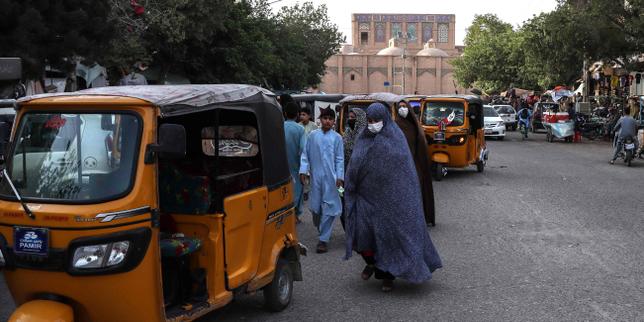
Walking down a Kabul street today is an exercise in hyper-vigilance. Every intersection is a potential trap. Every glance from a passing white pickup truck can trigger an interrogation that ends in a detention center. Zarmina knew the rhythms of the armed guards stationed at the major roundabout near the old market. She knew that by two in the afternoon, the fierce summer heat usually made them sluggish, their attention drifting toward the small pockets of shade beneath the concrete blast walls.
That was the window.
Before the transition, Zarmina had spent her mornings in a sunlit classroom at the university, discussing the meters of Persian poetry or analyzing the prose of twentieth-century novelists. She remembered the sound of the campus—the overlapping chatter of hundreds of young women, the rustle of notebooks, the steam rising from cups of green tea in the cafeteria. That world did not disappear overnight; it was dismantled brick by brick, decree by decree. When the first announcement came restricting female students, it felt like a temporary aberration, a political chip to be bartered in some distant international negotiation. But weeks turned into months, and months into years, until the absence became the law.
She met three other women near the rusted shutters of a pharmacy that had long since run out of medicine. They did not look at each other. They did not exchange greetings or offer the customary touches of the hand that used to define Afghan hospitality. A nod so slight it was almost invisible was all they dared. They walked in pairs, keeping twenty paces between them, their plastic sandals slapping softly against the dust-choked asphalt.
Standard news dispatches from distant bureaus describe what followed as a "rare protest." The phrase is technically accurate but emotionally empty. It implies a calculation. It suggests that these women woke up and decided to engage in political dissent the way a citizen in Paris or Washington might march against a tax hike. It ignores the crushing claustrophobia that drives a human being to the edge of an abyss. When every avenue of economic survival is blocked, standing in the street is not a political strategy. It is the final, desperate gasp of someone who is being suffocated.
Consider the reality of their isolation. The domestic economy has been hollowed out by sanctions and isolation. For households where women were the primary breadwinners—widows of the thirty-year conflict, daughters of fathers disabled by landmines—the ban on female employment was not an ideological shift. It was a sentence of slow starvation. The cardboard sign pressed against Zarmina’s ribs was not an abstract political demand. It was a literal cry for food.
The Network of Whispers
The gathering had not been organized on public apps or through digital networks, which are monitored by intelligence services with sophisticated tracking tools. Instead, it was built through the ancient methodology of whispers. A word passed while waiting in line at the communal bread oven. A scrap of paper slipped into a palm during a brief encounter at a fruit stall.
The fear of informants is a constant, heavy weight. In a city where poverty has reached historic depths, the temptation to trade information for a family’s monthly ration of flour is a real and terrifying force. Neighbors look at neighbors with suspicion. Even within extended families, walls have ears. To trust another person with the knowledge of a protest is to place your life, and the lives of your children, entirely in their hands.
Yet, they came.
By two-fifteen, the intersection that had once been a vibrant hub of student life and bookstalls had become a gray throat of concrete and heat. The four women became eight. Then twelve. Then twenty. They drew together into a tight knot, their black garments blending into a single, dense mass against the sun-bleached walls of the buildings.
The transition from absolute silence to sound was terrifying. It began as a low murmur, a collective clearing of throats that had been forced into muteness for years. Then, the cardboard signs emerged from beneath the veils.
"We want our rights!" The first shout broke the afternoon heat like a cracked whip. "Open the schools! Give us our bread!"
The sound of women’s voices in the open air felt illicit, almost shocking, even to those who were shouting. For a few fleeting moments, the street belonged to them. Pedestrians froze in their tracks. Shopkeepers watched through the narrow slits of half-closed steel shutters, their faces pale with anxiety. Passersby looked away immediately, caught between a deep, aching sympathy and the sheer terror of being associated with the gathering.
The Four-Second Fracturing
To understand the stakes of those moments, one must understand how power operates when it is uncoupled from accountability. There are no municipal permits for assembly here. There are no riot shields, tear gas canisters, or water cannons designed to disperse crowds with minimum lethality. There is only the absolute authority of the men with the rifles, and the absolute vulnerability of those on foot.
The trucks arrived within seven minutes. The sound of their engines—heavy, un-tuned diesels—reverberated against the low brick facades of the street before the vehicles even came into view. Three white pickups mounted with heavy weapons swerved around the corner, their tires screeching on the grit.
The men who tumbled from the back of the trucks did not issue dispersal orders. They did not brandish batons or shields. They carried Kalashnikovs and heavy wooden staves cut from orchard trees.
What happened next occurred with a speed that defied the senses, leaving behind only fragmented, sensory impressions: the sharp smell of unwashed wool and gun oil, the high-pitched shriek of a girl no older than eighteen, the dull, wet thud of wood striking human bone.
Zarmina saw the first officer fire a burst into the air. The crack of the rifle was deafening in the narrow street, bouncing off the concrete walls and echoing like a firecracker inside an iron barrel. The crowd splintered instantly. Women scrambled for the side alleys, their long, heavy garments tripping them as they tried to run over the broken pavement.
But two did not run fast enough. Or perhaps, in that final fraction of a second, they chose not to.
A woman whose name would later be omitted from the brief, sanitized international news reports—let us call her Maryam, to give the statistic a face—was struck by a burst of automatic fire as she turned toward an alley. She collapsed without a sound, her dark clothing absorbing the blood so quickly that it appeared only as a deepening, heavy shadow on the fabric. A second woman, turning back to pull Maryam toward the relative safety of a doorway, was shot through the center of her chest.
Two lives ended in the span of four seconds.
The street emptied as quickly as it had filled. The cardboard signs lay scattered in the dirt, trampled by heavy leather boots. One of them, stained with grease from the road, read simply: Our children are hungry.
The men from the trucks did not call for medical assistance. They cleaned the street in their own way, throwing the bodies into the back of a pickup before speeding off toward an unknown precinct house, leaving only a dark, wet patch on the dust to dry under the fierce sun.
The Illusion of the Number Two
The dry news reports that filtered out through international agencies hours later were brief. They used words like "reportedly" and "unconfirmed sources." They noted that two women had been killed. They added a standard paragraph of context about the political shifts of 2021 and the subsequent restrictions on human rights.
But a statistic is a wall. It protects the reader from the impact of the truth. It allows the mind to categorize the event as just another tragedy in a faraway place where tragedy is the default setting. It reduces an existential struggle to a minor data point in a global ledger of misery.
The reality is that those two deaths represent the tip of a massive, submerged iceberg of suffering. Behind every woman who steps onto that asphalt is a network of terrified relatives, a household of dependent children, and a lifetime of stolen potential. The woman who died in the dirt was someone's daughter, perhaps someone's mother, certainly someone who remembered what it felt like to walk into a classroom without the fear of arrest.
The psychological toll of this existence is something that cannot be measured by international observers or quantified in human rights indices. It is found in the quiet corners of Kabul homes, where young girls spend their days staring out of windows at a world they are no longer permitted to touch. It is found in the soaring rates of depression and domestic suicide among young women—a quiet, domestic epidemic that leaves no visible scars on the city’s infrastructure but hollows out the nation from the inside.
The Mechanics of Absolute Silence
Why does a regime with total military control, thousands of armed fighters, and an extensive intelligence apparatus fear twenty women with cardboard signs?
The answer lies in the fragile nature of absolute control. An authoritarian system relies entirely on the illusion of total consensus. It requires every individual to believe that they are completely alone in their dissent. The moment two people look at each other in public and realize they share the same anger, the illusion begins to fray. The moment twenty women stand in a public square and shout what everyone else is thinking in the privacy of their homes, the regime’s authority is revealed for what it truly is: a system built entirely on the management of fear.
Therefore, the response must be disproportionate. The dissent must be crushed immediately, visibly, and with lethal force. The two women who were shot were not killed by accident or through a misunderstanding; they were killed to send an unmistakable message to every other woman looking out of a window or sitting in a dark kitchen: This is the price of your voice.
But the mechanics of fear have a saturation point. When a person has lost her career, her education, her right to move, and her ability to provide for her family, the threat of death loses some of its leverage. When you have nothing left to lose, the risk of the street becomes identical to the risk of the home.
The Residual Ink
By five o'clock that evening, the intersection was completely silent again. The shopkeepers had cautiously reopened their doors, their eyes fixed on the ground as they swept the day’s dust and the remnants of torn cardboard into the gutters. The white pickup trucks were gone, back to their garrisons or their roadblocks.
Zarmina had made it back to her room. She sat on the woven rug, her back pressed against the cold concrete wall, her breathing still shallow and ragged. Her veil was torn at the shoulder where she had snagged it on a piece of corrugated iron while fleeing the gunfire.
Her hands were still shaking.
She looked down at her fingers, gray with the dust of the street where her friends had died. She did not cry. In Kabul, tears are a luxury that requires a sense of safety, an assurance that the crying will eventually stop and that someone will care that you are weeping. Instead, she reached into the pocket of her dress and pulled out a small, stubby pencil.
On a clean scrap of paper torn from an old notebook, she began to write the three words again.
The ink was faint, the pencil lead dull, but the letters were clear. The city outside her door was growing dark, falling into the forced, sullen silence of another curfew. The world outside would read the brief headline about the two dead, swipe to the next piece of news, and continue with their evening. But in the dark room, the pencil kept moving against the paper, a tiny, scratchy sound that the thickest walls in Kabul could not entirely contain.