Imagine leaving your home in Thailand or Vietnam to build a better life in a foreign country, only to have that life cut short in a factory accident. Then, instead of a dignified send-off, your body sits in a cold morgue because your family back home can’t afford the $10,000 it costs to bring you back. That's been the grim reality for thousands of migrant workers in South Korea for decades.
Honestly, it’s a national embarrassment that a country so dependent on foreign labor has treated those same laborers as disposable parts in a machine. But things are finally shifting. A new pilot program led by the Korea Workers’ Compensation and Welfare Service (K-Comwel) is fundamentally changing how the state handles the deaths of "non-citizens" who die on the job.
Moving beyond the lonely departure
For years, South Korean industrial accident insurance was a relic of 1964. It covered medical bills and some compensation, but it completely ignored the logistical nightmare of international death. If you were a migrant worker, the system didn’t care how your remains got home. It didn't care if your mother could afford a plane ticket to say goodbye.
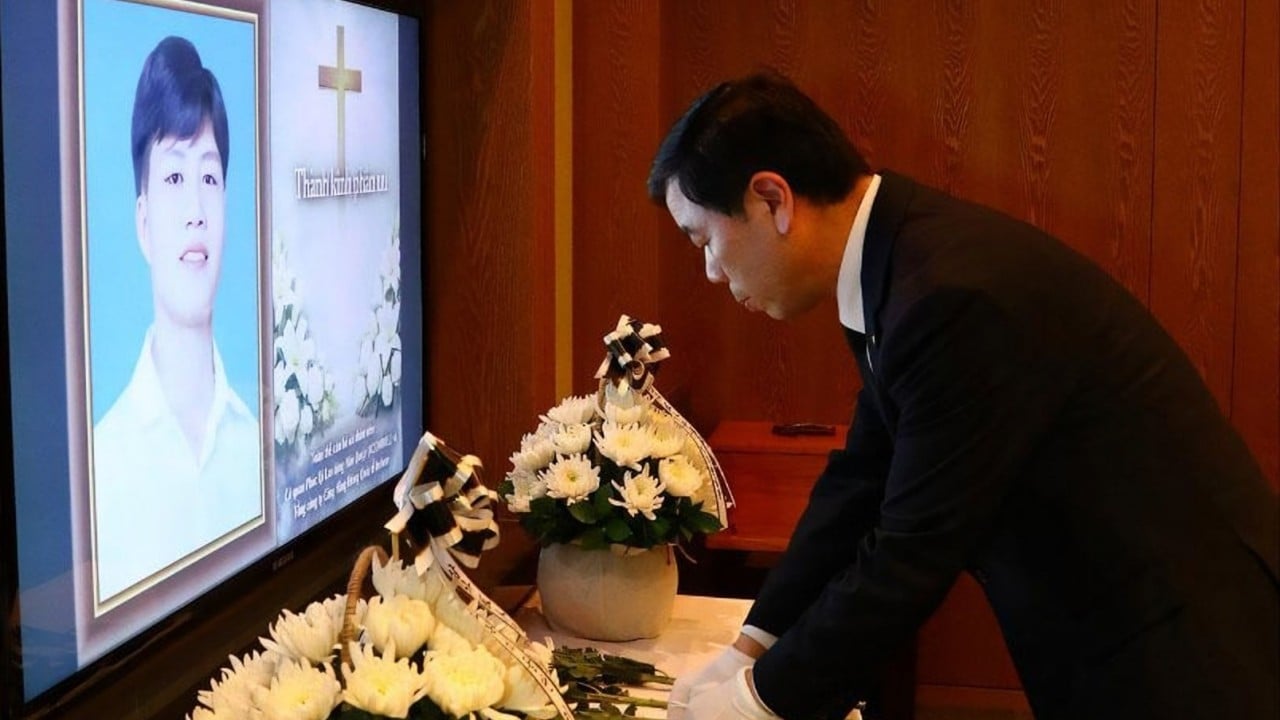
K-Comwel President Park Jong-kil recently highlighted a pilot scheme that finally puts a human face on these tragedies. Instead of a sterile administrative process, the agency is now setting up dedicated memorial spaces. We’re talking about actual mourning rooms with photos and flowers—places where friends and coworkers can show respect. It sounds like a small thing, but in a culture that prizes "Jeong" (a deep emotional bond), denying someone a funeral is the ultimate form of erasure.
The high cost of being essential
Migrant workers make up about 3.5% of South Korea's workforce, but they account for more than 10% of workplace deaths. Let that sink in. You’re three times more likely to die on the job if you weren’t born in Korea.
Most of these deaths happen in "3D" jobs—dirty, dangerous, and difficult. We're talking about the battery plants in Hwaseong or the construction sites in central Seoul. When the Aricell lithium battery factory went up in flames in 2024, killing 23 people, 17 of them were Chinese nationals. The sheer scale of that horror forced a mirror in front of Korean society.
The new reforms being pushed by K-Comwel include:
- Airfare support for bereaved families to fly to Korea.
- Accommodation costs so families aren't sleeping in hospital hallways.
- Repatriation expenses to ensure remains aren't abandoned due to poverty.
- Cremation and transport fees handled by the state.
No such thing as an illegal human at a funeral
One of the most radical shifts in this new policy is the stance on undocumented workers. In the past, being "illegal" meant living in the shadows and dying there, too. Employers would often use a worker's status as a threat to avoid paying compensation.
Park Jong-kil has been blunt about this: status doesn't matter. If you’re injured or killed while working in a Korean factory, you’re covered. He recently pointed to a case in Hwaseong where a Thai worker was severely injured by a high-pressure air gun used by his employer. Even though the worker was undocumented, K-Comwel stepped in to ensure full industrial accident compensation.
This isn't just about being nice. It’s a calculated move to stabilize the labor market. South Korea is facing a demographic collapse. Without these workers, the manufacturing and agricultural sectors would literally stop. Treating them with dignity is a matter of national survival.
Language as a safety tool
It’s hard to stay safe when your boss calls you "Number 4" or just "Hey." A new government-backed campaign is pushing factory owners to use workers' actual names. It sounds basic, right? But linguistic respect is often the first step toward physical safety.
When you’re a person with a name, you're someone worth protecting. When you're just a "migrant," you're a statistic. The Ministry of Employment and Labor has started distributing safety helmets engraved with individual names in cities like Ulsan and Gwangju. Better communication on the floor leads to fewer accidents. It’s that simple.
What needs to happen next
The pilot program is a start, but it’s not the finish line. To truly fix this, these "pilot" benefits need to be encoded into the law so they aren't subject to the whims of whoever is in office.
If you're an employer, stop viewing safety as a cost. It’s an investment. If you're a citizen, demand that the people building your apartments and packing your food are treated like the "precious members of society" the government claims they are.
Next steps for policy and industry:
- Institutionalize the funeral support pilot program into the Industrial Accident Compensation Insurance Act by the end of 2026.
- Mandate multilingual safety training that actually accounts for cultural differences, not just translated manuals.
- Increase the number of labor inspectors specifically trained to spot "safety gaps" in migrant-heavy workplaces.
The way a country treats its most vulnerable tells you everything you need to know about its future. South Korea is finally deciding that a worker's life—and their goodbye—is worth more than the cost of a flight home.