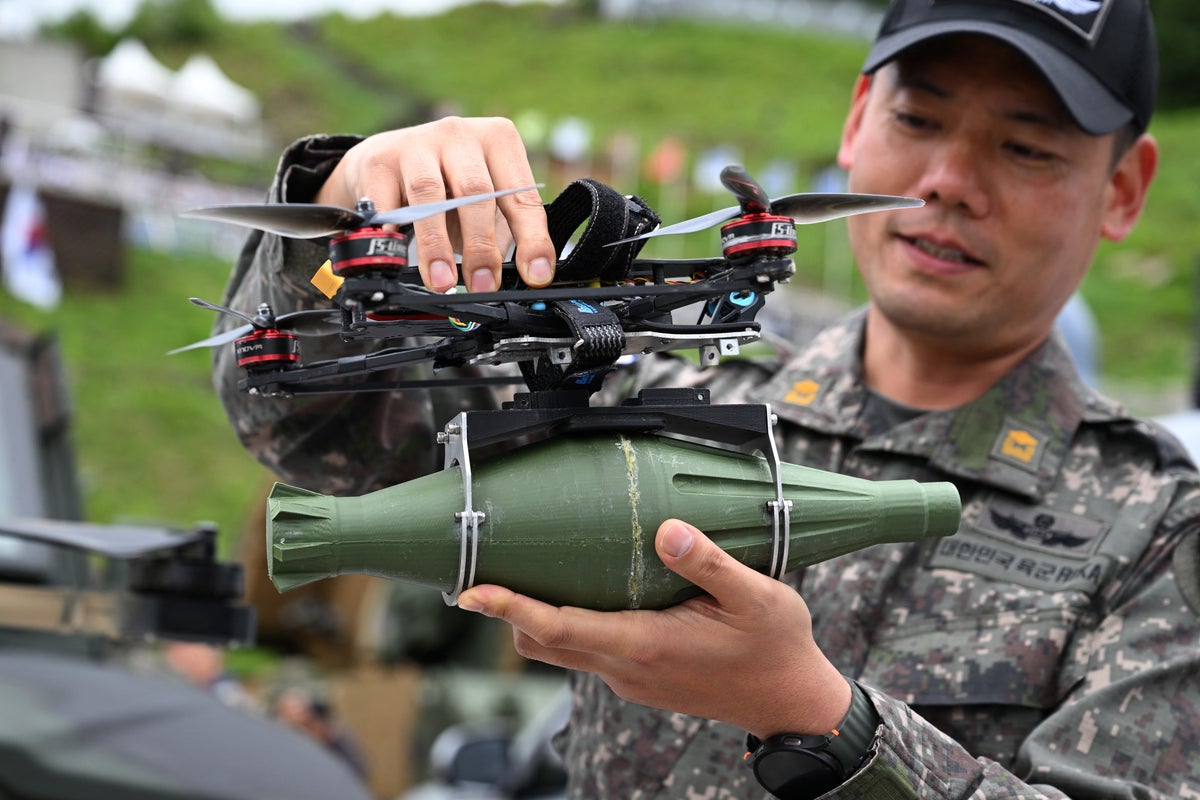
South Korea wants every single soldier to carry an unmanned aircraft. Defence Minister Ahn Gyu-back literally told a briefing that drones should become a "second personal weapon," used just as naturally as a standard rifle. The Defence Ministry just announced a massive overhaul to train 500,000 personnel across the army, navy, air force, and marines. They are trying to build an entire army of drone warriors.
The shift isn't just about matching modern tech. It's a direct response to a massive security headache and a brutal demographic reality. South Korea is running out of people, and North Korea is getting much better at asymmetric warfare. But turning half a million conscripts into skilled pilots is a lot harder than buying a bunch of quadcopters. The strategy sounds great on paper, but the execution faces massive real-world hurdles.
The Push for 500,000 Drone Warriors
Seoul plans to distribute tens of thousands of unmanned systems directly to frontline units. The numbers are big. The military will introduce roughly 11,000 drones in 2026 alone for training, aiming for 60,000 systems across all branches by 2029. On top of that, they want more than 20,000 low-cost, expendable combat drones and AI-based swarm systems by 2030.
They are also fast-tracking a homegrown long-range loitering munition called the K-Lucas. It is a massive departure from how the military used to think. Drones used to belong to specialized reconnaissance units. Now, they are trying to put them in the hands of ordinary conscripts.
The military is also decentralizing control. Instead of relying on a centralized drone operations command—which was recently dismantled following political fallout from a controversial 2024 martial law bid by former President Yoon Suk Yeol—individual services will handle their own surveillance and strike missions.
Why the Military Strategy Changed
Two factors are driving this sudden urgency. First, look at what happened in 2022. Five small North Korean drones slipped into South Korean airspace. One even made it into the no-fly zone right above the presidential office in Seoul. The South Korean military scrambled jets, sent up attack helicopters, and fired around 100 shots. They failed to bring down a single one. It was deeply embarrassing.
Since then, the threat has worsened. North Korea has deepened its military partnership with Russia. Pyongyang has sent thousands of troops to fight alongside Russian forces in Ukraine. Those North Korean soldiers are getting direct, real-world exposure to drone warfare at scale. They are bringing back actual battlefield data and electronic warfare tactics that would normally take years to learn.
The second factor is demographics. South Korea has the lowest birth rate in the world. The country simply doesn't have enough young men to maintain its traditional troop levels. Automation isn't a luxury anymore; it's survival. If you don't have the boots on the ground, you have to multiply the power of the soldiers you do have.
The Supply Chain Problem Nobody Wants to Talk About
Here is where the plan hits a massive wall. If you want to build 60,000 drones and train 500,000 people, you need a massive, reliable manufacturing base. Right now, South Korea doesn't have it for small commercial systems.
Invest Korea data shows that nearly nine out of ten small commercial drones in the country come from overseas. Most of them come from China. Defence Minister Ahn stated that Seoul will rely on 100% domestically produced components to avoid security vulnerabilities. Replacing Chinese components entirely is incredibly difficult. Component tracking, software validation, and local manufacturing take time. Local contractors like Hanwha and LIG Nex1 are working on advanced loitering munitions, but those are multi-year weapon programs. They don't help a conscript who needs a cheap quadcopter to practice with next month.
The Training Nightmare
Buying the hardware is the easy part. Training the people is the real challenge. South Korean conscripts serve short mandatory terms, often lasting less than two years. If it takes several months to teach a soldier how to operate a drone effectively, navigate electronic jamming, and coordinate with artillery, a massive chunk of their service is already gone.
Look at Ukraine. Organizations like Victory Drones have trained over 150,000 people, but that is fueled by raw, wartime volunteer energy. Civilians build, fix, and teach out of necessity. You cannot easily buy or replicate that social momentum through peacetime military budget lines.
Furthermore, South Korea's drone regulations are split across multiple civilian entities. The Ministry of Land, Infrastructure, and Transport handles aviation rules. The Ministry of Science and ICT manages frequency allocation. The Ministry of Trade, Industry, and Energy leads industrial policy. Navigating this bureaucratic maze during peacetime slows down the deployment of new tech to the front lines.
To fix this, the Defence Ministry says it will revamp procurement rules to fast-track civilian tech. They want the military to act as a primary buyer to force a domestic drone industry into existence.
What Needs to Happen Next
If you are tracking East Asian security or defense tech, don't just watch the announcement numbers. Watch the actual supply chain shifting.
True integration means watching whether the National Assembly successfully clears the bureaucratic red tape between civilian tech ministries and the military. Keep an eye on how quickly local factories can scale up component production without relying on Beijing. If South Korea cannot build its own cheap electric motors, flight controllers, and batteries at scale, the goal of half a million drone warriors will remain an expensive ambition rather than a functional defense force.
To see how these systems look in active deployment, you can watch this report on how South Korea bets on personal drones to reshape its frontline defense strategy. The footage shows the exact types of small, multi-purpose tactical systems the military wants to distribute to individual soldiers.


