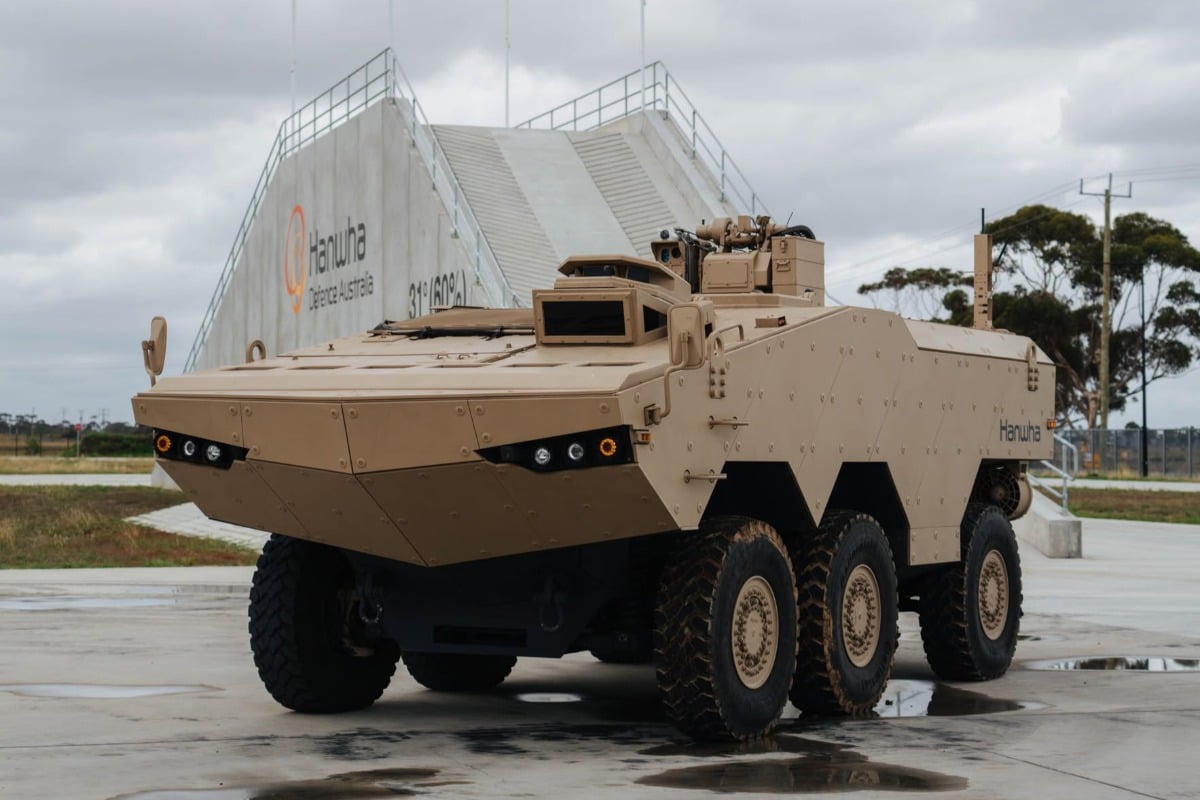
Wall Street loves a good boilerplate narrative, and right now, the lazy consensus is drooling over South Korea’s defense export boom. When S&P Global Ratings slapped a shiny A- investment grade rating on Hanwha Aerospace, the financial press predictably parroted the company line. The narrative seemed airtight: a massive backlog of foreign orders, a rapid delivery timeline that puts Western defense primes to shame, and a cozy geopolitical alignment with a NATO-adjacent world desperate for artillery shells and tanks.
It sounds flawless on a spreadsheet. It is also dangerously short-sighted.
Credit rating agencies are historically terrible at pricing in structural, long-term geopolitical risks because their models are backward-looking. They see cash flow from a Polish K9 howitzer order and mark it as a win. What they miss—and what anyone who has actually managed capital in complex supply chains knows—is that Hanwha Aerospace isn't just a defense company. It is a highly leveraged geopolitical proxy operating on razor-thin structural margins, tethered to a domestic market that could freeze overnight.
An A- rating implies stability. The reality of the defense sector in 2026 is anything but stable.
The Margin Illusion: Why Backlogs Lie
The financial media loves to highlight Hanwha’s multi-billion-dollar backlog. Look deeper. Defense procurement is a brutal, low-margin game when you are trying to underbid established American and European giants like Lockheed Martin or Rheinmetall. South Korea won its recent European and Middle Eastern contracts on two main pillars: speed and price.
To deliver weapon systems at lightning speed while undercutting European competitors, Hanwha relies heavily on massive economies of scale driven by South Korea’s active conscript military requirements. The domestic defense budget effectively subsidizes the export business.
But export contracts are increasingly tied to localized manufacturing agreements.
Take the Polish deals. A massive chunk of the long-term value relies on shifting production to Polish soil (the K9PL variant). When a defense prime transfers technology and sets up factories abroad, two things happen:
- Local labor, regulatory, and supply chain inefficiencies erode the initial margin projections.
- The domestic factory utilization in South Korea faces a steep drop once the initial "flyaway" units are delivered.
I have watched industrial conglomerates burn through hundreds of millions of dollars trying to replicate tight, domestic manufacturing ecosystems in foreign jurisdictions. It rarely goes as smoothly as the investor relations deck promises. By certifying Hanwha at an A- level, S&P is betting that Hanwha can maintain premium margins while executing unprecedented technology transfers across multiple continents simultaneously. That is an incredibly risky assumption.
The Single-Point Failure of the Korean Peninsula
Let us address the elephant in the room that rating agencies treat as a footnote: the geographic concentration of production.
Imagine a scenario where regional tensions in East Asia escalate slightly—not even a hot conflict, just heightened alerts that require the Republic of Korea Armed Forces to freeze all domestic military inventory. Hanwha’s primary manufacturing hubs, like Changwon Plant 3, are completely bound to the security posture of the Korean Peninsula.
If Seoul decides it needs to retain raw materials, components, or finished ammunition for domestic stockpiles during a period of regional friction, foreign export timelines evaporate.
[Global Defense Procurement Risk Profile]
Western Primes: Distributed global manufacturing footprint -> Higher cost, lower systemic risk
Hanwha Aerospace: Ultra-centralized domestic production -> Lower cost, extreme single-point vulnerability
Western defense primes build redundancy into their footprints. A strike or a supply bottleneck in one facility can be offset by another in a different hemisphere. Hanwha’s hyper-efficiency is achieved through centralization. In defense logistics, efficiency is the enemy of resilience. When you optimize entirely for speed and cost-efficiency, you eliminate the buffer required to survive a black swan event.
The Technology Trap: Who Really Owns the IP?
The core question nobody asking about South Korea's defense surge is simple: How much of this tech is truly sovereign?
For decades, South Korea's defense industrial base grew via joint ventures, licensed production, and offset agreements with American firms. Elements of their advanced systems still rely on critical components, subsystems, or foundational patents held by Western entities.
This creates a hidden regulatory bottleneck. If Hanwha wants to sell a high-end system to a country that falls out of favor with Washington's foreign policy apparatus, the United States can effectively veto the sale by withholding export licenses for underlying technologies or components.
We saw early iterations of this friction when Germany hesitated to allow re-exports of components during the initial rush to supply Ukraine. Relying on an A- rating that assumes unfettered global market access is naive when your entire product portfolio is subject to the geopolitical whims of foreign allies who are also, conveniently, your biggest economic competitors in the global arms trade.
Dismantling the Premium Defense Myth
Retail investors and institutional funds look at defense as a defensive, counter-cyclical asset class. They assume that because global threat vectors are rising, defense stocks are a guaranteed win.
They are asking the wrong question. The question isn't "Will countries buy more weapons?" The question is "Can these companies convert revenue into free cash flow before inflation and raw material shortages eat them alive?"
The cost of specialized steel, titanium, electronic components, and skilled engineering labor has skyrocketed globally over the past three years. Fixed-price defense contracts signed two or three years ago are turning into financial albatrosses for companies worldwide. If Hanwha locked in massive, long-term export agreements at aggressive price points to steal market share from European rivals, those contracts are now highly vulnerable to margin compression.
The downside to calling out this risk is obvious: if global instability remains localized and supply chains stay fluid, Hanwha will likely ride this wave of revenue for another twenty-four months. But investing based on a best-case scenario is a gambler's strategy, not an institutional framework.
S&P’s A- rating is an authorization to look at the scoreboard instead of the playing field. The scoreboard says Hanwha is winning. The playing field shows a hyper-centralized, low-margin exporter balancing on a geopolitical tightrope, pulling forward future demand while transferring its core intellectual property to foreign buyers.
Stop buying the clean corporate narrative. In the defense business, the brightest stars burn through their capital buffers first.


