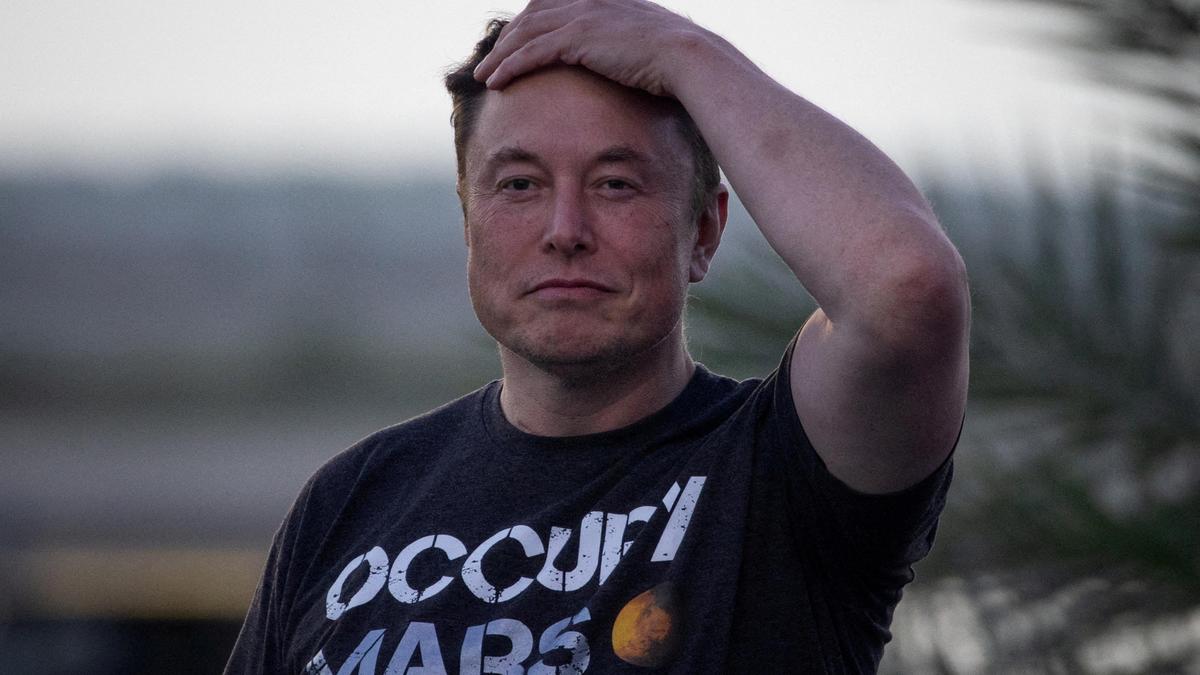
Elon Musk is preparing to take SpaceX public at a staggering $1.75 trillion valuation, but the offering comes with a heavy price for future shareholders: they will have virtually no say in how the company is run. Confidential IPO filings reveal a dual-class share structure designed to cement Musk’s absolute authority, granting Class B insiders ten votes for every single vote held by public Class A investors. While the market anticipates a record-breaking $75 billion capital raise this June, the fine print of the prospectus ensures that the man who owns the rockets also owns the rules.
This maneuver is not merely a founder protecting his vision; it is a calculated insulation against the very market forces that usually discipline public companies. By securing approximately 79% of the voting power despite owning only 42% of the equity, Musk is effectively turning the world’s most valuable aerospace firm into a private fiefdom funded by public billions.
The Iron Grip on Starbase
The proposed governance framework goes beyond simple voting math. The filing includes restrictive provisions that channel all shareholder disputes into binding arbitration and strictly limit where legal actions can be initiated. This creates a legal fortress around the nine-member board, which Musk chairs while simultaneously serving as CEO and Chief Technical Officer. In a public market context, this level of consolidated power is almost unprecedented.
Unlike the 2010 Tesla IPO, where Musk lacked these super-voting protections and eventually saw his control diluted to roughly 13%, SpaceX is being structured as a lesson learned. Musk has spent the last year publicly lamenting his lack of a 25% voting block at Tesla, even threatening to build AI products elsewhere if his demands weren't met. At SpaceX, that vulnerability is being engineered out of existence before the first ticker symbol ever flashes on a screen.
The Financial Divergence
Wall Street analysts are currently wrestling with a balance sheet that looks more like a high-stakes gamble than a mature industrial powerhouse. In 2025, SpaceX generated a massive $18.5 billion in revenue, yet it posted a net loss of nearly $5 billion. The culprit is not the rocket business, but a frantic expansion into artificial intelligence and semiconductor manufacturing.
The acquisition of xAI in early 2026 fundamentally shifted the company’s risk profile. While the Starlink satellite division remains the sole profit engine—bringing in $11.4 billion in revenue with a 63% adjusted EBITDA margin—those gains are being swallowed by the "Orbital AI Data Center" initiative. This plan involves launching massive clusters of AI-optimized hardware into low Earth orbit, a project that drove capital expenditures to a dizzying $20.7 billion last year.
- Starlink: $11.4 billion revenue (Profitable)
- Launch Services: $4.1 billion revenue (Negative cash flow)
- AI & Silicon: $3 billion revenue (High burn rate)
Investors are being asked to buy into a "Sum of All Parts" narrative where the dominance of the Falcon 9 and the promise of Starship justify a 100x revenue multiple. It is a valuation logic that defies traditional financial analysis, relying instead on the "Musk Premium"—the belief that one man can defy the laws of economics as consistently as he defies the laws of gravity.
The Retail Trap
In a move that some critics call "shameless," SpaceX plans to allocate up to 30% of its IPO shares to retail investors. While framed as a democratic gesture to allow the public to share in the "Mars mission," it also serves a strategic purpose. Retail investors are historically less likely to engage in activist voting or legal challenges compared to institutional hedge funds. By flooding the cap table with fragmented individual holders, Musk further dilutes the possibility of a unified shareholder revolt.
The reality of the private secondary markets suggests that much of the early value has already been captured. Institutional backers like Fidelity and Sequoia Capital have seen the valuation climb from $350 billion to over $1 trillion in just a few years. For the average investor buying in at the June listing, they are not entering on the ground floor; they are providing the liquidity for insiders to de-risk their positions.
Silicon Ambitions in the Texas Scrub
The shift toward vertical integration is most visible in Bastrop, Texas, where SpaceX is racing to complete a million-square-foot chip packaging facility. The goal is to bring the production of radio-frequency chips for Starlink and AI hardware in-house, reducing reliance on external vendors like TSMC or Intel. This is a capital-intensive pivot that adds a layer of manufacturing risk most aerospace companies would never touch.
If the "Orbital AI" bet pays off, SpaceX could become the backbone of a global, space-based neural network. If it fails, the company will be left with a crushing debt load and a fleet of expensive, depreciating hardware. Because of the voting structure, shareholders will be forced to ride that rollercoaster to the very end, with no way to grab the controls if the descent turns into a dive.
The June IPO will be a referendum on founder-led governance. Investors are not just buying a piece of a rocket company; they are signing a contract of total surrender to the strategic whims of Elon Musk. In the vacuum of space, no one can hear you scream, and in the SpaceX boardroom, no one will be able to outvote the chair.
Place your bets accordingly.