Wall Street is succumbing to a familiar euphoria as SpaceX lists on the Nasdaq under the ticker SPCX, securing a record-shattering $1.77 trillion valuation in the largest initial public offering in global history. The $75 billion capital raise was heavily oversubscribed, drawing $150 billion in institutional demand and a massive 30% allocation carved out for retail investors. While mainstream narratives paint this moment as a triumphant return of the tech bull market, a deeper forensic look at the deal structure reveals something far more volatile. This historic listing is not a standard corporate transition to public governance; it is a highly engineered, low-float vehicle designed to maximize valuation while completely stripping public shareholders of corporate control.
Investors are stepping into a structural minefield disguised as a generational investment opportunity.
The Illusion of Public Ownership
Standard initial public offerings typically introduce a meaningful portion of a company's equity to the open market, eventually forcing corporate leadership to align with shareholder interests. SpaceX is discarding that playbook. By offering 555.6 million shares at a fixed price of $135 each, the company is floating only about 4% of its total equity.
This tiny public free float creates an artificial scarcity that will almost certainly drive erratic price discovery on day one. When a massive wave of capital chases a minute fraction of available shares, standard valuation models break down. Compounding this structural tightrope is the fact that existing private shareholders face a strict 180-day lockup period, meaning no organic supply of shares will arrive to stabilize the market if trading turns frantic.
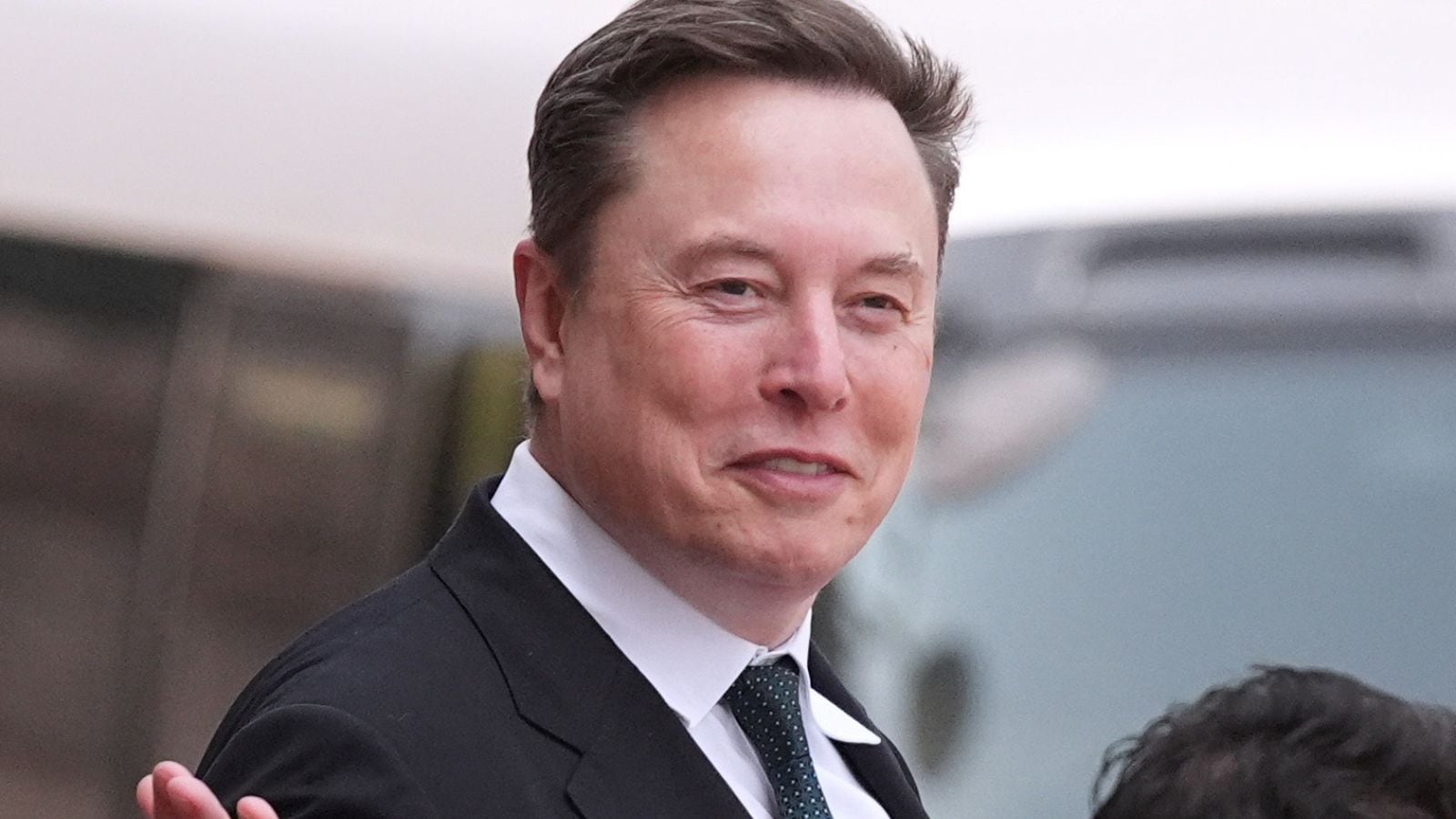
More striking than the small float is the total lack of governance offered to new buyers. Elon Musk is retaining an estimated 80% to 85% of the voting rights within the company. Public investors are effectively providing billions in cheap capital without acquiring any say in how that capital is deployed. In traditional corporate finance, a dual-class share structure with such extreme concentration of power serves as a red flag for institutional asset managers. Here, institutional books were closed early due to overwhelming demand, proving that the fear of missing out has thoroughly overridden traditional risk management.
Index Rebalancing and Hidden Passive Risk
The structural mechanics of this listing are already distorting the broader capital markets. Historically, newly public companies were subject to strict seasoning rules, forced to trade for months or even a year before gaining entry into major stock benchmarks. The sheer scale of SpaceX has forced index providers to rewrite their rules on the fly.
- Nasdaq-100: Overhauled its framework to allow top-40 ranked companies by market capitalization to skip the standard seasoning period, clearing the way for SpaceX to join the index in just 15 trading days.
- FTSE Russell: Implemented fast-track rules allowing mega-cap offerings to qualify for benchmark inclusion within five trading days.
- S&P 500: Stood firm, refusing to alter its eligibility criteria, meaning SpaceX will be excluded from the world's most tracked index for the foreseeable future due to its dual-class structure and financial viability screens.
This divergence across index providers creates an invisible trap for passive investors. Millions of retail savers holding Nasdaq-tracking index funds or target-date retirement portfolios will automatically absorb billions of dollars of SpaceX stock within weeks. They will become exposed to the extreme volatility of a 4% free float and an unprofitable parent company without making a conscious investment choice.
The Financial Reality Behind the Starlink and xAI Narrative
The corporate entity going public today is not just a rocket manufacturer. It is a sprawling conglomerate that includes the Starlink satellite broadband network, the core launch business, and the newly absorbed artificial intelligence startup xAI, which was merged into SpaceX in February 2026.
To justify a $1.77 trillion valuation, early bulls point to Starlink, which reported 10.3 million subscribers in the first quarter of 2026, generating $3.26 billion in revenue. The combined entity brought in $18.67 billion for the full year 2025, marking a 33% increase year-on-year.
SpaceX Financial Performance Overview
+--------------------------+---------------------+
| Financial Metric         | Fiscal Year 2025    |
+--------------------------+---------------------+
| Total Revenue            | $18.67 Billion      |
| Revenue Growth (YoY)     | 33%                 |
| Net Income / Loss        | -$4.94 Billion      |
| IPO Valuation Target     | $1.77 Trillion      |
+--------------------------+---------------------+
The underlying financials, however, show a company swinging wildly away from profitability. SpaceX posted a massive net loss of $4.94 billion in 2025, a stark reversal from the $791 million profit recorded in 2024. The capital expenditure required to maintain the Starlink constellation, finish the Starship development program, and build out the massive, energy-intensive methane-gas data centers for xAI’s Grok language model is burning through cash at an unprecedented rate.
Independent analysts, including those at Morningstar, have pegged the fair fundamental value of the business closer to $780 billion. Paying a premium that values the company at nearly 100 times its price-to-earnings equivalent requires a level of faith rarely seen outside of speculative bubbles. The market is pricing SpaceX as an agile software platform while its actual operations require billions of dollars in heavy industrial hardware and constant capital reinvestment just to keep satellites from falling out of orbit.
A Trillionaire Referendum
Ultimately, this IPO serves less as an investment in aerospace infrastructure and more as a pure speculative bet on a single individual. The listing is structured to provide the necessary liquidity to pursue Mars colonization and deep-space infrastructure, objectives explicitly laid out in the investor prospectus. If the market opening validates this $1.77 trillion valuation, it will simultaneously lift Elon Musk's personal net worth past the trillion-dollar threshold for the first time in history.
This reality introduces a singular point of failure that public markets are poorly equipped to price. The long-term upside baked into a $1.77 trillion market cap assumes decades of uninterrupted execution under a singular vision. If leadership changes, or if the distraction of managing multiple mega-cap corporations simultaneously leads to an operational stumble, public shareholders possess zero governance levers to correct the course. They are simply along for the ride, locked into an experimental model of public equity where the founder holds all the power, the index funds hold the bag, and the public market is treated as a private treasury.