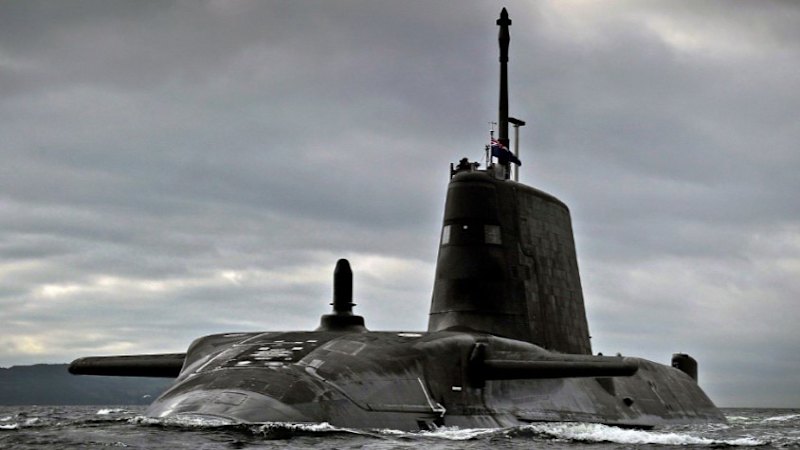
The air inside a submarine isn’t just oxygen and nitrogen. It is a pressurized cocktail of recycled breath, machine oil, and the constant, low-frequency hum of a nuclear reactor that never sleeps. For the sailors who live there, the hull is more than a vessel. It is the only thing standing between them and the crushing, indifferent weight of the Pacific.
When the UK, the US, and Australia announced the Aukus pact, the promise was a shield forged in the deep. We were told of a tri-lateral masterstroke that would redefine the balance of power in the Indo-Pacific. But go behind the polished podiums of Westminster and the glittering harbors of Sydney, and a different story emerges. It is a story of aging infrastructure, a hemorrhaging workforce, and a logistical mountain that we are currently trying to climb while wearing lead boots.
A recent UK parliamentary inquiry has pulled back the curtain. The report doesn’t just suggest delays; it paints a picture of a project vibrating with the kind of structural instability that precedes a collapse.
The Ghost in the Dockyard
Consider a welder in Barrow-in-Furness. Let’s call him Arthur. Arthur is sixty-two. He has spent four decades bending steel to his will, his eyes scarred by the ultraviolet glare of a thousand arcs. He knows the specific geometry of a nuclear pressure vessel like the back of his hand. He is also one of the last of his kind.
The inquiry warns that the UK’s submarine enterprise is facing a catastrophic skills shortage. It isn't just about finding people who can code or navigate; it’s about the tactile, grimy expertise required to build a machine that can survive hundreds of meters below the surface. When Arthur retires, that knowledge doesn't always transfer to a PDF or a training manual. It simply vanishes.
Without a massive, immediate infusion of new blood, the plan to build the new SSN-Aukus fleet isn't just ambitious. It’s a fantasy. We are attempting to build the most complex machines on the planet with a workforce that is shrinking by the day. The inquiry found that the Ministry of Defence is currently "struggling to fill thousands of roles" across the nuclear sector.
Money can buy steel. It cannot buy forty years of experience.
The Weight of Ancient Infrastructure
The problem isn't just who is building the boats, but where they are building them. The shipyards of the United Kingdom are historic, which is a polite way of saying they are old. Some of the facilities tasked with maintaining the current Vanguard-class fleet and birthing the next generation are decades past their prime.
Imagine trying to service a Formula 1 car in a garage built for a Model T.
The inquiry highlights "significant concerns" regarding the condition of the infrastructure at Devonport and Barrow. We are seeing a bottleneck effect. If one dock is out of commission because of a crumbling sea wall or an ancient crane failure, the entire timeline shifts. And in the world of nuclear procurement, a shift isn't measured in weeks. It is measured in years. And billions of pounds.
The current fleet is staying at sea longer than ever intended because the replacement cycle is stuttering. Submarines are being pushed to their absolute limits. When a boat stays submerged for months past its scheduled return, the psychological toll on the crew is immense. The mechanical toll is even worse. We are cannibalizing the safety margins of today to pay for the delays of tomorrow.
The Trilateral Tightrope
Then there is the Australian factor. For the first time, the UK and US are handing over the "crown jewels" of their military technology: nuclear propulsion. It is a gesture of profound trust, but it is also a logistical nightmare.
Australia has no domestic nuclear industry. They are starting from zero. They need to build the docks, train the technicians, and create a regulatory framework for nuclear safety in a country that has historically been allergic to the atom. The UK is expected to provide the "tutor" role, but as the inquiry points out, the UK is barely keeping its own head above water.
The risk is a "contagion of failure." If the UK cannot get its own production line for the Dreadnought and Astute classes in order, it cannot hope to support the Australian endeavor. We are three runners in a relay race where every participant is currently nursing a hamstring injury, yet we are sprinting toward a finish line that keeps moving further away.
The Invisible Price Tag
The numbers involved in Aukus are so large they become abstract. Hundreds of billions. It sounds like play money until you realize where it comes from and what it buys. Or what it doesn't buy.
The inquiry warns that the "affordability gap" is widening. Inflation in the defense sector is a different beast than the inflation you see at the grocery store. A specific grade of specialized alloy or a bespoke sensor array can triple in price overnight. When the budget for a submarine program blows out, it doesn't just mean fewer submarines. It means fewer schools, fewer nurses, and a hollowed-out conventional military.
We are gambling the long-term solvency of the Ministry of Defence on a project that has "shortcomings and failures" written into its current DNA.
The stakes are not merely financial. They are existential. If Aukus fails, it isn't just a botched contract. It is the collapse of a geopolitical strategy. It is the admission that the West can no longer build the things it needs to defend itself.
The Silence of the Deep
There is a specific kind of silence when a submarine dives. The surface noise—the waves, the wind, the chatter of the radio—fades away. You are left with the sounds of the ship itself. The groan of the hull. The click of a valve. The breathing of your shipmates.
In that silence, you have to believe in the integrity of the machine. You have to believe that the people who designed it, the people who welded it, and the government that commissioned it did their jobs without cutting corners. You have to believe the steel will hold.
But the inquiry’s warning is clear: the steel is under too much pressure before it even hits the water. We are asking for a miracle of engineering and diplomacy while ignoring the rot in the foundations. If we continue to ignore the warnings of those who actually inspect the docks and balance the books, we aren't just building a fleet.
We are building a monument to our own overreach.
The ocean is a harsh judge. It does not care about press releases or trilateral agreements. It only cares about the integrity of the hull. And right now, the blueprints are looking dangerously thin.