The media loves a convenient villain. For decades, the narrative surrounding Ebola virus disease (EVD) has been lazily pinned on the fruit bat. The story is always the same: a "spillover event" occurs when a human interacts with a bat or eats "bushmeat," and suddenly, a village is under quarantine. It is a neat, linear, and fundamentally flawed explanation that ignores the actual mechanics of viral transmission and the human-engineered environments that make these outbreaks possible.
Blaming the bat is the easy way out. It’s the "lazy consensus" of global health reporting. If we can blame a winged mammal, we don't have to talk about the industrial destruction of the African rainforest or the catastrophic failure of international monitoring systems.
The Myth of the Accidental Spillover
The common argument suggests that Ebola is a freak accident of nature. In reality, Ebola is an ecological feedback loop. Researchers like those at the CGIAR or the World Agroforestry Centre have long observed that EVD outbreaks don't happen in untouched, "wild" jungles. They happen in "fragmented" landscapes.
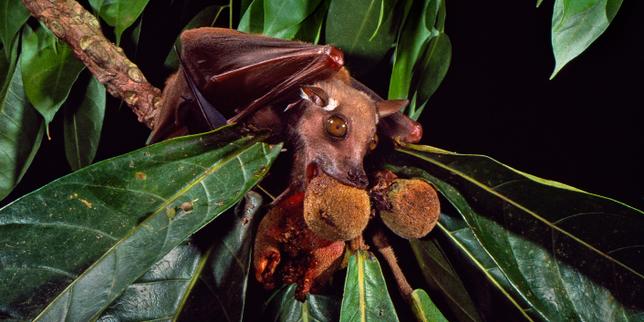
When we talk about Zaire ebolavirus, we are talking about a pathogen that survives in the shadows. The bat—specifically species like Hypsignathus monstrosus—is not an active hunter seeking humans. It is a reservoir. The virus lives there in a state of evolutionary truce. The "spillover" isn't a result of the bat moving toward us; it’s a result of us forcing the bat into a corner.
Data from the 2014-2016 West African epidemic showed a startling correlation: outbreaks were significantly more likely to occur in areas where forest loss had peaked two years prior. We aren't catching Ebola because we’re "unlucky." We’re catching it because we are creating "hot zones" through rapid, unplanned land conversion.
Why the Bushmeat Argument is a Distraction
Every time an outbreak hits, the first thing "experts" do is tell people to stop eating bushmeat. This is a classic example of addressing the symptom while the patient dies of the cause.
Focusing on the consumption of meat misses the structural reality:
- The Scale Problem: Millions of people in Central and West Africa rely on wild protein. If bushmeat were the primary driver, we wouldn't see sporadic outbreaks; we would see a permanent, rolling pandemic.
- The Transmission Reality: Most primary cases (Patient Zero) aren't hunters. They are often children playing near trees or farmers clearing land.
- The Poverty Trap: Telling a subsistence farmer to stop eating the only available protein without providing an alternative isn't health policy; it's a PR stunt for Western audiences.
The real danger isn't the guy with the snare; it’s the multinational logging firm. When a forest is sliced into pieces, the "edge effect" increases. This creates a high-traffic interface where humans and stressed, immune-compromised wildlife are packed into the same square meter. That is where the virus jumps.
The PCR Fetish vs. The Logistics Reality
The global health community is obsessed with high-tech diagnostic tools. We see millions poured into rapid PCR testing and experimental therapeutics like Inmazeb or Ebanga. While these are scientific marvels, they arrive too late.
I have seen international NGOs spend more on the business class flights of their consultants than on the basic cold-chain infrastructure required to keep a vaccine stable in a 40°C jungle. We are trying to fight a 21st-century virus with a 19th-century supply chain.
We don't need more "awareness" campaigns. We need:
- Distributed Lab Capacity: Stop flying samples to Geneva or Atlanta. If the diagnosis doesn't happen within six miles of the fever, the transmission chain is already ten people long.
- Ecological Surveillance: We should be monitoring forest density via satellite imagery to predict outbreaks before they happen. If a specific corridor of the Guinean forest loses 15% of its canopy, that’s a red alert.
The Evolution of the Virus is Not the Problem
Scientists love to debate the mutation rate of the Filoviridae family. They want to know if the virus is becoming "more airborne" or "more lethal." This is academic masturbation.
The virus doesn't need to evolve to kill us; our social structures are doing the work for it. Ebola’s $R_0$ (basic reproduction number) is actually quite low—usually between 1.5 and 2.5. Compared to Measles (12-18) or even the later variants of COVID-19, Ebola is a sluggish traveler.
The reason it spreads is not viral efficiency; it is distrust.
When a team in HAZMAT suits rolls into a village where the government hasn't provided clean water or electricity for fifty years, the villagers don't see "saviors." They see the people who are there to take their bodies and bury them in bleach-soaked bags, defying centuries of funeral traditions.
The World Health Organization (WHO) learned this the hard way in the North Kivu outbreak. You cannot sanitize a culture into submission. If the community doesn't own the response, the response will fail, regardless of how many monoclonal antibodies you bring to the table.
The Bio-Security Theater
We spend billions on bio-containment labs (BSL-4) and national stockpiles in the Global North. This is bio-security theater. It’s designed to make people in London and New York feel safe while the fire burns in the basement.
The most effective bio-security measure on the planet isn't a lab; it’s a well-paid, well-equipped local nurse in a rural clinic in the DRC. If that nurse has gloves, clean needles, and a reliable way to communicate with a central hub, the outbreak ends at Patient Zero.
Instead, we wait for the "international emergency" declaration. By then, the virus has already hitched a ride on a motorbike, a bus, and potentially a plane.
Stop Sanitizing the Narrative
We need to stop talking about Ebola as a "natural disaster." It is an industrial byproduct. It is the cost of cheap timber, expensive minerals (like the cobalt in your phone), and the systematic underfunding of African public health.
If you want to stop Ebola, stop obsessing over bats. Start looking at the land-use permits. Start looking at the sovereign debt that prevents nations from building their own pharmaceutical plants.
The bat is just a tenant in a house we are burning down. Don't be surprised when it tries to escape through the front door.
Identify the real vector. It isn't the animal; it's the interface.
Stop looking for a "cure" in a vial while you're ignored the "cause" in the landscape.
The next big one won't be because a bat bit a child. It will be because we decided that a few more hectares of cleared land was worth the risk of a hemispheric meltdown.
The virus isn't the enemy. Our arrogance is.