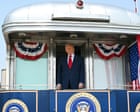
The media is having a collective meltdown over a congressional report claiming Donald Trump "hijacked" America’s 250th anniversary. Critics are weeping over the death of a "nonpartisan celebration." They are horrified that the official bipartisan America250 commission was shoved aside for a flashier, unapologetically corporate, highly politicized entity called Freedom 250.
They call it a theater of the absurd. They call it a hostile takeover.
They are entirely wrong. More importantly, they completely misunderstand how national identity is built, bought, and sold.
The lazy consensus dominating the current commentary is built on a fairy tale. It presumes that milestones like a semiquincentennial belong in a quiet museum, curated by academic committees and celebrated through polite, universally agreed-upon civic lectures.
That is not how history works. It is certainly not how America works.
National anniversaries have never been nonpartisan lovefests. They are battlegrounds for political dominance, massive corporate branding exercises, and raw spectacles of power. What the critics are actually mourning is not the sanctity of the republic; they are mourning their own loss of control over the narrative.
The Myth of the Pure National Birthday
Let’s dismantle the premise that previous anniversaries were pure, unifying moments of historical reflection.
Look back at the Bicentennial in 1976. The idealized memory is one of tall ships, fireworks, and shared purpose. The reality was a commercial free-for-all and a highly calculated political backdrop. Gerald Ford, facing a brutal election challenge from Jimmy Carter, used the Bicentennial relentlessly to project an image of stability and healing after Waterloo and Nixon's resignation. Corporate America slapped Bicentennial branding on everything from soda cans to pickup trucks.
Go back further to the 1876 Centennial Exposition in Philadelphia. It was a massive advertisement for American industrial capitalism, explicitly designed to project northern economic dominance after the Civil War. It excluded Black Americans almost entirely from its celebration of progress, despite the recent passage of the Reconstruction Amendments.
National milestones are always shaped by the faction holding the keys to the White House. To pretend that a committee-driven, risk-averse "America250" would have delivered a neutral, objective reflection on American history is laughable.
Had the opposition party controlled this anniversary, the celebration would have shifted entirely to a different political frequency. It would have focused heavily on systemic flaws, historical reckonings, and institutional critiques. That narrative is just as ideological, just as calculated, and just as partisan. Trump simply replaced a lecture with a stadium show.
The Mechanics of the Spectacle
The outrage machine is currently fixated on the specific mechanics of Freedom 250. Critics point to UFC cage matches on the White House South Lawn, massive fireworks displays, and commercial sponsorship tiers ranging from $500,000 to $10 million as evidence of corruption.
Let's look at this through a cold marketing lens.
Civic engagement committees love to produce white papers, local historical walking tours, and high-minded educational brochures. Do you know who consumes those? The people who already agree with them. It is an insular loop that fails to capture mass public attention.
A UFC fight at the White House might offend the sensibilities of a traditionalist historian, but it commands eyeballs. A massive, record-breaking fireworks display on the National Mall draws millions. Political movements are built on energy, visibility, and cultural capture.
By commercializing the event and pulling in massive corporate backers like major defense contractors and financial exchanges, Freedom 250 bypassed the gridlocked congressional appropriations process. The report complains that $100 million in federal funds flowed to politicized entities. In the grand scheme of federal spending, that is pocket change for a year-long national marketing campaign.
I have watched corporate entities dump tens of millions into sterile public-private partnerships that yield absolutely zero cultural footprint. They do it to check a box. Freedom 250 offered something corporations actually want to buy: high-stakes visibility and direct alignment with raw executive power. It is transactional, yes. But pretending that American infrastructure wasn't built on transactional political access is historical revisionism of the highest order.
Dismantling the Flawed Premise
The central question people are asking is: How do we protect national celebrations from partisan exploitation?
The question itself is flawed. You cannot protect a political event from politics.
The presidency is an inherently political office. The individual occupying it is the head of state and the leader of a political party. Expecting a president to hand over a massive, globally televised milestone to an independent committee of bureaucrats and academics is unrealistic. It ignores the fundamental nature of political survival and legacy building.
The real debate isn't about whether the anniversary is partisan; it's about which brand of partisanship wins the day.
- The Bureaucratic Model: Prioritizes consensus, inclusion, historical self-reflection, and institutional trust. It risks becoming boring, academic, and ignored by the vast majority of the population.
- The Populist Model: Prioritizes spectacle, nationalism, commercial partnership, and raw entertainment value. It risks alienating the cultural elite, polarizing the electorate, and simplifying complex history into a digestible mythos.
Trump chose the populist model because it works for his base and fits his skill set. It transforms a historical date into a rolling, year-long campaign asset.
Is there a downside? Absolutely. The blatant injection of partisan programming and historical oversimplification alienates a massive portion of the country. It turns what could be a broad-based celebration into a high-walled fortress for one specific political tribe. If you do not subscribe to that specific worldview, you are locked out of the party.
But let's not pretend the alternative would have been an oasis of unity. In a deeply polarized nation, a "nonpartisan" celebration is a statistical impossibility. Any narrative chosen would be viewed as an attack by the opposing side.
The Reality of Cultural Capture
Stop looking at the 250th anniversary as a ruined civics lesson. Start looking at it for what it actually is: a masterclass in narrative capture.
While critics write scathing reports that will be read exclusively by people who already agree with them, the machinery of Freedom 250 is executing a highly coordinated cultural rollout. They are leveraging the basic human desire for entertainment, pride, and spectacle. They understand that the average citizen remembers a massive airshow and a record-breaking fireworks display far longer than they remember a carefully worded statement on institutional harmony.
The battle for the American story has always been vicious. The side that wins is not the side with the most historically accurate footnotes. It is the side that throws the bigger party, builds the higher monument, and commands the loudest microphone.
Complaining that a politician is acting like a politician during a national milestone is an exercise in futility. The takeover wasn't a failure of the system; it was a predictable demonstration of how power operates when it encounters a vacuum left by institutional timidity.
How Trump is making the US's 250th anniversary about himself provides an analytical breakdown of how this anniversary was transformed from a traditional, consensus-driven civic event into a highly personalized political vehicle.