Big Tech is gaslighting the American education system, and school districts are cutting massive checks to help them do it.
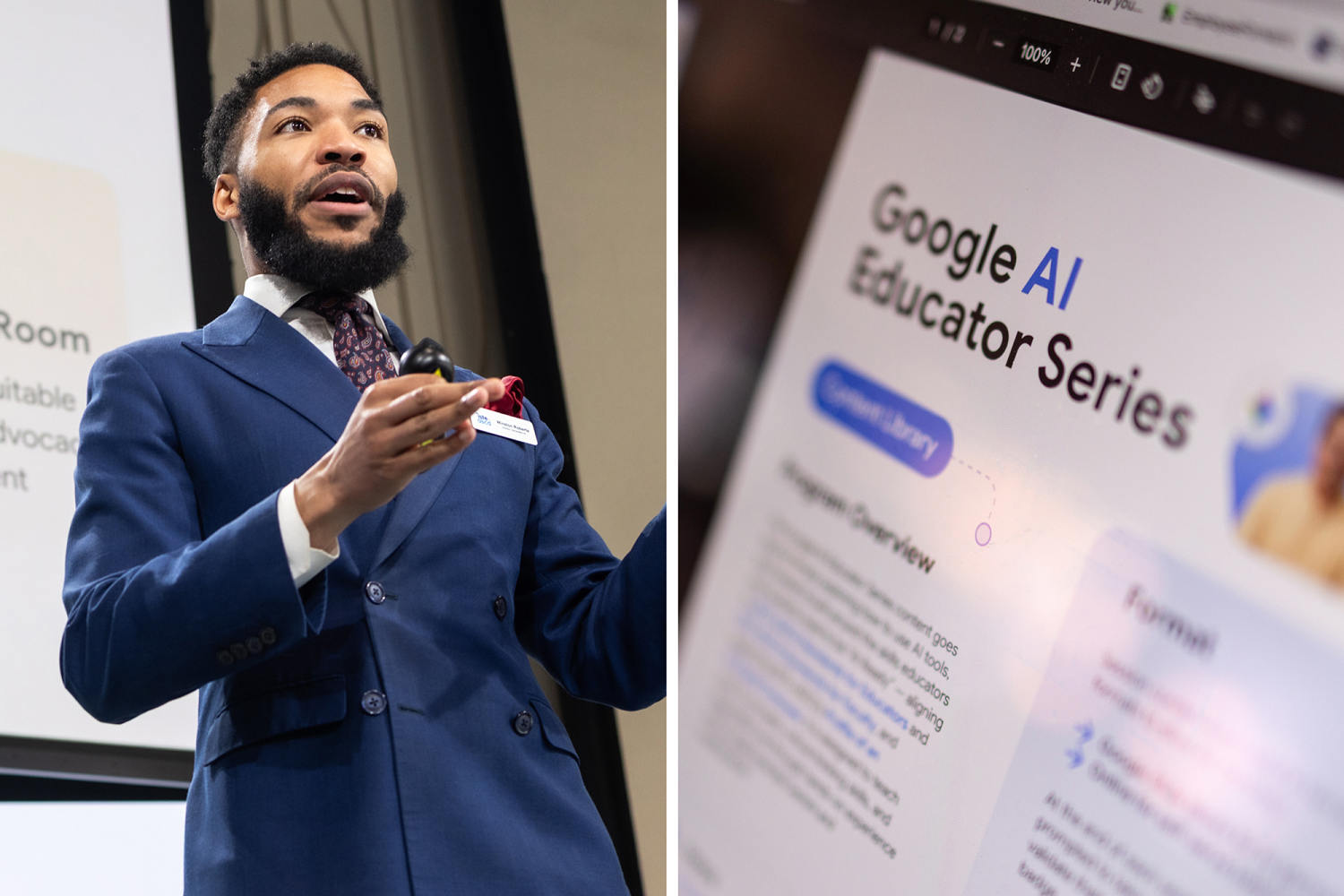
The current consensus among tech evangelists is comforting: if we just put teachers through corporate-sponsored bootcamps, they will master prompt engineering, automate their lesson planning, and gracefully guide the next generation into a brave new world. Google rolls out a flashy initiative to "train" educators, the media swoons, and administrators check a box marked "innovation."
It is a complete farce.
I have watched school boards burn hundreds of thousands of dollars on these weekend seminars. The result? Teachers leave with a few superficial tricks, a mountain of anxiety, and absolutely no fundamental shift in student outcomes. We are treating a structural transformation like a software update.
The premise that teachers need to learn how to "use" AI is fundamentally flawed. They do not need corporate professional development. They need the tech industry to build tools that do not require a computer science mentality to operate. Until then, these training initiatives are nothing more than a marketing strategy disguised as philanthropy.
The Big Tech Grift: Outsourcing the Product Deficit
When a product requires millions of users to take remedial classes just to get basic utility out of it, the product is broken.
Somehow, Silicon Valley convinced the education sector that the inability of large language models to provide reliable, hallucination-free assistance is a "teacher training" problem. If a teacher gets a fabricated historical fact in a generated quiz, the corporate trainers claim the educator didn't use the right "persona" or "contextual constraints" in their prompt.
That is absurd.
Imagine buying a car that randomly turns left when you hit the brakes, and the dealership tells you that you just need a three-day certification course to learn how to compensate for the steering defect. You would return the car.
By framing AI adoption as a skills gap for teachers, tech companies accomplish two things:
- They shift the blame for brittle, unpredictable software onto overworked educators.
- They create an ecosystem of dependency where schools must constantly pay for updated training every time an API changes.
Let's call it what it is: outsourced product testing. Teachers are paying with their limited time to debug tools that should have been production-ready before they crossed the schoolhouse threshold.
The Illusion of Efficiency
The primary selling point of these teacher-training tracks is time-saving. "Generate a rubric in seconds!" "Create differentiated reading passages instantly!"
This promises a shortcut that ignores how pedagogical expertise actually works.
The Cost of Cognitive Disconnection
When a veteran teacher writes a lesson plan, the value is not in the text on the page. The value is in the mental simulation. The process of writing the plan forces the educator to anticipate which concepts will trip up student A, which examples will resonate with student B, and how to sequence the cognitive load.
When you outsource that process to an automated generator, you save twenty minutes of typing but lose the entire cognitive rehearsal. The teacher walks into the room with a perfect, AI-generated script they do not deeply own.
The Curation Tax
The time saved generating content is immediately swallowed by the time required to verify it.
A Common Reality: A teacher uses an enterprise tool to create a chemistry quiz. The system generates ten questions in three seconds. Fantastic. Now the teacher must spend fifteen minutes cross-checking every question to ensure the chemical equations are balanced, the vocabulary matches the state curriculum, and the answers are actually correct.
This is the Curation Tax. It does not reduce workload; it shifts the workload from creative, high-agency design to tedious, high-vigilance proofreading.
Dismantling the Flawed Premise
If you look at the queries dominating education forums, the anxiety is palpable. People are asking the wrong questions because the tech industry set the agenda.
"How can teachers prevent students from using AI to cheat?"
You cannot. Not with current detection software, which catches innocent non-native English speakers at a higher rate than clever cheaters. The premise of the question assumes the traditional essay assignment is a sacred, unchangeable metric. If a machine can mimic your homework assignment perfectly, the assignment was measuring compliance and syntax, not deep understanding. Stop trying to police the software. Change the environment. Move to oral defense, blue-book writing in class, or iterative project design where the evolution of thought is visible.
"What prompts should teachers learn to save time?"
None. If you have to memorize complex syntax structures—specifying role, task, audience, and constraints—to get a usable output, the interface has failed you. The future of educational technology belongs to vertical software that embeds pedagogical guardrails directly into the user interface, not open-ended chat boxes that require a linguistics degree to wrangle.
The Real Skills Gap Nobody Is Talking About
We are training teachers on the wrong end of the pipeline. We are teaching them how to input commands into a text box, when we should be teaching them the mechanics of algorithmic bias, data privacy, and the degradation of digital text.
The true threat to education isn’t that teachers won't know how to generate a vocabulary worksheet. The threat is that they will blindly trust systems trained on historical biases, amplifying inequities under the guise of data-driven objectivity.
Current Training Focus:  Prompting -> Output -> Deployment
What We Actually Need:   Data Ethics -> System Evaluation -> Algorithmic Literacy
We need educators who can look at an automated grading system and dismantle its underlying assumptions. We need teachers who understand that these models do not "know" anything; they are probabilistic engines predicting the next token based on a corpus of text that might be fundamentally hostile to marginalized students. Corporate bootcamps do not teach this. They teach feature adoption.
The Contrarian Playbook for School Administrators
If you are a superintendent or a principal, stop buying into the hype cycles. Hang up the phone when consulting firms offer to run an AI certification day for your staff. Do this instead:
- Enact a Moratorium on Open-Text Prompting: Stop encouraging teachers to use raw, unfiltered chat interfaces for curriculum development. Direct them toward tools with built-in, verifiable boundaries that protect student data and limit hallucinations.
- Fund Sabbaticals, Not Seminars: If you want teachers to understand how the digital world is changing, give them time to read peer-reviewed research on cognitive science and machine learning. Three days of uninterrupted reading will yield more insights than thirty hours of corporate slide decks.
- Invest in Physical Infrastructure: The counter-intuitive answer to an increasingly automated world is more human friction, not less. Shrink class sizes. Build physical lab spaces. Buy paper notebooks. The value of a school in the machine age is the presence of other humans holding you accountable to real-time thought.
The tech industry wants us to believe that education is fundamentally a content delivery problem, and that their tools can optimize that delivery. They are wrong. Education is a relationship problem. No amount of corporate professional development will change the fact that a student does not learn from a machine, nor do they learn from a teacher who has been reduced to an operator of a machine.
Stop trying to turn teachers into prompt engineers. They have a much more important job to do.