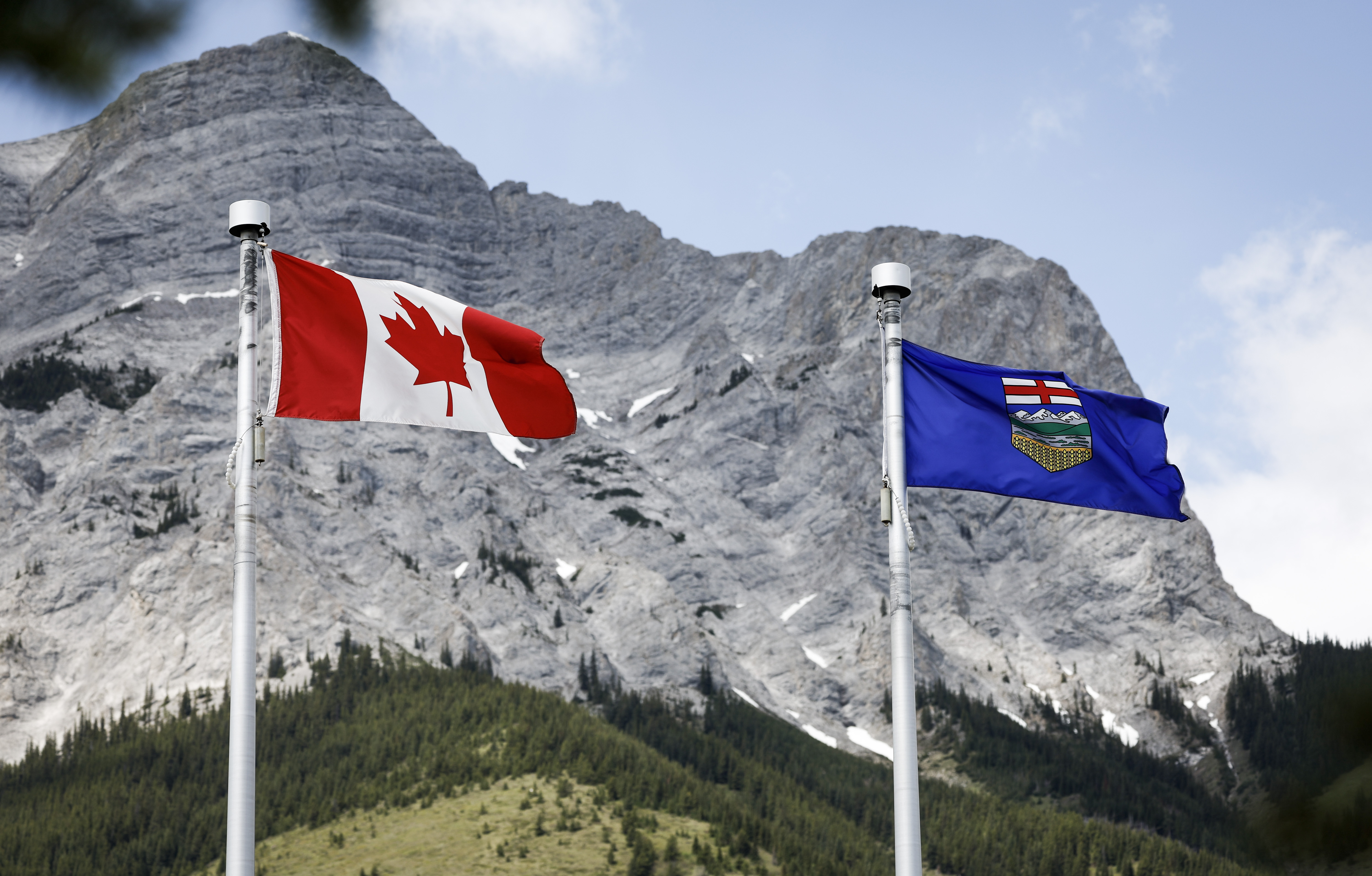
The lazy consensus covering the upcoming October 19 referendum in Alberta reads like a stale undergraduate script. Mainstream talking heads treat the event with a predictable mixture of pearl-clutching panic and earnest federalist hand-wringing. They fret over "economic uncertainty." They worry about "spooking institutional capital." They paint a picture of a nation on the brink of an emotional divorce.
It is a completely flawed reading of the situation. For another perspective, consider: this related article.
The political class wants you to believe this vote is a serious, foundational debate about nationhood, akin to Quebec in 1995 or Scotland in 2014. It is not. Alberta separatism is an ideological ghost in the machine, a highly transactional leverage play masquerading as a liberation movement. The premise that Alberta is weighing an actual exit from Canada misses the entire mechanics of Canadian power politics.
This isn't an existential crisis. It is a hostile corporate negotiation where neither side actually wants to dissolve the parent company. Further reporting regarding this has been published by NBC News.
The Myth of the Maverick Nation
To understand why the common narrative fails, you have to dissect the DNA of genuine secessionist movements. True independence drives are rooted in distinct identity, linguistic divergence, or deep historical subjugation. Scotland has a distinct legal system and centuries of pre-union sovereignty. Quebec has a unique culture and a language it actively protects through statutory law.
Alberta has a laundry list of accounting complaints.
Political scientists like André Lecours have pointed out the obvious: you cannot build a sovereign nation entirely out of a capital expenditure ledger. Alberta separatism is an anomaly because it lacks any foundational cultural marker. It is a product of modern fiscal friction, not ethnic or national identity. The average Wexit voter doesn't view themselves as ethnically non-Canadian. They see themselves as hyper-Canadians who happen to be footing an unfair portion of the national bill.
I have watched corporate boards and political campaigns play this exact hand for decades. You don't threaten to build a new factory down the street because you actually want to move the heavy machinery; you do it because you want the city council to cut your property taxes. Premier Danielle Smith’s multi-ballot referendum strategy—asking voters whether they should look into having a vote about maybe thinking about leaving—is the ultimate political manifestation of this bluff. It is an exercise in dynamic posturing designed to force structural concessions from Ottawa, specifically regarding pipeline corridors and carbon pricing carve-outs.
Treating this like an ideological push for independence is like mistaking an aggressive union salary demand for a Marxist revolution.
The Landlocked Math Nobody Wants to Face
The pro-independence crowd operates under a delusional economic thesis: that cutting ties with Ottawa instantly frees the energy sector from federal red tape, opening a golden era of unhindered prosperity.
Let’s run the hard mechanics of a sovereign Alberta.
If Alberta separates, it does not magically move its borders next to the Gulf of Mexico. It remains precisely where it is: trapped between British Columbia, Saskatchewan, the Northwest Territories, and the United States. Under international law, specifically the United Nations Convention on the Law of the Sea, landlocked states have a right of access to the sea, but the specific terms of transit must be negotiated via bilateral treaties with the transit states.
Imagine a scenario where an independent Republic of Alberta tries to force an energy corridor through a hostile British Columbia. Without the federal constitutional hammer of Section 92A or federal declarations of "general advantage" to force interprovincial infrastructure, Alberta would be utterly at the mercy of its neighbors. B.C. Premier David Eby has already made it clear that Western cooperation ends where territorial encroachment begins. A sovereign Alberta would find its tidewater access entirely dependent on international treaty negotiations with a Canadian government it just insulted, or an American administration that prioritizes its own domestic oil producers.
Furthermore, secession does not dissolve Indigenous treaty rights; it amplifies them. The lands inside Alberta’s borders are governed by Treaties 6, 7, and 8, signed directly with the Canadian Crown. Secession would instantly trigger a constitutional crisis regarding these nation-to-nation agreements. Indigenous leaders have already stated that their treaties are with Canada, not a breakaway petro-state. Any attempt to unilaterally alter that relationship would lock Alberta’s resource sector in an endless, paralyzing cycle of litigation and blockades that would make the old federal regulatory hurdles look like a walk in the park.
Why the Fiscal Argument is Backwards
The bedrock of Western alienation is the equalization formula. The standard grievance states that Alberta sends billions more to Ottawa than it receives in return, subsidizing the public services of provinces like Quebec. This is mathematically accurate, but the separatist solution to this problem is economically illiterate.
When a province separates, it doesn't just stop paying federal taxes. It takes an active share of the national debt with it.
Based on historical precedents and population share, a separating Alberta would be on the hook for roughly 11% to 12% of Canada's massive national debt. Suddenly, the new nation begins life saddled with over $140 billion in liabilities. To service that debt, establish a new central bank, set up a military, build a foreign service, and create a brand-new currency, the newborn state would require massive capital reserves.
+-------------------------------------------------------------+
|              THE SECESSION REVENUE ILLUSION                 |
+-------------------------------------------------------------+
|                                                             |
|   [ Gross Resource Revenue ]                                |
|               │                                             |
|               ▼                                             |
|   ( Minus: 12% Shared Canadian National Debt Service )      |
|   ( Minus: Cost of Stand-up Military & Border Control )      |
|   ( Minus: New Sovereign Currency Risk Premium )             |
|               │                                             |
|               ▼                                             |
|   [ Net Sovereign Budget: HIGHER VOLATILITY & LOWER LIQUIDITY ]|
|                                                             |
+-------------------------------------------------------------+
Worse, its economy would be terrifyingly un-diversified. Canada’s national economy absorbs the cyclical shocks of the oil and gas sector because it is backed by Ontario manufacturing, B.C. tech and real estate, and Quebec aerospace. A sovereign Alberta would be a pure play on global crude prices. When oil prices plummet, there would be no federal safety net, no national employment insurance system, and no diversified tax base to smooth out the crater. The international bond markets would price this volatility instantly, demanding massive interest rate premiums on Alberta sovereign debt.
The Real Arbitrage Play
Stop asking whether Alberta should leave Canada. That is the wrong question, formulated by politicians who want to score cheap points with their base and media outlets looking for sensational headlines.
The real question is: how effectively can Alberta use the threat of structural disruption to rewrite the terms of Western economic development?
The ultimate irony of the October referendum is that it is happening precisely when Alberta’s leverage within the federation is peaking. The federal government, desperate to stabilize a volatile national economy, has already begun conceding ground, offering memorandums of understanding on coastal pipelines and relaxed carbon enforcement.
The strategy going forward should not be a romantic, self-destructive march toward an independent state. It should be an aggressive, calculated exercise in structural autonomy inside the tent.
- Establish Provincial Institutional Moats: Instead of leaving, Alberta should continue building distinct provincial institutions that duplicate federal functions to capture tax collection and pension management. The creation of an Alberta Revenue Agency or an isolated provincial pension plan keeps capital within provincial borders without triggering a constitutional exit.
- Weaponize the Discord: Treat the referendum result not as a mandate for secession, but as a hard mandate for aggressive interprovincial trade wars. If the federal framework fails to protect resource corridors, Alberta should systematically dismantle its own internal trade barriers to force bilateral deals with pragmatic neighbors like Saskatchewan and Manitoba, bypassing Ottawa entirely.
- Monetize Federal Dependence: Force the federal government to buy domestic peace. Every time Ottawa wants to implement a sweeping national regulatory framework, Alberta must demand direct, unconditional fiscal transfers or permanent statutory exemptions as the price for keeping the referendum weapon in its sheath.
The political class wants you to pick a side in a fake war. They want you to be either a passionate defender of a broken federal system or a starry-eyed revolutionary dreaming of a new flag. Both positions are suckers' bets. The only real move is to recognize the referendum for what it is: a giant, high-stakes poker game where the goal isn't to leave the casino, but to force the house to change the rules of the table.