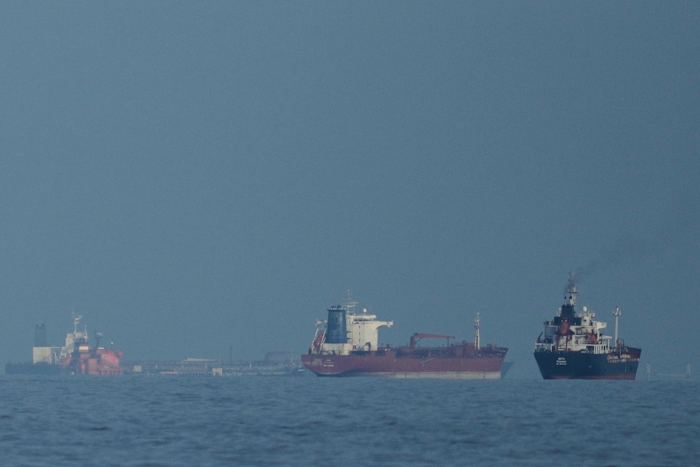
The peace talks in Islamabad didn't just fail; they cratered. After 21 hours of high-stakes negotiation between Washington and Tehran, the ceasefire is effectively dead. US President Donald Trump hasn't wasted a second. He's ordered the US Navy to begin an immediate blockade of all maritime traffic entering and exiting Iranian ports as of Monday, April 13, 2026.
If you're wondering how this affects your wallet, look at the gas pump. Oil prices just cleared $100 a barrel. This isn't just a regional spat anymore. It's a direct strangulation of one of the most critical energy arteries on the planet.
The Strategy Behind the Blockade
CENTCOM isn't being subtle about the math here. The blockade officially kicks off at 10 a.m. ET. The goal is to isolate Iran without completely choking off the rest of the world’s oil supply—a balancing act that looks nearly impossible on paper.
Here's how the US military is framing it:
- Targeted Isolation: Every ship heading to or from an Iranian port is a target.
- Neutral Transit: Theoretically, ships going to non-Iranian ports (like those in Kuwait or the UAE) can still pass.
- Illegal Tolls: Trump’s latest "red line" is the $1 million per ship toll Iran started charging during the ceasefire. The Navy is now authorized to intercept any vessel that paid these fees.
Honestly, the "freedom of navigation" talk sounds good in a press briefing, but the reality on the water is chaotic. Shipping data shows traffic in the Strait of Hormuz has slowed to a crawl. Tanker captains aren't exactly lining up to test whether a US destroyer can tell the difference between a neutral ship and one that "might" be carrying Iranian condensate.
Why the Islamabad Talks Fell Apart
Vice President JD Vance led the American delegation, and his post-meeting tone was ice cold. He basically told reporters that the Iranians refused to accept the final terms. The sticking points? Uranium enrichment and Iran's refusal to stop supporting regional proxies like Hezbollah and the Houthis.
Iran’s Foreign Minister, Abbas Araqchi, told a different story. He blamed "shifting goalposts" from the US. Whatever the truth, the two-week ceasefire that gave the world a momentary breather is gone. We’re right back to the brink of a massive maritime war.
The Mine Problem Nobody Wants to Talk About
It’s not just about the ships. It’s about what’s under the water. Iran has reportedly been dropping sea mines throughout the Strait. During the brief ceasefire, US Navy destroyers entered the Strait for the first time since the war began six weeks ago to start clearing these "eggs of death."
Reports suggest Iran actually lost track of where they planted some of these mines. That’s a nightmare scenario. It means even if a peace deal happened tomorrow, the Strait would remain a graveyard for merchant ships until the Navy clears every square inch.
The IRGC (Islamic Revolutionary Guard Corps) is still claiming "full control" of the waterway. They've warned that any mine-clearing operation is a violation of sovereignty. It’s a classic standoff where one wrong move by a nervous sonar operator could trigger a full-scale naval engagement.
Global Markets are Screaming
Markets hate uncertainty, and they’re getting a double dose of it today. Beyond the $100 oil price tag, we’re seeing:
- Wheat and Fertilizer Spikes: These markets are jumping because the Strait is a key route for chemicals used in global agriculture.
- Asian Economy Panic: China, Japan, and South Korea get more than half of their energy through this chokepoint. If the US blockade leads to a total shutdown by Iran, these economies will stall within weeks.
- Insurance Meltdown: Most maritime insurers have pulled coverage for the Persian Gulf entirely. If you want to sail through Hormuz right now, you’re basically on your own.
What You Should Watch Next
Don't expect this to settle down by the weekend. The US military is moving more assets into the Fifth Fleet’s area of responsibility. If you’re a business owner or just someone worried about the cost of living, you need to prepare for a "long winter" in the energy markets.
Keep an eye on the following:
- The 10 a.m. ET Deadline: Watch for reports of the first ship seizures or "interdictions." That will tell us how aggressive the US Navy actually intends to be.
- Retaliation from the IRGC: If Iran responds by targeting commercial tankers in the Gulf of Oman, the "neutral transit" plan goes out the window.
- Domestic Fuel Prices: With the US midterm elections approaching, the political pressure on Trump to "fix" gas prices might lead to even more aggressive military action against Iranian infrastructure.
Stop waiting for a "return to normal." The era of cheap, predictable energy transit through the Middle East is on life support. If you have interests in global shipping or energy-sensitive stocks, now is the time to hedge your bets and diversify your supply chains away from the Gulf.