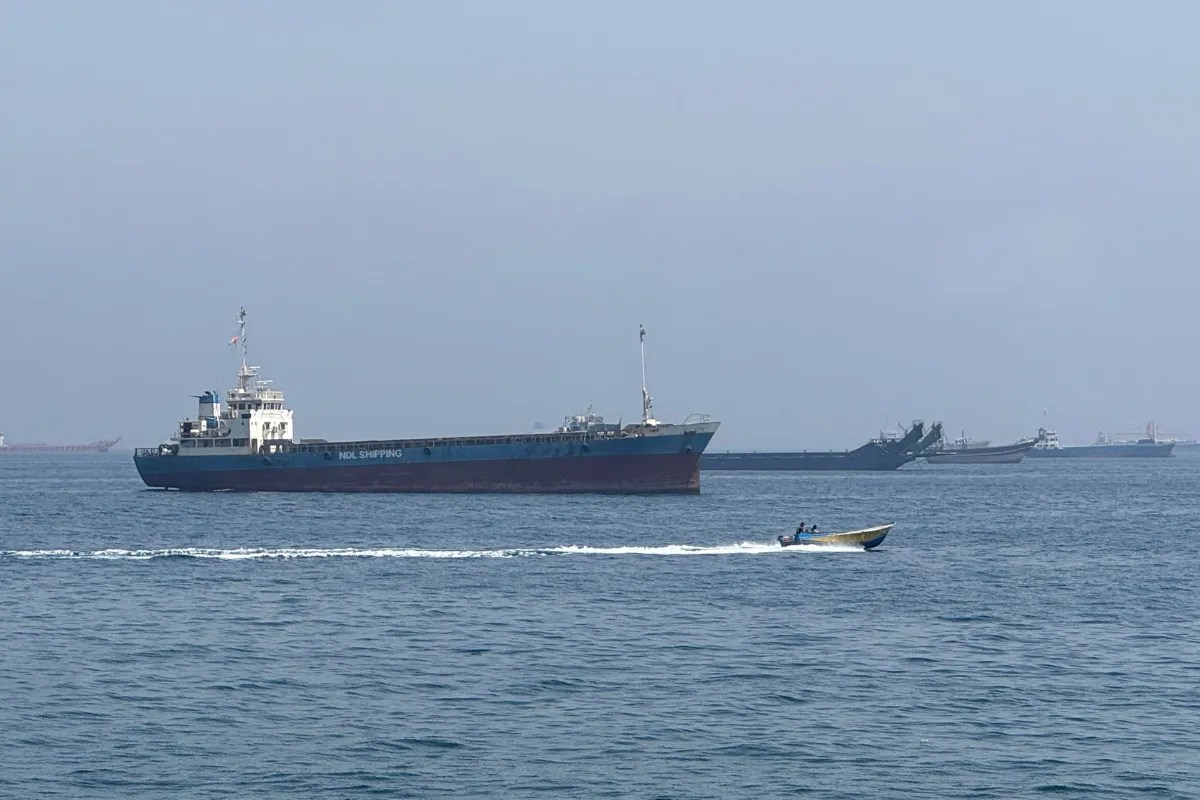
Every time geopolitical friction heats up in the Middle East, mainstream media outlets rush to dust off the exact same headline: America and Iran are facing off, and Tehran is threatening to shut down the Strait of Hormuz.
It is a predictable, lazy narrative. It paints a picture of a global energy market hanging by a thread, waiting for an Iranian general to pull a metaphorical lever and plunge the world into darkness. If you enjoyed this piece, you might want to look at: this related article.
This panic is entirely manufactured. It misunderstands the basic economic and military realities of modern energy logistics.
The mainstream press loves the drama of a blockade because it generates clicks. But if you actually analyze the mechanics of global trade, naval strategy, and domestic survival, the narrative falls apart. Iran cannot close the Strait of Hormuz. More importantly, it does not want to. For another angle on this event, refer to the recent update from The Washington Post.
Here is the reality behind the noise.
The Economic Suicide of a Blockade
The standard argument treats Iran as an irrational actor willing to destroy its own house just to break its neighbor's windows. This ignores how money actually flows through the region.
The Strait of Hormuz is not just a choke point for global oil; it is Iran’s primary economic artery. While sanctions have squeezed Tehran's official oil exports, a massive volume of its economy still relies on shipping lanes running directly through those exact waters.
Imagine a scenario where a country completely cuts off its own access to global markets to spite its adversaries. It does not happen. If Iran chokes the strait, it chokes itself.
- The Single-Buyer Reality: A massive percentage of Iranian crude still finds its way to Asian markets, specifically China, through dark fleets and ship-to-ship transfers. Beijing is not going to look kindly on a move that disrupts its own energy supply chain. Tehran knows that alienating its most powerful economic lifeline is a fast track to regime collapse.
- The Import Reliance: Iran relies heavily on maritime trade for essential goods, consumer products, and industrial inputs. You cannot lock the front door of your house to keep an intruder out if you are still standing on the porch.
The "lazy consensus" assumes that a blockade hurts the West more than it hurts Iran. In reality, western economies have spent decades building resilience against this exact scenario. Iran has not.
The Shallow Water Military Illusion
Let us look at the actual naval mechanics. The media talks about the Strait of Hormuz as if it is a narrow canal where you can just park a few warships and call it a day.
The shipping lanes themselves are narrow—two miles wide in each direction, separated by a two-mile buffer zone—but the water around them is a highly complex, shallow environment. This makes a prolonged, successful blockade militarily impossible for a nation with limited conventional naval power.
Mainstream analysts point to Iran's massive fleet of fast-attack craft and sea mines. They claim these assets can easily shut down commercial transit. They miss the difference between disrupting traffic for 48 hours and maintaining a blockade.
The Problem with Mines
Sowing sea mines in a high-traffic international waterway is an indiscriminate act of war against the entire world, not just the United States. The moment a mine hits a non-Western tanker—say, an Indian or Chinese vessel—Iran loses any diplomatic cover it has left. Furthermore, mine clearance operations by international coalitions, using advanced autonomous underwater vehicles and specialized sweepers, would begin instantly. Mine warfare is a temporary stalling tactic, not a structural shift in control.
The Fast-Attack Craft Fallacy
Swarm tactics using small, missile-armed speedboats look terrifying in propaganda videos. They are highly effective for asymmetric ambushes. However, they lack sustainability. In a sustained conflict, these craft have zero protection against airborne anti-ship platforms, carrier-based strike aircraft, and integrated automated defense systems like the Phalanx CIWS carried by Western warships. A swarm can cause a headline-grabbing incident, but it cannot hold geographic space against a concentrated military response.
Redefining the Search Intent: The Wrong Question
When people search for information on US-Iran tensions in the region, they usually ask variations of the same flawed question: Will Iran close the Strait of Hormuz?
The better question to ask is: Why does the illusion of a closure benefit both sides?
Geopolitics is often a theater of mutual convenience. Both Washington and Tehran derive immense political capital from pretending a total blockade is a realistic possibility.
For Tehran, the threat of closure is the ultimate leverage tool. It is cheap deterrence. By projecting the image of a madman with his hand on the global economic kill switch, Iran forces Western powers to tread carefully. It keeps adversaries at the negotiating table because the perceived cost of a hot war is artificially inflated.
For Washington, the threat justifies a permanent, heavy military footprint in the Persian Gulf. It keeps regional allies dependent on American security guarantees. It also provides a convenient scapegoat for domestic energy price fluctuations. If oil prices spike, it is much easier for politicians to blame Iranian posturing than to address structural domestic inflation or refinery capacity issues.
The True Vulnerability is Not Where You Think
If the threat of a physical blockade is overblown, where does the real danger lie?
The industry fixation on physical ship hulls and sea mines ignores the actual vector of modern gray-zone warfare: infrastructure cyber security and insurance markets.
You do not need to sink a tanker to stop shipping. You just need to make it uninsurable.
Lloyd's Joint War Committee designates the Persian Gulf and adjacent waters as high-risk areas. If state-sponsored cyber operations successfully target the port management systems in Jebel Ali or disrupt the maritime insurance communication networks in London, shipping rates will skyrocket instantly.
During previous periods of heightened tension, insurance premiums for tankers transiting the region spiked by over 100% in a single week.
When freight costs and insurance premiums hit a certain threshold, commercial operators simply refuse to sail. They do not need an Iranian warship to turn them around; their chief financial officers will do it for them. This is the real vulnerability, yet it receives a fraction of the media attention dedicated to naval posturing.
Stop Preparing for the Wrong Crisis
The traditional playbook for energy companies and global logistics firms involves tracking naval movements, counting anti-ship missiles, and monitoring rhetorical escalation in state media.
This is an obsolete approach to risk management.
I have seen corporate boards spend millions of dollars formulating contingency plans for a total, physical shutdown of the Persian Gulf. They build elaborate financial models based on $150-a-barrel oil scenarios, assuming a protracted military siege that will never happen. Meanwhile, they leave their operational technology networks completely exposed to targeted ransomware attacks that could freeze their loading docks for weeks.
If you want to survive the next genuine disruption in energy logistics, stop reading the alarmist headlines about naval standoffs.
Accept that the Strait of Hormuz will remain open because every major global power—including the one occupying its northern coastline—requires it to stay that way. Shift your focus away from the cinematic fantasy of a naval blockade and start securing the digital systems that actually keep the global economy afloat. The next major disruption will not arrive via a torpedo; it will land via an email attachment.