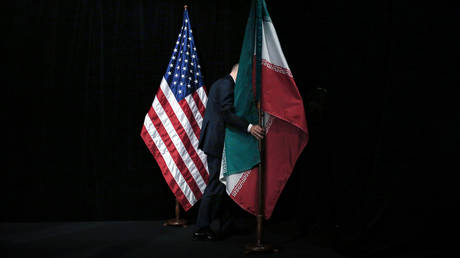
The world economy didn't avoid a total meltdown because of brilliant diplomacy in Switzerland. It survived because Washington blinked. When the White House signed off on a temporary ceasefire memorandum and lifted oil sanctions on Iran, it wasn't a triumph. It was a capitulation to a geographical reality that every superpower eventually hits like a concrete wall.
Look at the sheer volume of shipping backed up right now. Over 200 tankers holding roughly 130 million barrels of crude and 46 million barrels of refined fuel are sitting idly outside the Persian Gulf. The International Energy Agency isn't exaggerating when it calls this worse than the oil shocks of 1973, 1979, and 2022 combined. The current lull in fighting isn't peace. It's an uneasy truce where Tehran proved it can strangle global energy supplies at will, and the West realized it has no good military options to stop it. Discover more on a similar topic: this related article.
We are entering a period of permanent uncertainty. The old assumption that global shipping lanes are guaranteed by Western naval power is dead. Iran successfully weaponized geography, and the consequences will dictate the price of everything you buy for the next decade.
The Illusion of a Western Maritime Mandate
For decades, the global economy operated under the assumption that the United Nations Convention on the Law of the Sea (UNCLOS) secured the absolute right of transit passage through international straits. If anyone stepped out of line, the US Navy's Fifth Fleet would show up to enforce order. That deterrent has vanished. Further analysis by Al Jazeera delves into comparable perspectives on this issue.
Tehran isn't just trying to survive sanctions anymore. They're rewriting the legal architecture of global trade. The Islamic Revolutionary Guard Corps (IRGC) wants a permanent permits-and-licenses protocol for the Strait of Hormuz. They want to turn a global chokepoint into a sovereign toll booth, working quietly with Oman to draft rules that would require commercial vessels to pay fees and obtain explicit Iranian permission to pass.
If this model succeeds, it changes how international waters work everywhere. It tells every regional power with a missile battery and a coastline that they can extort the rest of civilization.
The Trump administration's $300 billion reconstruction fund proposal and the sudden lifting of oil sanctions show how desperate Washington became when faced with a prolonged blockade. The White House was stuck between two terrible choices.
- Option A: Watch global gas prices rocket past historic highs, breaking the back of the domestic economy and triggering an electoral disaster.
- Option B: Give Iran a massive financial lifeline while getting almost nothing in return regarding their ballistic missile program or proxy networks.
They chose Option B. Iran walked away from the negotiating table with its core military capabilities completely untouched, its pockets lined, and its grip on the world's primary energy artery tighter than ever.
Why a Military Solution Was Always a Myth
Whenever tensions spike in the Gulf, hawkish commentators in Washington and Jerusalem demand a decisive military campaign to open the shipping lanes by force. They talk about surgical strikes and destroying IRGC naval assets. It's a fantasy that ignores basic geography and logistics.
Iran is a natural fortress. You can't just sail in and clean it up. The country is bordered by the Zagros Mountains to the west, featuring peaks over 4,000 meters that completely shield the interior from Iraq. The southern coastline along the Persian Gulf consists of jagged foothills perfect for hiding mobile anti-ship missile batteries, drones, and kamikaze speedboats. To the north sits the Alborz mountain range protecting Tehran, while the eastern borders with Afghanistan are dominated by hostile deserts and jagged uplands.
A ground invasion to force a regime change would require a massive logistical footprint that simply cannot be sustained. Unlike previous campaigns in the Middle East, a Western force wouldn't have friendly, easily accessible ground supply routes. Every piece of equipment, every gallon of fuel, and every crate of ammunition would have to be flown in through airspace heavily defended by sophisticated Russian-made air defense systems, or brought through narrow, heavily mined maritime corridors.
The IRGC doesn't need a massive conventional navy to win this fight. They don't need to defeat a US carrier strike group in a traditional battle. They just need to sink one or two commercial tankers, drop a few dozen cheap sea mines, and launch swarms of low-cost loitering munitions from civilian trucks hidden in the coastal cliffs. The moment insurance companies refuse to cover vessels entering the Gulf, the strait is effectively closed. Tehran achieved total asymmetric leverage for the price of a few thousand drones.
The Failed Regional Security Architecture
The current crisis exposes the limits of regional alliances like the Abraham Accords. While the diplomatic normalization between Israel, the UAE, and Bahrain was sold as a unified front against Iranian expansion, it hasn't translated into maritime security. When the pressure built, the small Gulf states quickly realized that American anti-missile systems like THAAD can't protect their vital desalination plants and oil infrastructure from sustained, close-range drone salvos.
Israel finds itself in an incredibly vulnerable strategic position under the current ceasefire framework. The terms negotiated in Switzerland essentially require Israeli forces to pull back from defensive zones in southern Lebanon without any real guarantees that Hezbollah won't immediately reoccupy the border. For Prime Minister Benjamin Netanyahu, complying with these terms is political suicide at home, yet defying them means breaking openly with an American administration desperate to keep oil flowing.
Meanwhile, the real winners of this chaos aren't even sitting at the main negotiation tables. Look at Turkey, which continues to position itself as the primary alternative transit hub for Eurasian natural gas. Look at Russia and China, who watch the West drain its military stockpiles and political capital trying to police a waterway that their own commercial vessels pass through with relative impunity due to bilateral understandings with Tehran.
The region is split among three historical empires competing for dominance.
- Iran: Leveraging its proxy networks and coastal geography to dictate terms to global energy markets.
- Saudi Arabia: Trying to protect its massive economic modernization plans from falling victim to regional crossfire.
- Turkey: Building a monopoly over alternative pipelines and land-based supply chains heading into Europe.
In this struggle, international trade is merely the collateral damage.
Structuring a Diversified Operations Strategy
If you run a business dependent on international supply chains or commodity pricing, waiting for a permanent diplomatic solution is a losing strategy. The "normal" we are returning to is a state of perpetual instability where the Strait of Hormuz can be closed for forty days at a time whenever Tehran needs financial concessions. You must adapt your logistics immediately.
First, you need to actively reduce your exposure to maritime routes that rely on the Suez Canal and Persian Gulf corridors. This means shifting freight budgets toward the Cape of Good Hope route around Africa, despite the extra ten to fourteen days of transit time and higher initial fuel costs. It's no longer just about finding the cheapest route; it's about buying predictability.
Second, reconfigure your inventory strategy away from just-in-time logistics. Businesses that survived the recent shipping suspensions did so because they held a ninety-day buffer of critical components rather than relying on weekly arrivals. Identify your single points of failure—whether it's specific chemical compounds, plastics, or specialized electronics—and diversify your supplier base to include manufacturers in the Western Hemisphere or North Africa.
Finally, hedge your energy exposure. The volatility in oil markets isn't going away just because a temporary 60-day extension might be signed next month. The structural holes in the current memorandum of understanding mean that another flare-up is always one drone strike away. Secure long-term energy contracts now while the market is temporarily subdued by the lifting of sanctions, because the moment negotiations stall again, prices will spike instantly.