The mainstream media is feeding you a sedative. While major outlets scramble to cover the pomp of a British state visit and the supposed "crisis" in the Strait of Hormuz, they are missing the tectonic shifts in energy independence and the total irrelevance of soft-power pageantry. They want you to believe that a royal handshake or a localized naval blockade still dictates the fate of the American economy.
They are wrong.
The traditional "live update" format is a relic designed to keep you clicking on incremental nonsense while the real story—the obsolescence of the current geopolitical map—goes unreported.
The Hormuz Hoax: Why a Blockade is a Paper Tiger
The "Strait of Hormuz" is the ultimate bogeyman of the 20th century. Every time a politician "floats a plan" to reopen it or secure it, they are playing to a theater that hasn't changed since 1979. The lazy consensus suggests that if the Strait closes, the Western world grinds to a halt.
This is a fundamental misunderstanding of 2026 energy realities.
First, let's look at the "Strait of Hormuz" as a physical reality versus a market reality. Yes, approximately 20% of the world's petroleum liquids pass through that narrow strip. But the idea that the US needs to "reopen" it through some novel, aggressive military plan ignores the fact that the US is now the world's largest producer of crude oil.
We aren't in the Carter era anymore. The panic isn't about supply; it's about price volatility managed by algorithmic traders who profit from the very headlines you're reading. When a candidate proposes a "new plan" for the Strait, they aren't solving a logistics problem. They are performing a ritual to satisfy defense contractors and nervous speculators.
If the Strait closed tomorrow, the primary victim wouldn't be the American commuter. It would be China. Over 70% of the oil moving through Hormuz is headed for Asia. When US politicians talk about "securing" the Strait, they are essentially offering a free security service to their biggest economic rival. Why are we still subsidizing the protection of China's energy supply with American tax dollars and naval assets?
The contrarian truth is that a closed Strait might actually accelerate the global shift toward the localized energy grids we claim to want. Stop obsessing over a 21-mile-wide channel and start looking at the internal infrastructure that renders that channel irrelevant.
Royal Tourism is Not Diplomacy
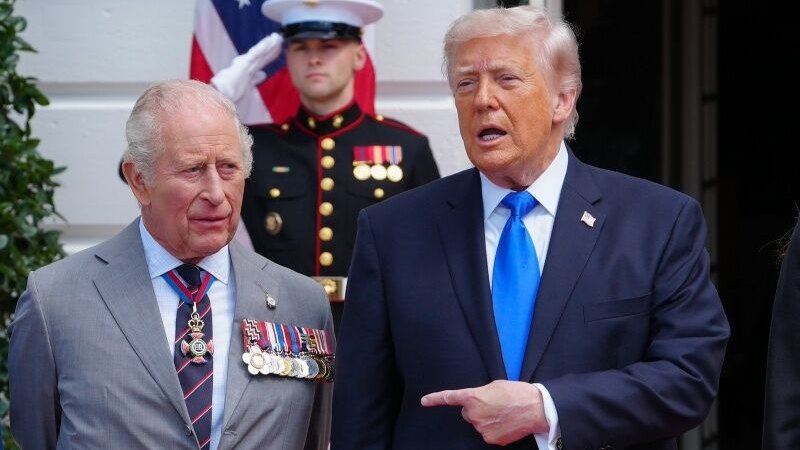
The coverage of King Charles and Queen Camilla's visit is being treated as a "pivotal" (to use a word I despise) moment for the "Special Relationship." It isn't. It’s a high-end tourist junket that serves as a convenient distraction from the fact that the UK’s economic influence is currently at its lowest ebb in a century.
I have watched these state visits for decades. They follow a scripted pattern: a gala dinner, a speech about shared values, and a carefully choreographed photo op at a historical site. The media treats this as "statecraft." It’s actually "stagecraft."
True power is moved in the quiet rooms of the Department of Commerce and the trade representative's office. It isn't moved by a man wearing a crown whose role is strictly ceremonial. To report on the British monarchy’s visit as a lead political story is to admit that you value celebrity over substance.
The "Special Relationship" is a branding exercise. In the real world, the UK is desperate for a free trade agreement that the US has no actual incentive to provide. We are watching a bankrupt debtor visit its primary creditor, and the press is reporting on the quality of the china.
The Fallacy of "Reopening" the World
The competitor’s headline suggests that the world is a series of doors that US politicians can simply kick open. This "reopening" rhetoric is a ghost of 1990s hegemonism.
Take the Strait of Hormuz again. You cannot "open" a waterway that is being contested by asymmetric warfare—drones, mines, and shore-based missiles—without a full-scale regional war. Any politician suggesting a "plan" that doesn't involve a massive increase in the defense budget and a multi-year commitment is lying to you.
The Cost of Interventionism vs. The Reality of Shale
- Strategic Petroleum Reserve (SPR): We treat the SPR like a political piggy bank rather than a strategic tool.
- Shale Efficiency: US fracking technology has hit a point where we can scale production faster than a naval carrier group can reach the Persian Gulf.
- The Pipeline Alternative: Significant volumes of oil can already bypass the Strait via the Petroline (East-West Pipeline) in Saudi Arabia and the Abu Dhabi Crude Oil Pipeline.
The "crisis" is manufactured. The solution is already here, and it has nothing to do with naval maneuvers.
Why You Are Asking the Wrong Questions
Most people ask: "How will this plan affect gas prices?"
The better question is: "Why does our foreign policy still prioritize a region that we no longer depend on for survival?"
Most people ask: "What did the King say to the President?"
The better question is: "Why is a 18th-century relic occupying the lead spot in a 21st-century news cycle?"
We are addicted to the drama of the "State Visit" and the "Global Chokepoint" because they are easy stories to tell. They have clear heroes, villains, and costumes. The reality—a messy, decentralized transition to domestic energy and the slow, grinding irrelevance of traditional European alliances—is harder to turn into a "live update."
The Industry Insider's Reality Check
I’ve spent years in the rooms where these "plans" are drafted. The people writing them know they are mostly fluff. They are designed to project strength to a domestic audience that still thinks the US is the world's policeman.
The "nuance" the mainstream misses is that the US is currently in a state of managed retreat from these global obligations, and that’s actually a good thing for the American taxpayer. Every "plan to reopen the Strait" is a desperate attempt by the foreign policy establishment to stay relevant in a world that has moved on to regionalized power blocs.
The royal visit is the ultimate "nothingburger." It’s a distraction from the crumbling trade reality between the US and Europe. If you want to know where the power is, look at the semiconductor fabrication plants being built in Arizona and Ohio, not the guest list at a White House dinner.
Stop reading the "live updates." They are snapshots of a world that is already dead. The future isn't being decided in the Strait of Hormuz or in the drawing rooms of a visiting monarch. It’s being decided in the supply chains of the Midwest and the energy labs of Texas.
The media focuses on the crown because it’s shiny. They focus on the Strait because it’s scary. Both are diversions from the fact that the old world order is being dismantled by the very people claiming to protect it.
The status quo is a comfort blanket for the unimaginative. If you’re still looking at the Middle East for your economic indicators, you’re looking in the rearview mirror while driving toward a cliff.
The Strait is a distraction. The Crown is a ghost. Wake up.