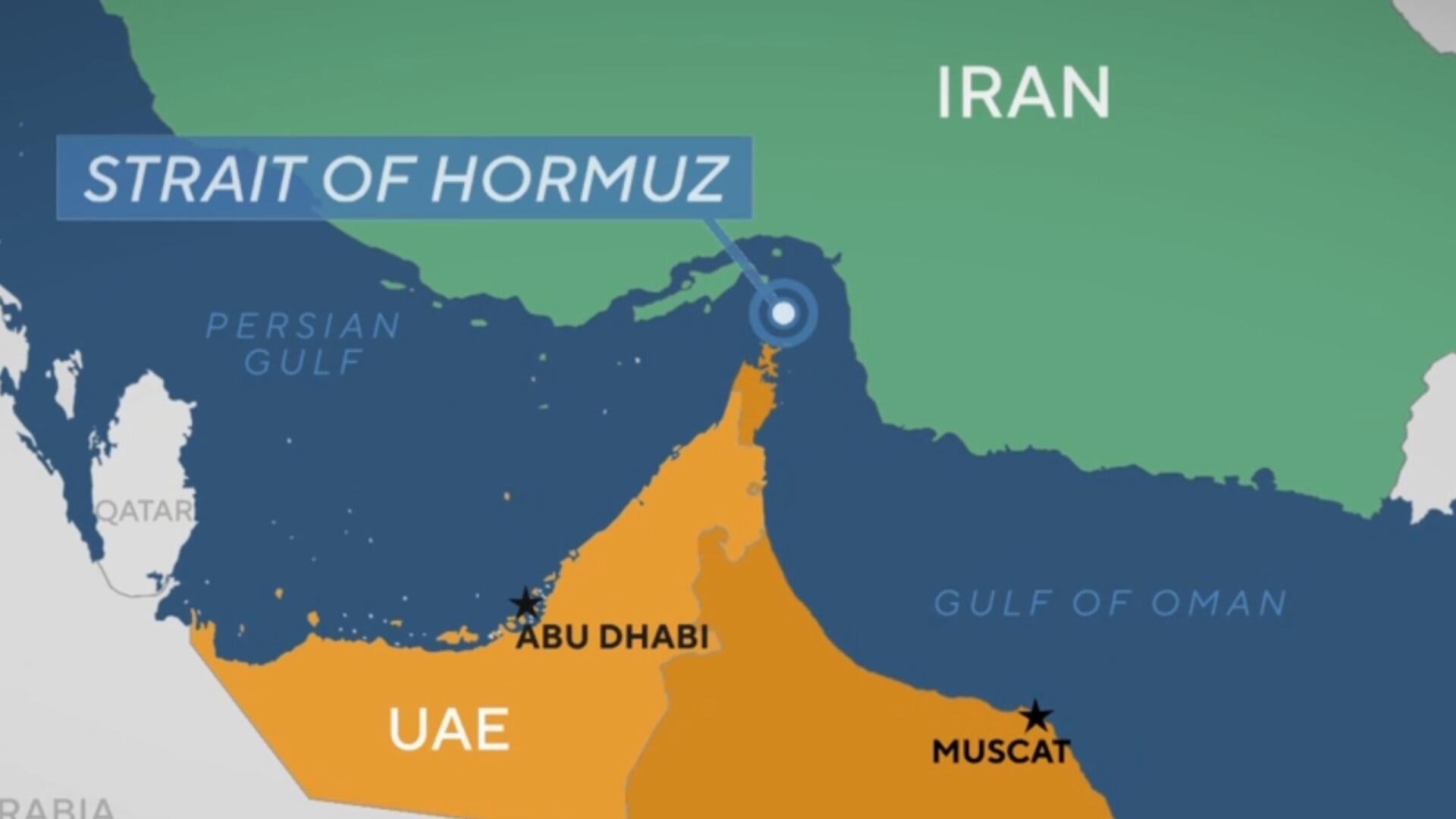
The world’s most critical maritime chokepoint is currently being used as a high-stakes bargaining chip in a game of regional brinkmanship that threatens to upend the global energy market. While Qatar has publicly urged Iran to move toward de-escalation, the reality beneath the diplomatic surface is far more fractured. Doha’s plea for Tehran to stop threatening the Strait of Hormuz is not merely a request for peace. It is a desperate attempt to protect the only corridor through which its massive liquefied natural gas (LNG) exports can reach a world hungry for fuel. If the Strait closes, Qatar’s economy does not just slow down. It stops.
The Strait of Hormuz remains the jugular vein of the global oil and gas trade. Roughly one-fifth of the world’s liquid petroleum consumption passes through this narrow stretch of water every single day. For Iran, the threat of closure is the ultimate deterrent against Western sanctions and military pressure. For the rest of the world, it is a nightmare scenario that would send crude prices skyrocketing past $150 a barrel almost overnight. Qatar, positioned as the middleman of the Middle East, is now finding that its long-standing strategy of "talking to everyone" is reaching its breaking point.
The Geography of Mutual Destruction
Understanding the gravity of this situation requires looking at a map, not a press release. The Strait of Hormuz is only 21 miles wide at its narrowest point, with shipping lanes just two miles wide in either direction. It is a physical bottleneck that cannot be bypassed. Unlike Saudi Arabia or the United Arab Emirates, which have invested billions in pipelines that can move oil to the Red Sea or the Gulf of Oman, Qatar is geographically locked. Every cubic foot of Qatari gas must pass through waters that Iran can effectively turn into a minefield with minimal effort.
Tehran knows this. By signaling that the Strait is a "bargaining chip," Iran is effectively holding the global economy hostage to secure relief from economic isolation. Qatar’s recent diplomatic intervention is an admission that the traditional "quiet diplomacy" used by the Al Thani monarchy is no longer sufficient to keep the waters clear. The Iranians are playing a different game now, one where the survival of their regime is weighed against the stability of the global energy supply.
The LNG Factor
While most analysts focus on oil, the real story is LNG. The global shift away from coal and the decoupling of European industry from Russian pipeline gas have made Qatari LNG the foundation of Western energy security. If Iran follows through on even a partial blockade, the heating and electricity systems of major European economies would face an existential threat.
This isn't about a temporary price hike. It’s about physical delivery. If a tanker cannot move through the Strait, the gas stays in the North Field. There is no plan B for Qatar. Their entire infrastructure is built on the assumption that the Strait remains a global common, a premise that Iran is now actively dismantling.
Why Doha is Breaking Character
Qatar has spent decades perfecting the art of the hedge. They host the largest U.S. military base in the region while simultaneously maintaining a shared gas field with Iran. They fund diverse media outlets and act as a bridge for negotiations with groups that the West won’t touch. However, the current rhetoric coming out of Tehran has forced Doha to take a more public, and surprisingly firm, stance.
The shift occurred when it became clear that Iran was no longer just using the Strait as a metaphorical threat. Recent naval drills and the seizure of commercial vessels have proven that the Islamic Revolutionary Guard Corps (IRGC) is ready to operationalize the bottleneck. Qatar’s "urging" of de-escalation is a signal to Washington as much as it is to Tehran. It is an SOS. Doha is telling the world that they can no longer guarantee the flow of energy if the international community does not find a way to cool Iran’s regional ambitions.
The Illusion of Security
There is a common misconception that the U.S. Fifth Fleet, based in nearby Bahrain, can simply "keep the lanes open." Military reality is much grimmer. While the U.S. Navy can certainly win a direct confrontation, Iran’s strategy involves "asymmetric attrition."
Think of it this way. You do not need to sink a carrier to close the Strait. You only need to raise the insurance premiums to a level where commercial shipping becomes impossible. A few well-placed mines, a swarm of fast-attack boats, and the threat of land-based anti-ship missiles are enough to turn the Strait into a "no-go zone" for Lloyd's of London. Once the insurers pull out, the global economy enters a tailspin.
The Failure of Regional Sanctions
For years, the West has relied on a policy of "maximum pressure" to keep Iran in check. This strategy has clearly backfired when it comes to maritime security. Instead of bowing to pressure, Tehran has identified the Strait of Hormuz as the one place where they have the upper hand. Every time a new round of sanctions is announced in Washington or Brussels, a new "exercise" is announced in the Strait.
Qatar’s diplomats are trying to explain to their Western counterparts that the current path is leading to a dead end. By cornering Iran, the West has made the "bargaining chip" of the Strait the only currency Tehran has left. The more the Iranian economy suffers, the more attractive the nuclear option—in this case, the economic nuclear option of closing the Strait—becomes.
The Double-Edged Sword of Interdependence
Qatar and Iran share the South Pars/North Field, the largest natural gas field in the world. This shared asset was supposed to be a guarantee of peace. The logic was simple. Neither side would want to jeopardize the source of their primary wealth.
However, we are seeing a decoupling of economic logic from geopolitical survival. For the IRGC and the hardliners in Tehran, the shared gas field is secondary to the survival of the revolutionary state. If they feel the regime is under threat, they will burn the house down, even if they are inside it. Qatar’s leadership is beginning to realize that their partner in the North Field might be more interested in a scorched-earth policy than a shared profit margin.
Tactical Realities of a Blockade
If Iran moves to weaponize the Strait, it won't be a grand declaration of war. It will be a slow strangulation. It starts with "security inspections" of tankers. Then come the "unidentified" sea mines. Finally, the "accidental" collisions.
This creates a gray-zone conflict where the U.S. and its allies are forced to decide whether to escalate to a full-scale war over a single damaged tanker. Qatar’s intervention is an attempt to stop this process before the first inspection occurs. They know that once the cycle of escalation begins, there is no easy way to de-escalate without one side losing face—and in Middle Eastern diplomacy, losing face is often seen as worse than losing a war.
The Role of China
Beijing is the silent elephant in the room. As the largest buyer of Iranian oil and a major consumer of Qatari gas, China has the most to lose from a closed Strait. Yet, they have remained remarkably quiet.
Qatar is reportedly leaning on its Chinese partners to exert influence over Tehran. The logic is that Iran will ignore Doha and Washington, but they cannot afford to ignore the country that buys their sanctioned oil. If China refuses to step in, it suggests they may see the chaos in the Strait as a way to weaken U.S. influence in the region, even if it costs them more at the pump in the short term. This is a dangerous gamble that Qatar is desperate to avoid.
The Myth of the "Bargaining Chip"
The term "bargaining chip" implies that the Strait of Hormuz is something that can be traded. It isn't. It is a fundamental component of the global infrastructure. Treating it as a negotiable asset is like treating the oxygen in a room as a bargaining chip during a fire.
By allowing Iran to even frame the conversation this way, the international community has already lost ground. Qatar’s plea for de-escalation is a recognition that the "chip" has already been played. The threat is no longer theoretical. It is the baseline for all future negotiations in the region.
Moving Beyond the Soundbite
The headlines will focus on Qatar’s call for peace, but the real story is the total collapse of the security framework that has governed the Persian Gulf since the end of the Iran-Iraq war. The "Tanker War" of the 1980s showed that even with a massive U.S. presence, protecting shipping is incredibly difficult. Today, with the proliferation of drone technology and advanced missile systems, it is nearly impossible.
Qatar’s sudden urgency reveals a deep-seated fear that the window for a diplomatic solution is closing. If Tehran decides that the "bargaining chip" is worth more than the status quo, the ensuing crisis will dwarf the supply chain disruptions of the last decade.
The strategy of containment has reached its logical limit. You cannot contain a country that holds the key to the world's fuel supply without expecting them to turn the lock. Qatar is shouting because they are the first ones who will hear the click.
Every day that the Strait remains a "negotiable" point is a day the global economy sits on a powder keg. The real fix isn't more "urging" or "de-escalation" talk. It is a fundamental shift in how the world secures its energy transit. If we continue to treat the Strait of Hormuz as a regional issue, we will be unprepared when it becomes a global catastrophe.
The time for polite diplomatic requests has passed. Either the international community establishes a non-negotiable maritime security framework that even Iran respects, or we all start preparing for a world where the Strait of Hormuz is a memory of a more stable era. Qatar knows this. Now the rest of the world needs to wake up to the sound of the gates closing.