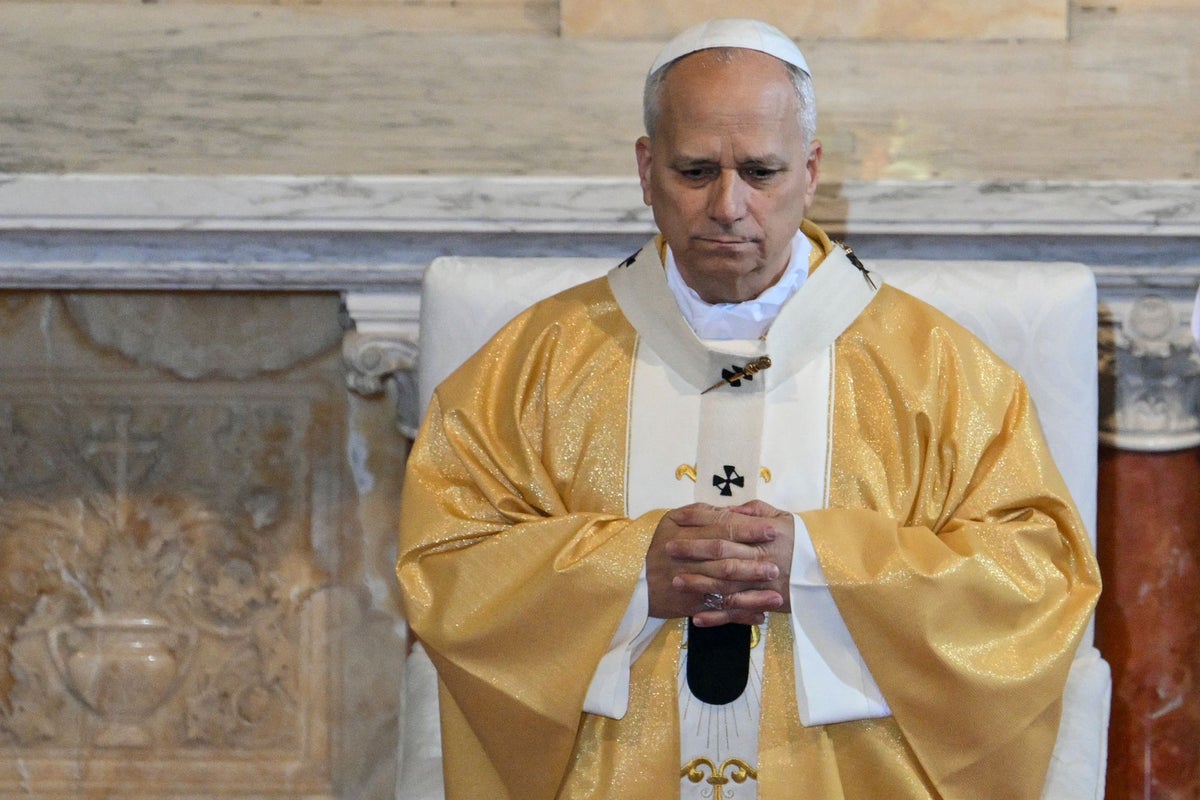
The cessation of hostilities following the arrival of Pope Leo in a conflict zone is not a miracle of sentiment but a function of shifted incentive structures and the introduction of a high-value neutral arbiter. When warring factions agree to a truce during a diplomatic or religious visitation, they are responding to a temporary alteration in the political economy of the conflict. The presence of a global figurehead forces combatants to weigh the marginal utility of continued kinetic operations against the catastrophic reputational cost of violating a high-visibility peace window. This analysis deconstructs the mechanics of such interventions, categorizing the variables that turn a symbolic visit into a functional operational pause.
The Triad of De-escalation Incentives
Three primary variables dictate whether a truce holds during a high-level diplomatic entry. Combatants calculate their moves based on visibility, legitimacy, and the necessity of tactical regrouping.
1. The Optics of Legitimacy
Non-state actors and sovereign militaries alike operate under a quest for international recognition. Attacking during a papal visit incurs a "legitimacy tax" that few organizations can afford. The Pope represents a unique form of soft power that transcends standard bilateral diplomacy. Because he lacks a standing army, his presence serves as a "pure" humanitarian signal. Violating this signal labels a faction as an irrational actor, effectively cutting off future paths to formal negotiation or international aid.
2. Information Asymmetry and Global Observation
A conflict usually exists in a state of relative media obscurity. A papal visit acts as a massive influx of external observation. The sudden presence of the global press corps removes the "shroud of war," making war crimes or truce violations instantly documented and broadcast. This transparency creates a temporary state of panopticon-style deterrence. Leaders of armed groups understand that any tactical gain achieved during this window is outweighed by the strategic loss of being branded a war criminal on a global stage.
3. Tactical Refitting and Resupply
While the public narrative focuses on peace and moral appeal, the ground-level reality often involves "tactical breathing." Both sides in a protracted war face attrition—depleted ammunition, exhausted personnel, and degraded supply lines. A religiously mandated truce provides a socially acceptable pretext for a pause that both sides likely required for logistical reasons. By framing the stop-work order as a sign of respect for a religious leader, commanders can rest their troops without signaling weakness to their opponent.
The Cost Function of Violation
The decision to maintain or break a truce can be modeled as a cost-benefit equation. If $C$ is the cost of international condemnation, $L$ is the loss of internal support from religious demographics, and $G$ is the potential tactical gain of a surprise attack, the truce holds as long as:
$$(C + L) > G$$
In nations where the population holds deep religious convictions, $L$ becomes the dominant variable. If a militia commander fires on an area near the Pope, they risk a total collapse of their domestic recruitment base. The religious identity of the combatants acts as an internal restraint system. The "Leo Effect" succeeds because it aligns the actor's self-preservation instincts with the visitor’s humanitarian objectives.
Structural Bottlenecks in Temporary Ceasefires
Despite the immediate success of a truce, the underlying friction points of the war remain unaddressed. These interventions often suffer from three specific structural failures that prevent them from scaling into permanent peace.
The Problem of Sunk Costs
Wars of long duration involve massive investments in blood and capital. A 48-hour truce does not resolve the "sunk cost" dilemma where leaders feel they must achieve a total victory to justify previous losses. The truce provides a momentary dip in the fever of war but does not provide an exit ramp for leaders who fear domestic execution if they concede territory.
Decentralized Command and Control
The Pope interacts with high-level leadership. However, many modern war zones are characterized by fragmented command structures. A "truce" signed in a capital city may not be recognized by a local warlord or a radicalized splinter cell. These actors may view the papal visit as an opportunity to gain notoriety by defying both their own leaders and the international community.
The Elasticity of Violence
Data from historical short-term truces suggests a phenomenon known as "violence elasticity." Once the high-profile visitor departs and the media attention wanes, there is often a sharp spike in kinetic activity. Factions "make up for lost time" by launching intensified offensives to reclaim momentum lost during the pause. The truce, in this context, acts as a coiled spring rather than a dampener.
Identifying the Catalyst for Permanent Transition
For a papal truce to move from a temporary atmospheric shift to a permanent resolution, it must be leveraged into a formal framework. This requires the immediate insertion of secondary and tertiary negotiators.
- Step 1: The High-Level Freeze. The Pope secures the initial stop-movement order through moral authority.
- Step 2: Technical Integration. Before the visitor departs, technical teams from the UN or regional powers must establish a monitoring mechanism (drones, ground observers) to institutionalize the ceasefire.
- Step 3: Economic De-risking. Financial incentives must be tied to the extension of the truce. This moves the motivation from "respect for the Pope" to "economic survival of the faction."
The failure of the competitor's narrative lies in the assumption that peace is driven by a change of heart among fighters. In reality, fighters do not change their hearts; they change their math. The arrival of a figure like Pope Leo changes the math by making the cost of aggression temporarily unsustainable.
Strategic Forecast: The Post-Departure Vacuum
The 72-hour window following the Pope's departure is the highest-risk period for the host nation. As the "legitimacy tax" of the visit expires, the incentive to strike first—before the opponent can utilize their resupplied units—becomes overwhelming.
To prevent a return to the status quo, the following maneuvers must be executed:
- Immediate establishment of a "Green Zone" around the locations visited by the Pope, to be maintained by neutral third-party peacekeepers. This creates a psychological and physical anchor for peace that outlasts the visit.
- Implementation of a "Debt-for-Peace" swap. International creditors should offer immediate interest rate reductions or debt forgiveness to the sovereign government in direct proportion to the duration of the ceasefire.
- The redirection of the religious narrative. The local clergy must be empowered to frame a return to violence not just as a political failure, but as a direct betrayal of the sanctity of the papal visit. This keeps the internal cost ($L$) high even after the visitor has left the airspace.
The success of the "Leo Intervention" is not measured by the silence of the guns while he is on the ground, but by the density of the diplomatic infrastructure left in his wake. Without a rapid transition from moral appeal to technical enforcement, the truce remains a historical footnote rather than a strategic inflection point.