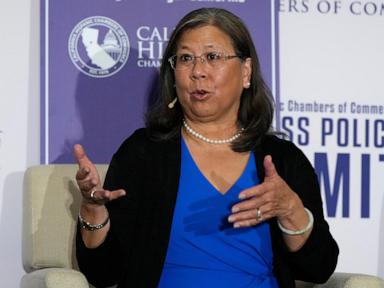
The exit of a Democratic candidate from the 2026 California gubernatorial race is not a sign of a failing campaign, but a rational response to the brutal math of the "Top Two" primary system. In a state where the cost of entry is measured in eight figures and the path to victory is constrained by geographic and demographic bottlenecks, early attrition is a predictable feature of political capital optimization. Candidates who withdraw at this stage have likely hit a fundamental ceiling in one of three critical areas: capital liquidity, donor concentration, or path-to-runoff feasibility.
The Three Pillars of Gubernatorial Viability
To understand why a candidate abandons a race two years before the general election, one must evaluate their standing against three non-negotiable pillars of viability. Failure in any single pillar renders a campaign a liability rather than an asset.
1. Capital Liquidity and Burn Rate
California is the most expensive media market in the United States. A statewide run requires simultaneous saturation in Los Angeles, the San Francisco Bay Area, Sacramento, and the Central Valley. The cost function of a viable campaign is driven by the "Media Buy Floor"—the minimum expenditure required to achieve a 70% name recognition rate among likely voters.
When a candidate’s burn rate (staff, polling, travel) exceeds their capital inflow, the campaign enters a "death spiral." Donors recognize the lack of momentum and withhold secondary contributions, further starving the operation. Exiting early allows a politician to preserve their remaining political capital and avoid the stigma of a low-single-digit finish, which would jeopardize future runs for lower-tier offices.
2. Geographic and Demographic Consolidation
The California electorate is not a monolith; it is a collection of distinct power centers. A successful candidate must secure a "base of operations" in at least one major metropolitan area while maintaining a competitive "floor" in another.
- The Northern Power Block: San Francisco and Oakland (High-turnout, progressive, donor-dense).
- The Southern Power Block: Los Angeles and Orange County (High-volume, diverse, media-expensive).
- The Inland Empire/Central Valley: The swing regions that decide the margin in a close two-Democrat runoff.
A candidate exiting the race usually finds themselves squeezed out of these geographies. If two other candidates have already locked up the major endorsements and donor networks in Los Angeles and the Bay Area, a third candidate has no mathematical path to the 25-30% of the vote required to clear the primary.
3. The Top Two Primary Bottleneck
California’s nonpartisan blanket primary creates a unique strategic hazard. Because the top two finishers advance regardless of party, the "Spoiler Effect" is intensified. If too many Democrats stay in the race, they risk splitting the liberal vote so thinly that two Republicans—or one Republican and one dominant Democrat—take the top spots. Party leadership often applies quiet pressure on trailing candidates to consolidate the field, ensuring the party does not accidentally lock itself out of the general election in a deep-blue state.
The Cost Function of Name Recognition
The primary barrier to entry in California is the sheer scale of the "Voter Contact Gap." In a state with over 22 million registered voters, traditional retail politics (shaking hands at diners) has near-zero statistical impact on the outcome.
The mechanism of victory is almost entirely reliant on high-frequency paid media. We can quantify the challenge using a Simplified Recognition Model:
$$R = \frac{E \cdot A}{V \cdot C}$$
Where:
- $R$ is the Name Recognition percentage.
- $E$ is the Total Expenditure on media.
- $A$ is the Ad Effectiveness coefficient (creative quality).
- $V$ is the Total Registered Voter population.
- $C$ is the Cost per Impression in a given market.
As $V$ is a constant and $C$ is rising due to inflation and digital ad competition, $E$ must increase exponentially to maintain $R$. A candidate who cannot project a path to raising $50 million to $75 million for the primary cycle is effectively a "ghost candidate." By exiting now, they acknowledge that their $E$ value is insufficient to move $R$ beyond the margin of error.
The Mechanical Impact of Attrition on the Remaining Field
The withdrawal of a candidate triggers an immediate redistribution of political assets. This is not a random dispersal; it follows a predictable "Proximity Logic."
Endorsement Migration
When a candidate leaves, their endorsers—labor unions, advocacy groups, and local officials—become free agents. These entities prioritize "Winning Probability." They will typically migrate to the remaining candidate whose platform most closely aligns with theirs, but only if that candidate demonstrates a viable path to the runoff. This creates a "Rich Get Richer" effect, where the top two or three candidates see a disproportionate surge in momentum following a peer's exit.
Donor Reallocation
Donors are venture capitalists of policy. They hate losing. An early exit allows a donor to "tax-loss harvest" their political investment and move their remaining budget to a candidate who can actually deliver a return (access or policy influence). The candidates currently polling in the top three will see an immediate uptick in "second-choice" fundraising.
Voter Sentiment Shifts
In a crowded field, voters often experience "Choice Paralysis." The exit of a minor candidate simplifies the cognitive load for the electorate. However, the voters who supported the exiting candidate do not always move to the next most similar person. Often, they move to the "Alpha Candidate"—the one perceived as the most likely winner—to ensure their vote "counts" in the Top Two scramble.
Structural Failures in the Competitor's Narrative
Standard reporting often frames these exits as personal failures or "lack of message." This is a fundamental misunderstanding of the systemic pressures at play. The "message" is rarely the problem in California; the "transmission" is.
A candidate can have a revolutionary policy platform, but if they lack the "Distribution Network" (media spend and ground game), the message never reaches the ears of the 60% of voters who don't tune in until the final three weeks. The departing candidate didn't lose the argument; they lost the auction for the electorate's attention.
Furthermore, many analysts overlook the "Incumbency Shadow." While there is no incumbent in the 2026 race, the presence of high-ranking statewide officers (such as the Lieutenant Governor or Attorney General) creates a "quasi-incumbency" advantage. These figures have pre-existing statewide name recognition ($R$) that acts as a massive subsidy, allowing them to spend less on "Introduction Ads" and more on "Contrast Ads." A candidate coming from a local office (like a Mayor) or a private background must pay a "Recognition Tax" that their statewide counterparts do not.
Predictive Modeling of the 2026 Field
The current contraction of the field suggests the 2026 race is entering a "Consolidation Phase" earlier than historical norms. This is driven by the anticipation of a high-spending, high-stakes national environment that will drive up ad costs across the board.
We can expect the following shifts in the next six months:
- The Extraction of Peripheral Candidates: Expect at least two more "Tier 2" candidates to withdraw before the end of the fiscal year as they realize their Q3 and Q4 fundraising totals are insufficient to compete with the frontrunners.
- The Pivot to Negative Branding: As the field thins, the remaining candidates will move from "Introduction" mode to "Differentiation" mode. This involves using "Opposition Research" to drive up the "Unfavorability Rating" of their closest rivals.
- The Search for a "Third Way": With the Democratic field consolidating, look for a Republican or an Independent to attempt a "Consolidated Minority" strategy—hoping to capture 100% of the GOP vote to slide into the second-place runoff spot while the Democrats continue to split the remaining 70% three or four ways.
The 2026 race is currently a game of musical chairs where the music is the sound of television ad buys. Every time a candidate exits, another chair is removed, and the price of sitting down in the remaining ones doubles.
The strategic play for the remaining candidates is not to seek broad appeal, but to aggressively monopolize a specific demographic or geographic "silo." By securing 15-18% of a guaranteed, high-turnout segment (e.g., organized labor in the North or Latino voters in the South), a candidate can insulate themselves against the volatility of the broader field and guarantee a spot in the runoff. The departing candidate realized they had no silo; the remaining ones must now defend theirs at all costs.


:strip_icc()/pic2513216.jpg)