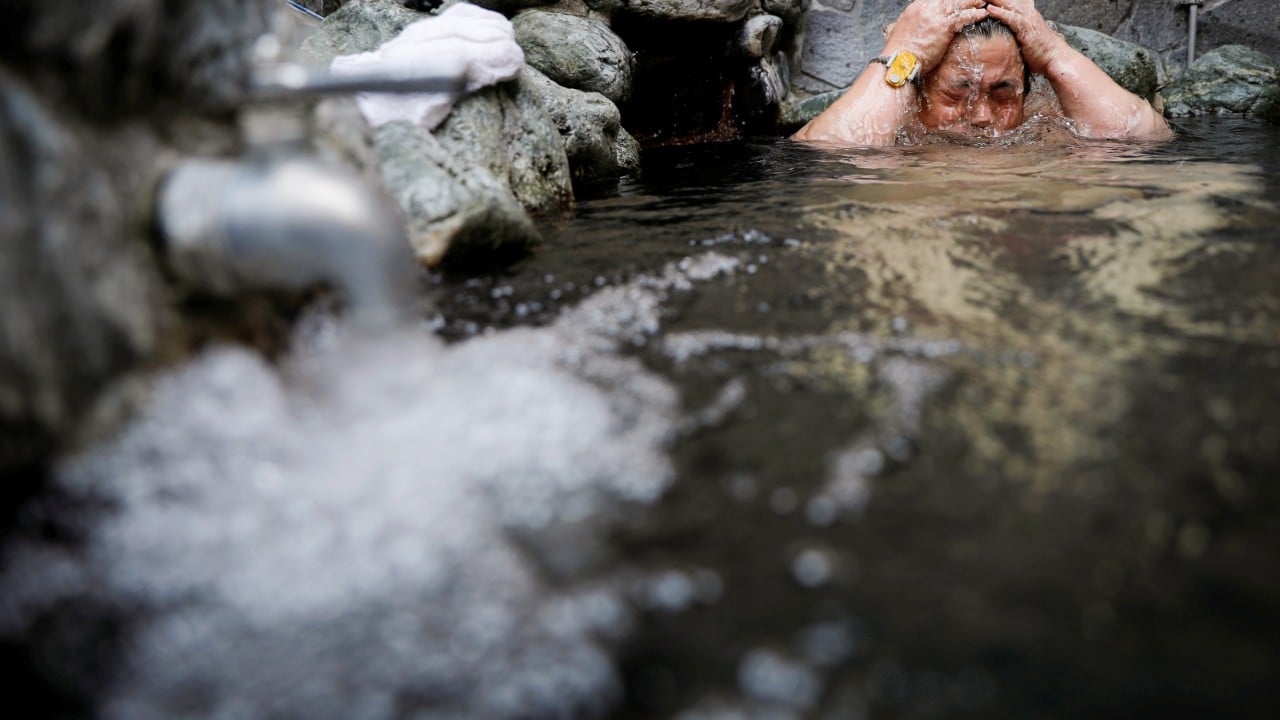
The collapse of the traditional Japanese bathhouse—the sento—is not a cultural evolution but an industrial insolvency crisis triggered by a fixed-revenue model colliding with volatile variable costs. While the public narrative centers on "changing lifestyles," the actuarial reality is a failure of the Sento Unit Economic Equation. When the price of energy exceeds the margin generated by government-capped admission fees, the business model transitions from a community service to a liability. Survival in this sector requires a radical pivot from a volume-based utility model to a high-margin experiential asset or a subsidized social infrastructure play.
The Unit Economic Imbalance
The fundamental flaw in the sento business model lies in the decoupling of price and cost. Unlike standard retail or service industries, sentos operate under a price ceiling dictated by local prefectural governments. In Tokyo, for example, the adult admission fee is strictly regulated, preventing owners from passing inflationary pressure onto the consumer.
The cost structure of a bathhouse is defined by three primary levers:
- Energy Input Intensity: Sentos are thermal-heavy operations. The energy required to heat thousands of liters of water to a constant 42°C represents the largest variable expense.
- Fixed Asset Maintenance: High-humidity environments accelerate the depreciation of physical assets. Plumbing, boilers, and tilework require continuous capital expenditure (CapEx) to prevent structural failure.
- The Labor-Occupancy Ratio: A sento requires a baseline level of staffing regardless of whether one person or fifty people are bathing.
When the price of imported Liquefied Natural Gas (LNG) or crude oil spikes, the "Breakeven Occupancy" rises. In many cases, the number of patrons required to cover the daily gas bill exceeds the physical capacity of the facility or the local population density. This is the Thermal Insolvency Threshold.
The Thermal Efficiency Gap
Most remaining sentos are legacy facilities built during Japan’s Showa era. Their infrastructure was designed for a period of cheap, stable energy and high domestic growth. These buildings are thermal sieves.
The inefficiency is rooted in the Open-Loop Water System. In a traditional setup, heated water is used once and drained. This results in a 100% loss of residual thermal energy. Modern industrial processes utilize heat exchangers to capture energy from wastewater to pre-heat incoming cold water, but the CapEx required to retrofit a 50-year-old bathhouse is often greater than the remaining value of the business.
The second bottleneck is Boiler Obsolescence. Many sentos still rely on wood-fired boilers or aging oil burners. While wood-scraps offer a lower fuel cost, they require intensive manual labor and lack the precision of modern electronic thermal management. The transition to electric heat pumps—which are significantly more efficient—is barred by the prohibitive cost of electrical grid upgrades for residential-zoned properties.
Demographic Erosion and the Convenience Substitution
The sento was originally a "utilitarian necessity" because domestic bathrooms were rare. As Japan modernized, the bathhouse was replaced by the Domestic Substitution. Today, nearly 95% of Japanese households have a private bath. This shifted the sento’s value proposition from "Hygiene Access" to "Leisure/Social Interaction."
The leisure market is significantly more competitive than the utility market. The sento now competes for "Time Share" against:
- Super Sentos: Large-scale, private-sector facilities that are not subject to government price caps. They offer dining, massage, and relaxation lounges, allowing them to monetize the customer beyond the bath.
- Home Entertainment: High-fidelity streaming and gaming have increased the "Opportunity Cost of Leaving the Home."
The demographic most loyal to the sento—the elderly—is shrinking. This creates a Negative Network Effect. As the social density of the bathhouse decreases, its value as a "third space" diminishes, leading to further declines in attendance.
The Regulatory Death Spiral
Government intervention, intended to protect the public’s access to hygiene, is now the primary accelerant of the industry’s demise. By fixing prices, the government has removed the market's ability to signal value.
If a sento owner cannot raise prices to $10 or $15 USD to reflect the premium nature of the experience or the increased cost of energy, they are forced to cut costs. Cost-cutting in a service business inevitably leads to:
- Reduced Operating Hours: Limiting the window for revenue generation.
- Deferred Maintenance: Leading to a visible decline in facility quality.
- Staffing Reductions: Decreasing the quality of the customer experience.
This results in a "race to the bottom" where the facility becomes less attractive to new, younger customers who are willing to pay more for a premium experience but find the aging sento "dilapidated."
Strategic Diversification and the High-Margin Pivot
Survival is currently limited to those who can break the unit economic equation through non-bath revenue. The bath itself must be treated as a Loss Leader for more profitable segments.
Successful sentos are diversifying into:
- Craft Beverage and Gastronomy: Utilizing the lobby space as a high-margin bar or cafe. The "Post-Bath Refreshment" is a high-intent purchase with significant markups.
- Co-working Integration: Repurposing underutilized daytime hours for remote workers, charging for space and Wi-Fi rather than just water.
- Niche Branding (The Sauna Pivot): Leveraging the global "sauna boom" to attract younger, affluent demographics who view the heat-cold cycle as a wellness ritual rather than a hygiene task. Saunas have a higher perceived value than a simple hot tub, allowing for auxiliary fees.
The Infrastructure Case for Subsidy
If the sento is to survive as a public utility, the funding model must shift from the consumer to the state. There is a strong argument for the sento as a Preventative Healthcare Asset.
Studies in Japan have indicated that regular communal bathing reduces social isolation and improves cardiovascular health in the elderly, potentially lowering long-term national healthcare costs. However, current subsidies are often "Band-Aid" solutions—one-time grants for boiler repairs—rather than structural offsets for energy costs. A sustainable model would involve the sento being integrated into urban disaster-relief networks, serving as emergency water and heat hubs in exchange for permanent tax exemptions or utility credits.
Execution of the Exit or Evolution
For operators, the current landscape dictates a binary choice: Asset Liquidation or Total Model Transformation.
The liquidation value of the land in urban centers like Tokyo or Osaka often exceeds the 20-year projected NPV (Net Present Value) of the bathhouse business. For those choosing evolution, the strategy must focus on Thermal Optimization and Revenue Layering.
- Install Heat Recovery Systems: Captured energy from gray water must be used to reduce the primary heating load by at least 20-30%.
- Abolish the Utility Mindset: Market the facility as a "Thermal Sanctuary." Shift the aesthetic from functional tile to high-design environments that justify a higher "voluntary" spend on amenities.
- Digital Community Management: Implement subscription models (SaaS-style memberships) to secure recurring revenue and stabilize cash flow against seasonal energy fluctuations.
The traditional sento is an artifact of a low-cost energy environment that no longer exists. Without a transition to high-margin service delivery or state-sponsored utility status, the remaining 1,800 sentos in Tokyo will continue to vanish as their boilers reach the end of their mechanical life cycles. The future of the industry is not in the water, but in the space around it.