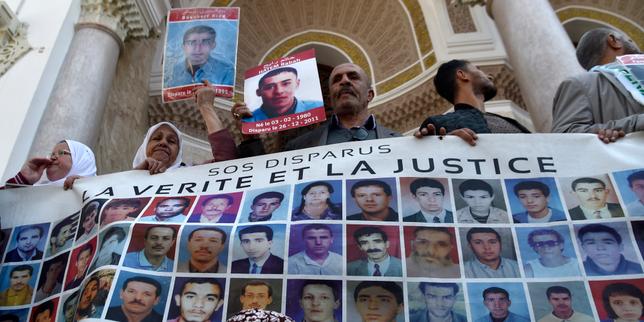
The dissolution of SOS Disparus and the National Association of Families of the Disappeared (ANFD) by Algerian authorities represents a final systemic closure of the "Black Decade" evidentiary trail. This is not a localized administrative action; it is the execution of a state strategy designed to achieve legal finality over the 1990s civil conflict by dismantling the infrastructure of memory. By analyzing the intersection of the Charter for Peace and National Reconciliation, the narrowing of civic space, and the mechanics of "disappearance" as a legal vacuum, we can identify the specific logic driving the liquidation of these human rights entities.
The Architecture of Legal Impunity
The primary obstacle to the existence of SOS Disparus is the Charter for Peace and National Reconciliation (2005). This document serves as the constitutional bedrock for state-mandated amnesia. It operates on two distinct functional layers:
- Amnesty for Insurgents: Providing a path for former militants to reintegrate, provided they were not involved in massacres, rapes, or bombings in public places.
- Immunity for State Actors: Specifically, Article 45 prohibits any legal proceedings against members of the defense and security forces for actions taken during the "fight against terrorism."
The existence of an association dedicated to documenting the disappeared creates a persistent friction with Article 46 of this Charter, which criminalizes any speech or action that uses the "wounds of the national tragedy" to harm state institutions or the image of Algeria internationally. When an organization collects testimony regarding the missing, it inadvertently compiles a dossier of potential state liability. The closure of SOS Disparus is the state’s method of neutralizing the "evidentiary risk" that these dossiers represent.
The Mechanics of Disappearance as a Legal State
In Algerian law, the "disappeared" inhabit a non-space. To manage the socioeconomic fallout for the families (inheritance, marital status, guardianship), the state implemented a system of "Certificates of Death" issued for those missing during the 1990s.
This creates a specific Binary of Recognition:
- The State's Model: Acceptance of a death certificate in exchange for financial compensation. This converts a human rights violation into a closed administrative file.
- The Association's Model: Maintenance of the "Disappeared" status until the truth of the disappearance is established. This refuses the financial settlement in favor of forensic and judicial accountability.
By dissolving SOS Disparus, the state removes the primary intermediary that supports families in choosing the second model. Without organizational support, families face overwhelming bureaucratic and psychological pressure to accept the administrative closure of their relatives' cases, effectively erasing the "disappeared" category from the national registry.
The Shrinking Perimeter of Decree 12-06
The legal instrument used to shutter these organizations is often Law 12-06 on Associations. This legislation provides the executive branch with broad discretionary power to deny registration or dissolve groups based on vague criteria such as "interference in internal affairs" or "harming national sovereignty."
The operational life cycle of an Algerian NGO under this law follows a predictable path of strangulation:
- Administrative Limbo: The state refuses to issue a "receipt" of registration, leaving the group in a legal "gray zone" where they can technically meet but cannot open bank accounts or lease office space.
- Surveillance and Restriction: Once a group gains international visibility, their activities are framed as violating the terms of their (often non-existent) registration.
- Judicial Liquidation: The Ministry of Interior files for dissolution in administrative courts, citing violations of public order.
The case of SOS Disparus is a subset of a broader campaign that saw the dissolution of the Algerian League for the Defense of Human Rights (LADDH) and the youth organization RAJ. The objective is to eliminate "civilian monitors" who possess the capacity to aggregate individual grievances into collective political demands.
Forensic Erasure and the Risk of Historical Revisionism
The loss of SOS Disparus is, at its core, a loss of data. For three decades, these associations served as a decentralized archive of the 1990s. They held:
- Standardized intake forms documenting the time, location, and circumstances of abductions.
- Geospatial data on suspected mass graves and detention centers.
- Chains of command associated with specific security sectors during high-intensity periods of the conflict.
When the state closes these offices, it does not just stop an activist from speaking; it secures the physical and digital archives. In a state where the official narrative of the Black Decade is one of "national redemption," the survival of an independent archive is a threat to the state’s monopoly on history. This erasure ensures that future generations will lack the primary sources necessary to challenge the state-sanctioned version of events.
International Leverage and Its Limitations
Algeria’s position as a critical energy supplier to Europe (particularly after 2022) has altered the geopolitical cost-benefit analysis of domestic repression. The "Gas for Silence" trade-off reduces the efficacy of traditional human rights pressure from the European Union or individual member states.
Furthermore, the state utilizes the "Universal Periodic Review" (UPR) process at the United Nations to present a facade of compliance. By the time international bodies issue recommendations regarding the rights of the disappeared, the domestic organizations that would implement or monitor those recommendations have already been dismantled.
Structural Logic of the Present Crackdown
The timing of these closures suggests a desire to sanitize the political landscape ahead of electoral cycles. By removing the "Disappeared" issue from the public square, the authorities are attempting to finalize the transition from a post-conflict society to a "normalized" state. However, this normalization is built on a foundation of unresolved trauma.
The logic of the state follows a clear sequence:
- De-legitimize the actors by labeling them as tools of foreign influence.
- Paralyze the logistics by blocking financial and legal status.
- Atomize the base by removing the central organizing hub for the families.
- Formalize the absence through judicial dissolution.
The dissolution of SOS Disparus is the final step in the Atomization phase. Without a central hub, the families of the disappeared revert to being isolated individuals dealing with a monolithic bureaucracy, rather than a collective force capable of demanding systemic truth.
Strategic Forecast for Human Rights Documentation
The era of formal, registered human rights associations in Algeria is effectively over for the medium term. Documentation will likely shift to a "Distributed Model." This involves:
- Offshore Data Redundancy: Moving archives to cloud-based, encrypted servers outside Algerian jurisdiction to prevent the physical seizure of evidence.
- Informal Networks: Relying on clandestine data collection that does not require a physical office or legal registration.
- Digital Memorialization: Shifting from physical protests to digital "Places of Memory" that are harder for local police forces to dismantle.
For the international community and legal practitioners, the focus must shift from "capacity building" for local NGOs to "evidence preservation." The goal is no longer to keep an office open in Algiers, but to ensure that the data collected over the last 30 years is digitized, verified, and stored in a manner that remains admissible in future international jurisdictions, should the legal landscape ever shift toward accountability.
Would you like me to map the specific legislative intersections between Law 12-06 and the Penal Code revisions used to target these associations?