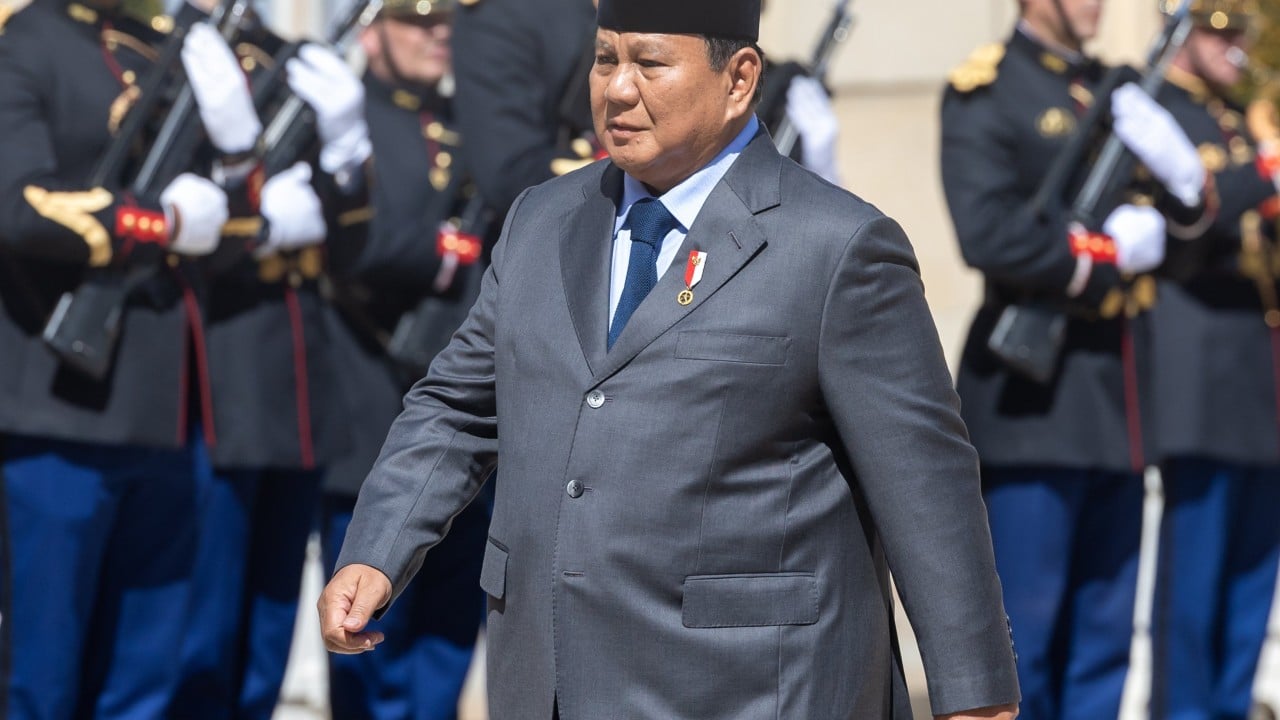
The Indonesian government currently faces a dual-track credibility crisis defined by a misalignment between executive operational expenditure and domestic energy conservation mandates. While the administration of President Prabowo Subianto has signaled a shift toward austerity by requesting civil servants reduce Work-From-Home (WFH) fuel consumption, the simultaneous expansion of high-frequency overseas diplomatic missions creates a friction point in public policy. This tension is not merely a matter of public perception; it is a structural contradiction between the Macroeconomic Necessity of Energy Security and the Geopolitical Luxury of Executive Presence.
To analyze this friction, one must examine the cost-benefit ratio of the "Executive Mobility Premium"—the inherent value assigned to the President’s physical presence on the world stage—against the "Domestic Utility Function," which measures the economic efficiency of the Indonesian workforce under fuel constraints.
The Taxonomy of Presidential Diplomacy vs. Fiscal Austerity
The current administrative strategy operates under two competing frameworks that are increasingly difficult to reconcile within a single budgetary cycle.
1. The Geopolitical Expansion Mandate
Prabowo’s early tenure has been characterized by a "First-Mover Advantage" strategy. By visiting major global powers—China, the United States, and various European nations—within his first months, the President aims to re-position Indonesia as a non-aligned but highly active middle power. The logic here is that foreign direct investment (FDI) and defense cooperation require high-level, face-to-face negotiation that cannot be replicated via digital diplomacy. This is the Primary Stakeholder Engagement phase, where the cost of travel is viewed as a capital expenditure (CAPEX) intended to yield long-term sovereign returns.
2. The Energy Subsidy Correction Mechanism
Inversely, the domestic front is managed under an Operational Expenditure (OPEX) Reduction framework. Indonesia's dependence on imported fuel and the volatility of the Rupiah create a fragile fiscal environment where fuel subsidies represent a significant drain on the state budget (APBN). The call for WFH measures is a blunt instrument designed to suppress aggregate demand for refined petroleum products.
The friction arises because the government is asking the "labor" (the citizens and civil servants) to optimize for efficiency while the "executive" (the presidency) continues to operate under a high-burn expansionist model.
Quantifying the Opportunity Cost of Diplomatic Saturation
The critique of Prabowo’s overseas trips often lacks a quantitative basis, focusing instead on optics. However, a rigorous analysis must evaluate the Marginal Utility of the Nth Trip.
In the first 30 to 60 days of an administration, the utility of presidential travel is high. It establishes legitimacy and secures immediate bilateral commitments. However, as the frequency of trips increases, the marginal utility begins to diminish, while the fixed costs of the presidential entourage (security, logistics, aircraft operation) remain constant or increase due to "Diplomatic Fatigue."
- The Logistical Footprint: A presidential trip is not a solo endeavor; it involves a tiered support structure including the State Secretariat, Ministry of Foreign Affairs, and security details. The carbon and fiscal footprint of this apparatus directly counters the narrative of national energy conservation.
- The Shadow Cost of Absence: Every day the President is abroad is a day of delayed decision-making on internal domestic bottlenecks. In a centralized political system like Indonesia’s, executive absence can lead to "Legislative Stasis," where critical reforms are paused pending the leader’s return.
The administration’s failure to provide a transparent "Success Metric" for these trips allows the public to view them as a net loss. Without a disclosed ROI (Return on Investment) for each state visit—measured in confirmed trade volume or technology transfer—the trips are categorized by the public as consumption rather than investment.
The WFH Paradox: Efficiency or Shifting the Burden?
The directive for Indonesians to work from home to save fuel is a redirection of costs from the state to the individual. While WFH can reduce national fuel consumption, it shifts the operational costs (electricity, internet, home cooling) to the private household.
The Elasticity of Fuel Demand in Indonesia
Indonesia’s transportation infrastructure is heavily reliant on private vehicle ownership due to gaps in public transit networks outside of Jakarta. Consequently, fuel demand is relatively inelastic. Forcing a WFH mandate on a population without providing a robust digital infrastructure or energy rebates creates a secondary economic drag.
- The Productivity Leak: If the WFH transition is not supported by high-speed connectivity and decentralized digital government services, the result is a drop in Total Factor Productivity (TFP).
- The Fuel Savings Mirage: If citizens reduce work-related travel but increase leisure-related or logistics-related (delivery services) travel, the net reduction in national fuel consumption is negligible.
Bridging the Credibility Gap Through Structural Transparency
The administration’s current communication strategy relies on appeals to patriotism and national stability. However, data-driven governance requires more than rhetoric. To align executive mobility with domestic austerity, the following structural adjustments are necessary to mitigate the "Hypocrisy Risk."
Implementation of a Triple-Bottom-Line Reporting for State Visits
The State Secretariat should adopt a reporting framework that justifies each overseas mission based on three criteria:
- Economic Yield: Specific, audited investment commitments or debt restructuring gains.
- Geopolitical Security: Quantifiable advancements in regional stability or defense procurement.
- Fiscal Offset: Evidence that the cost of the trip has been offset by efficiency gains in other executive departments.
The "Austerity at the Top" Signal
For the WFH mandate to gain public compliance, the executive branch must demonstrate a parallel reduction in internal operational costs. This includes:
- Limiting the size of ministerial delegations accompanying the President.
- Utilizing virtual summits for secondary and tertiary diplomatic engagements, reserving physical travel only for G20, ASEAN, and primary strategic partners.
- Transparent accounting of the presidential aircraft’s fuel consumption, perhaps offset by a voluntary carbon tax or investments in domestic renewable energy projects.
The Geopolitical Risk of Domestic Alienation
A government that projects strength abroad while demanding sacrifice at home risks eroding its Domestic Social Capital. Indonesia’s political history shows that fuel prices and the perception of elite excess are the two most volatile variables in social stability.
If the public perceives that the "sacrifices" are asymmetrical, the resulting erosion of trust will manifest in reduced compliance with future fiscal reforms, such as the inevitable further reduction of the fuel subsidy. The administration is currently "spending" its political capital to fund its diplomatic presence.
The success of the Prabowo administration will not be judged by the number of hands shaken in Washington or Beijing, but by whether those handshakes result in a tangible reduction in the cost of living for the Indonesian citizen. If the Executive Mobility Premium does not translate into a Domestic Standard of Living Dividend, the current strategy will be viewed as a historical miscalculation in resource allocation.
The strategic imperative now is to transition from "High-Frequency Diplomacy" to "High-Impact Diplomacy." The administration must immediately prioritize the domestic energy transition—not through behavioral mandates like WFH, but through the accelerated overhaul of the national grid and the reduction of the state's own fuel-intensive logistics. Only by reducing the state's dependence on fossil fuels at the source can the executive branch reclaim the moral and fiscal authority to request the same from its citizenry. The era of "Diplomacy by Presence" must give way to "Diplomacy by Result," where every liter of fuel burned by the presidential fleet is backed by a verified contribution to the national treasury.