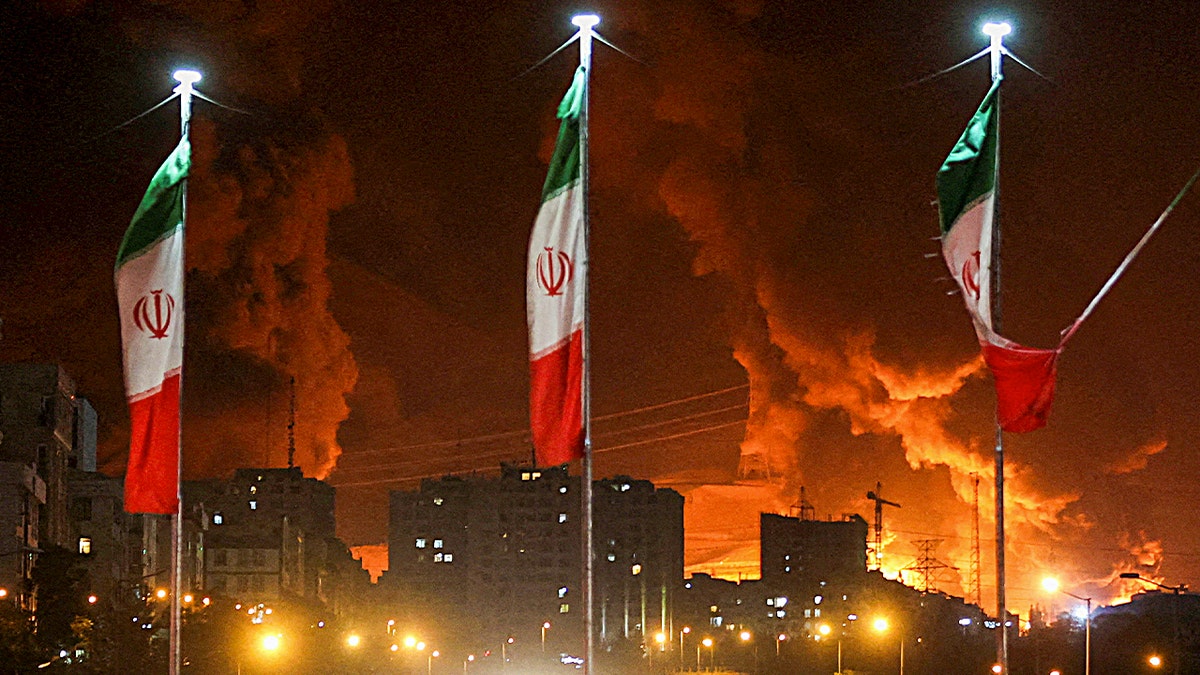
The breach of the $100 per barrel mark in global crude markets represents more than a psychological hurdle; it is the mathematical realization of a systemic risk premium tied to the physical restriction of the Strait of Hormuz. When diplomatic frameworks collapse, the market shifts from pricing based on marginal supply-demand balances to pricing based on total existential threat to the energy transit corridor. A U.S. Navy-led blockade of Iranian ports functions as a dual-force multiplier for price volatility, creating an immediate supply vacuum while simultaneously activating long-tail insurance and logistics surcharges that redefine the global cost of energy.
The Triad of Maritime Disruption
To understand the current price trajectory, the situation must be viewed through three distinct operational layers. The failure of peace talks transitioned the geopolitical state from "friction" to "active containment," forcing an immediate revaluation of risk by commodity desks and physical traders.
1. Physical Supply Extraction
Iran’s daily export volume, while fluctuating under prior sanctions, represents the marginal supply that keeps the global market from entering a deficit. The physical removal of these barrels via a blockade creates a structural gap. Global spare capacity—primarily held by Saudi Arabia and the UAE—is not a frictionless valve. The time-lag required to bring dormant wells online and the technical limitations of refinery configurations (matching crude API gravity and sulfur content) mean that Iranian "Heavy" or "Light" cannot be instantly replaced by a generic substitute.
2. The Strait of Hormuz Chokepoint Risk
The blockade does not occur in a vacuum. It takes place at the world's most sensitive energy artery. Roughly 20% of the world’s total oil consumption passes through this 21-mile-wide passage. The threat of Iranian retaliation against non-Iranian tankers—utilizing asymmetric naval assets like fast-attack craft, sea mines, and shore-to-ship missiles—introduces a "War Risk Premium."
3. Logistic and Insurance Cascades
The cost of shipping crude is governed by the Baltic Exchange indices and specialized maritime insurance premiums. A blockade triggers "Additional Premium" (AP) zones. When a high-traffic area is declared an active zone of naval interdiction, hull and machinery insurance can spike by 500% to 1,000% per transit. These costs are directly passed to the end-user, decoupling the price at the pump from the actual cost of extraction.
The Cost Function of Naval Interdiction
The naval blockade model relies on "Command of the Sea" to achieve economic objectives. However, the efficiency of a blockade is inverse to its duration. A prolonged engagement increases the probability of "leakage" through overland pipelines and grey-market ship-to-ship transfers in international waters.
The U.S. Navy's operational footprint requires a massive allocation of Carrier Strike Group (CSG) resources to maintain a perimeter around major terminals such as Bandar Abbas and Kharg Island. This deployment creates a cost-sink for the intervening power while forcing the target nation into a corner where the only remaining economic lever is the total sabotage of the waterway.
Strategic analysts must calculate the Total Disruptive Value (TDV) of this blockade using the following variables:
- Primary Loss: 1.5 to 2.5 million barrels per day (mb/d) of Iranian exports.
- Secondary Loss: Potential disruption of 15+ mb/d of neighboring exports (Kuwait, Iraq, UAE) due to combat proximity.
- Tertiary Loss: Diversion of global shipping fleets to longer, more expensive routes to avoid the Persian Gulf.
Kinetic Escalation and Market Elasticity
Oil prices are currently "inelastic," meaning consumers cannot quickly reduce their usage in response to price hikes. This lack of elasticity ensures that for every 1% of global supply removed, prices do not rise by a mere 1%; they surge exponentially until "demand destruction" occurs.
The $100 threshold is the point where industrial output in emerging markets begins to contract. At this level, the cost of diesel for logistics and the cost of naphtha for chemical production outpace the profit margins of mid-sized manufacturers. If the blockade moves from a "soft" screening process to "hard" kinetic interdiction (the seizing of vessels), the market will likely price in a $120 to $130 floor.
The relationship between naval positioning and Brent Crude pricing follows a predictable sequence:
- The Announcement Phase: Speculative bidding drives prices up 5-8% on the threat of action.
- The Deployment Phase: Physical tightening occurs as tankers avoid the region; prices stabilize at a new, higher plateau.
- The Interdiction Phase: The first boarding or seizure of a vessel creates a "volatility spike," often adding $10-$15 to the barrel price in a single trading session.
Strategic Deficiencies in Current Market Analysis
Most commentators focus on the "Price of Oil" as a singular metric. This is a fundamental error. The market is actually a collection of regional spreads. A blockade in the Persian Gulf creates a massive "Brent-WTI" spread. West Texas Intermediate (WTI), being largely insulated from Middle Eastern maritime risk, should trade at a significant discount to Brent. However, because oil is a fungible global commodity, European and Asian buyers will pivot to U.S. and West African crudes, bidding up the price of non-Middle Eastern oil and erasing the insulation American consumers might expect from domestic production.
Furthermore, the "Strategic Petroleum Reserve" (SPR) is a finite buffer. While the U.S. or IEA member nations can release stocks to dampen the initial shock, this is a tactical band-aid for a structural wound. The SPR cannot substitute for the lost daily flow of a blockade indefinitely. The moment the market perceives that SPR levels are reaching their "red line" (the minimum required for national defense), a second, more violent price surge will occur.
The Buffer Capacity Illusion
The assumption that OPEC+ will simply "fill the gap" ignores the internal politics of the cartel. Many member nations are currently producing at their technical limits. Maintenance backlogs and lack of upstream investment during the low-price years of the previous decade have left the global system with the thinnest safety margin in recent history.
If the U.S. Navy enforces a total blockade, the success of the mission depends on the compliance of the global tanker fleet. If the "Shadow Fleet"—vessels operating with obscured ownership and non-standard insurance—continues to move Iranian product, the blockade becomes a high-cost theater with low economic impact. This would force the U.S. into a position of having to sink or seize non-Iranian flagged vessels, which escalates a regional trade dispute into a global maritime legal crisis.
Macroeconomic Feedback Loops
The intersection of $100+ oil and a naval blockade triggers three specific economic feedback loops:
- The Inflationary Spiral: Energy costs account for a significant portion of the Consumer Price Index (CPI). Sustained high energy prices force central banks to maintain higher interest rates, which increases the cost of debt for the very companies trying to innovate around energy dependency.
- Currency Devaluation: Countries that are net importers of oil (India, Japan, much of the EU) must sell their domestic currency to buy USD-denominated oil. This weakens their currencies, making the oil even more expensive in local terms—a "double hit" to their economies.
- The Fertilizer Bottleneck: Natural gas and oil derivatives are primary inputs for nitrogen-based fertilizers. A blockade in the Gulf doesn't just raise the price of gasoline; it raises the price of global food staples six to nine months down the line.
Operational Pivot for Global Energy Consumers
The strategy for institutional players is no longer about predicting "if" prices stay high, but managing the "duration" of the supply gap. The failure of peace talks indicates a multi-quarter period of volatility.
The immediate tactical move is the aggressive hedging of distillates. While crude gets the headlines, the "crack spread"—the difference between the price of crude and the refined products like diesel—will widen even faster. Refineries in the path of the blockade’s indirect effects will face feedstock uncertainty, leading to localized shortages even if crude is available elsewhere.
Enterprises should shift from "Just-in-Time" inventory models to "Just-in-Case" stockpiling of energy-dense components. The maritime blockade of Iran is not a localized event; it is a fundamental restructuring of the global energy risk map. The era of $70-80 oil was predicated on a level of maritime security and diplomatic stability that has now been functionally dissolved.
The next phase of the crisis involves the testing of the "Joint Comprehensive Plan of Action" (JCPOA) remnants. If the blockade results in Iran exiting the Non-Proliferation Treaty (NPT), the energy market will move from a "Supply Risk" model to a "Total War" model, where $100 oil will be viewed as a historical floor rather than a peak.
The strategic priority for the U.S. and its allies is the rapid certification of alternative maritime routes and the expansion of the East-West Pipeline in Saudi Arabia, which can bypass the Strait of Hormuz. However, the throughput capacity of these alternatives is less than 40% of the total volume currently at risk. The math is inescapable: until the blockade is lifted or a new supply source of equal magnitude (2+ mb/d) is integrated into the global grid, the price of energy will remain untethered from traditional cost-of-production metrics.
Positioning should focus on the "Inland Producers" and companies with robust pipelines that do not rely on the vulnerable maritime corridors of the Middle East. The blockade has effectively turned geography into destiny for the global economy.