The sports media is celebrating a massive victory for labor rights. They are entirely wrong.
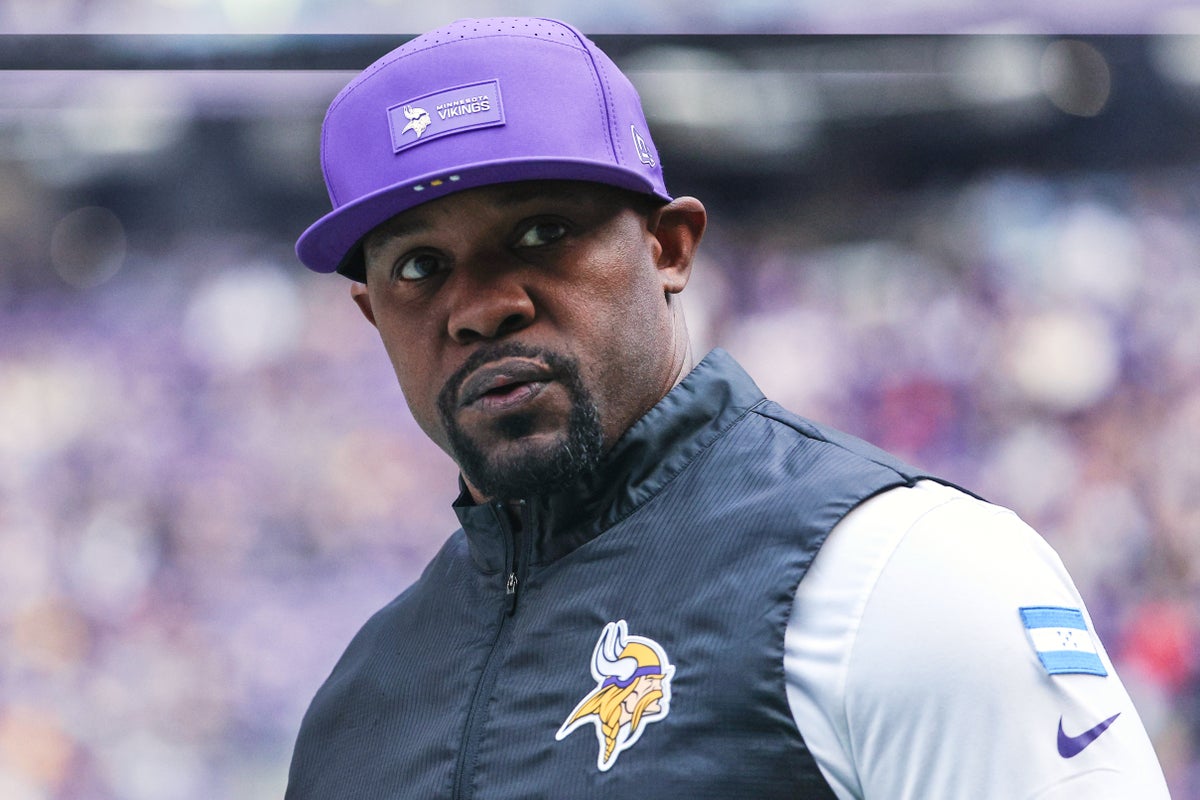
When the US Supreme Court rejected the National Football League’s bid to force Brian Flores’s racial discrimination lawsuit into private arbitration, the consensus view crystallized immediately: a win for transparency, a defeat for billionaire owners, and a turning point for minority coaches. Activists cheered. Law professors nodded in approval.
They are missing the trap. By keeping this high-profile litigation in the public court system, the legal system did not just open the NFL's books to scrutiny. It practically guaranteed that no major structural reform will happen for a generation.
Public courts are built to litigate specific, backward-looking damages, not to re-engineer systemic corporate hiring practices. Private arbitration, for all its structural flaws, offers a venue for rapid, systemic overhauls through binding corporate governance adjustments that public judges routinely reject as judicial overreach.
By forcing this case into the public spotlight, the legal strategy has shifted from structural reform to an expensive, multi-year PR war that the NFL is perfectly built to survive.
The Illusion of Public Accountability
The core argument against arbitration is that it buries corporate misdeeds in total secrecy. The logic follows that if the NFL is forced to answer questions in open court, the resulting public pressure will compel the league to fix its hiring pipeline.
This view ignores how the NFL actually operates.
Public exposure does not shame NFL owners into compliance; it hardens their resolve. The league has survived multi-billion-dollar public scandals involving concussions, domestic violence, and collusion without fundamentally altering its power structure. The public courtroom is a slow, grinding machine. Discovery disputes will take years. Appeals will take years more.
Look at the mechanics of a public employment discrimination lawsuit. To win under federal law, specifically Title VII of the Civil Rights Act of 1964, a plaintiff must prove intentional discrimination or a disparate impact that cannot be justified by business necessity. In a public court, the burden of proof is extraordinarily high. Owners do not leave paper trails stating they refused to hire a candidate based on race. They hide behind subjective metrics like "cultural fit," "leadership presence," or "offensive philosophy."
Federal judges are notoriously reluctant to second-guess business judgments in high-level executive hiring. In the corporate world, courts routinely rule that an employer has the right to make a poor hiring decision, or a subjective one, as long as it is not explicitly discriminatory. By forcing the Flores case into this rigid legal framework, the plaintiffs must prove individual malice across specific hiring cycles, rather than addressing the structural, fraternity-like network that governs NFL hiring.
The Math Behind the NFL Coaching Pipeline
To understand why public litigation fails here, look at the actual data rather than the emotional headlines.
The NFL’s player population is roughly 56% Black. Yet, heading into recent seasons, the number of Black head coaches routinely hovered between three and five out of 32 teams. The lazy analysis points directly to explicit bias during the interview process. The real bottleneck happens much earlier in the pipeline.
The modern NFL hiring machine draws almost exclusively from the offensive coordinator position. Teams want the next young, offensive play-caller who can develop a franchise quarterback.
- The Coordinator Bottleneck: Historically, over 80% of offensive coordinator positions have been held by white coaches.
- The Defensive Trap: Minority coaching candidates have historically been steered toward defensive positions or positional coaching slots like wide receivers or running backs, which rarely lead to the head coaching chair.
- The Nepotism Factor: A significant percentage of NFL coaches are related to current or former coaches, creating an insular network that shuts out outsiders regardless of race.
A public court cannot order an NFL owner to change how they hire an offensive coordinator. A federal judge cannot strike down a team's preference for an offensive-minded coach. Public litigation is a binary system: the plaintiff wins money damages, or the defendant gets the case dismissed. Money damages do not create structural opportunities for the next generation of minority assistant coaches.
Why Arbitration Offered a Hidden Lever for Real Change
Arbitration is widely hated because it is designed by corporations, for corporations. It is faster, cheaper, and private. But in the hands of sophisticated litigants, privacy is a commodity that can be traded for massive structural concessions.
When a major corporation faces an arbitration claim that threatens its core business model, its primary goal is risk mitigation. Because the proceedings are private, the company is often far more willing to agree to radical, systemic changes as part of a settlement because they do not have to worry about setting a public legal precedent that affects other industries.
Imagine a scenario where the NFL was forced into arbitration, away from the cameras. The plaintiffs would hold a massive point of leverage: the threat of prolonged, disruptive proceedings that interfere with league operations. In a private settlement, the league could agree to binding, enforceable structural reforms, such as:
- Mandating independent, third-party oversight of all executive and coordinator-level hiring.
- Creating a binding financial penalty system for ownership groups that fail to meet objective diversity metrics in their front-office pipelines.
- Establishing an independent fund, financed by league revenues, to explicitly train and promote minority offensive coaches.
In a public court, the NFL cannot agree to these kinds of structural overhauls without admitting liability, which their insurance policies and corporate structures strictly prohibit. The public nature of the lawsuit forces the NFL into a defensive posture. They must fight to win, which means destroying the plaintiff's credibility and establishing a legal precedent that protects their right to hire whomever they want, however they want.
The Cost of the PR Strategy
I have seen organizations spend tens of millions of dollars fighting public lawsuits, treating the legal fees as a standard cost of doing business. The NFL's legal budget is effectively infinite. They will deploy top-tier defense firms to drag out discovery, depose every associate of the plaintiffs, and turn the litigation into a war of attrition that lasts a decade.
By the time this case reaches a definitive conclusion, the current generation of minority coaches will have moved on. The momentum for reform will have dissipated, replaced by the next cycle of sports media outrage.
The conventional wisdom says that transparency is the ultimate disinfectant. In the multi-billion-dollar world of professional sports leagues, transparency is just another variable to be managed by crisis communications firms. The public court system provides a stage for performance, not a mechanism for institutional restructuring.
Stop looking at the Supreme Court's refusal to intervene as a triumph for civil rights. It locked both sides into a public legal battle where the rules of engagement favor the institution, the remedy is limited to financial compensation, and the actual pipeline crisis remains completely untouched. The coaches wanted a revolution, but they settled for a trial date.