The wrecking ball isn’t a tragedy. It’s a mercy killing.
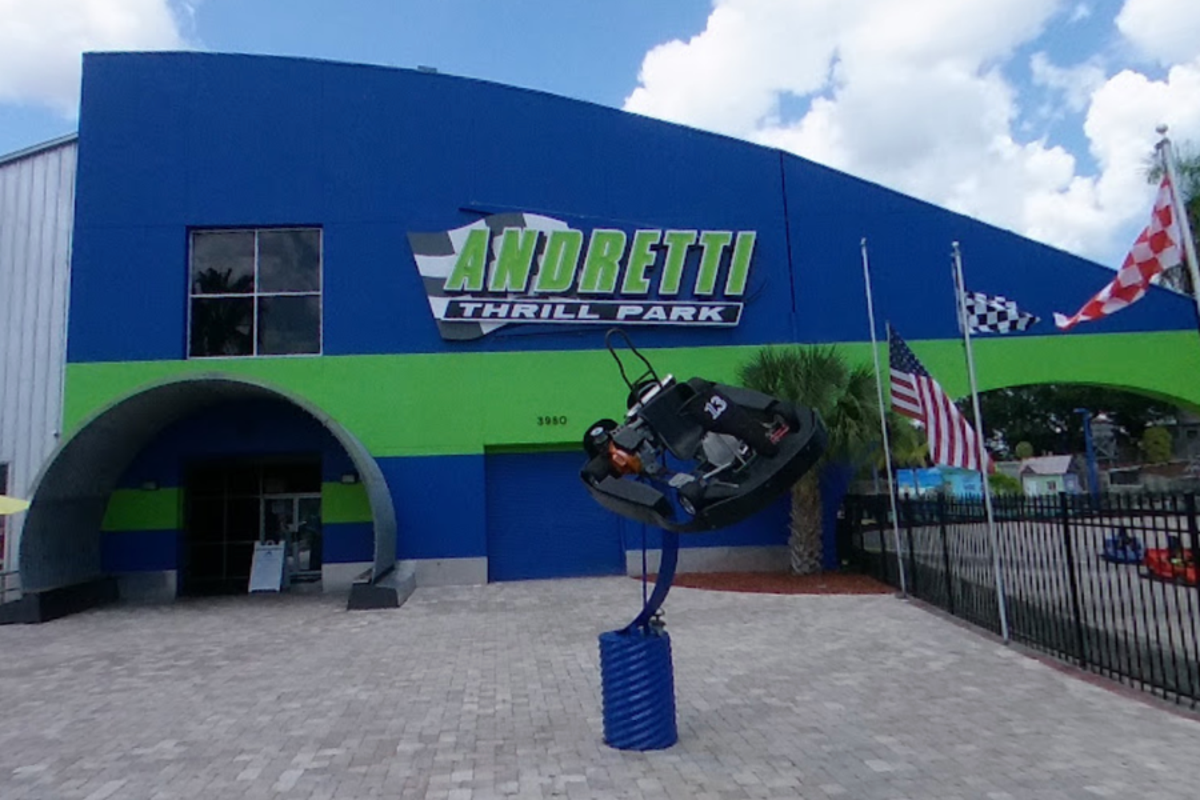
When the news broke that Florida’s iconic racing-themed amusement park was shutting its gates after nearly three decades, the internet did what it always does: it wallowed in a shallow pool of nostalgia. The headlines mourned the loss of "history" and "family memories." They painted the demolition crews as the villains of a story about corporate greed.
They’re wrong.
The death of a 27-year-old park isn't a sign of a failing industry or a cold-blooded real estate play. It is the natural, healthy shedding of a skin that had become a liability. In the high-stakes world of location-based entertainment, sentimentality is a slow-acting poison. If you aren't building for the next decade, you are already rotting from the inside out.
The Nostalgia Trap
Most people mistake "old" for "classic."
A classic is something that transcends its era through timeless design or peerless engineering. Most amusement parks built in the mid-90s are not classics. They are beige monuments to a specific, now-dated aesthetic and a mechanical infrastructure that was never meant to last thirty years.
I have seen operators dump millions into "revitalizing" parks that should have been bulldozed five years prior. They fix the peeling paint. They swap out the old arcade cabinets. They try to slap a fresh coat of "experience" on a skeleton that is fundamentally broken.
It never works.
The "lazy consensus" suggests that we should preserve these spaces because they represent a simpler time. But here is the reality: the kids who visited that Florida racing park in 1997 aren't the ones keeping the lights on today. Their children are. And those children don't care about your 1990s nostalgia. They care about high-fidelity immersion, friction-less technology, and intellectual property that actually resonates with their lives.
When a park hits the quarter-century mark, its maintenance costs don't just rise; they explode. We are talking about an exponential curve in capital expenditure just to keep the status quo.
The Math of Decay
Let’s look at the actual physics of the business.
Amusement parks are machines. Every bolt, every hydraulic line, and every sensor has a shelf life. When you reach the 27-year mark, you aren't just replacing parts; you are hunting for components that the original manufacturer stopped making during the Bush administration.
In the industry, we call this the Obsolescence Wall.
- Phase 1 (Years 1-10): High growth, low maintenance. The honeymoon period.
- Phase 2 (Years 11-20): Diminishing returns. You start "theming" your way out of mechanical failures.
- Phase 3 (Years 21+): The tipping point.
Once you hit Phase 3, the cost of keeping an aging coaster compliant with modern safety standards—think ASTM F2291—often exceeds the projected revenue of the ride itself. At that point, you aren't running a business; you're running a museum that's losing money every time the sun rises.
Imagine a scenario where a park owner decides to keep a legacy racing attraction open. To meet 2026 safety and accessibility requirements, they have to re-engineer the entire loading station. They have to replace the control system. They have to retrain staff on a hybrid of old and new tech.
The price tag? $15 million.
The projected increase in attendance? Zero.
Why? Because no one buys a ticket to see a "slightly safer version of the thing I saw ten years ago." They buy a ticket for the new.
The Real Estate Reality Check
The "villainous developer" trope is the easiest lie to sell.
Critics scream that the land is being "stolen" for condos or warehouses. What they ignore is that the land is often the only thing of value left.
In Florida—a state that is essentially the global headquarters of themed entertainment—land is the ultimate currency. If a racing park sits on 50 acres of prime real estate and its EBITDA is flatlining, the most responsible thing the owners can do is liquidate.
Demolition isn't a failure of imagination. It is a liberation of capital.
That capital doesn't just vanish. It moves. It flows into the next generation of parks, the next wave of immersive tech, and the next set of entrepreneurs who aren't burdened by the "way we’ve always done it" mindset.
Why Your "Save the Park" Petition is Pointless
Every time a park closes, a Change.org petition pops up. It's a performative gesture that fundamentally misunderstands how the industry works.
People ask: "Why couldn't they just update the themes?"
The answer is structural. Modern guest expectations have shifted. We have moved from "rides on a plot of land" to "total immersion." You cannot turn a 1997 layout into a 2027 immersive environment without tearing it down to the dirt.
The sightlines are wrong. The power grid is insufficient for high-density LED arrays and AR integration. The drainage was designed for a different climate reality.
If you try to "update" around these ghosts, you end up with a Frankenstein’s monster of a park. It feels cheap. It feels "off." Guests sense it immediately. They might not be able to articulate why, but they won't come back.
Stop Mourning the Dirt
The demolition of the Florida park is a win for the industry.
It clears the deck. It removes a mediocre product from the market, which forces competitors to work harder. It signals that the era of "good enough" is over.
If you truly love amusement parks, you should be cheering when the old ones die. You should want the land to be recycled. You should want the industry to be lean, aggressive, and obsessed with the future rather than anchored to the past.
Safety standards are getting tighter. Technology is moving faster. Guest patience is at an all-time low.
In this environment, "heritage" is just another word for "baggage."
We don't need more parks that survived for 30 years. We need parks that are so innovative they make the last 30 years look like the Stone Age.
Stop crying over the scrap metal. The wrecking ball is the most honest tool in the park.
Get out of the way and let the crews work.