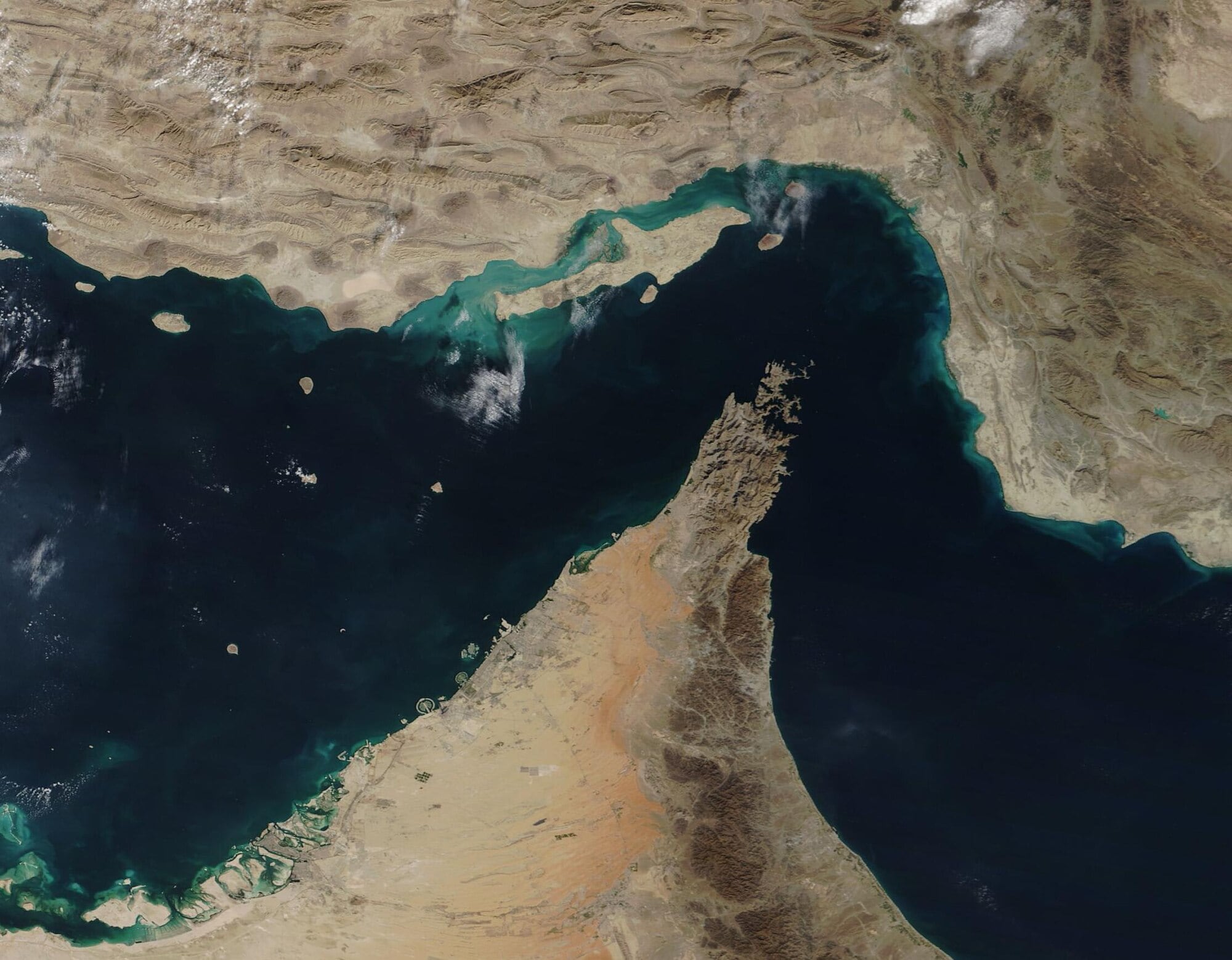
The seizure of two merchant vessels by the Islamic Revolutionary Guard Corps (IRGC) near the Strait of Hormuz is not a random act of piracy or a simple regulatory dispute. It is a calculated demonstration of asymmetric power. While one of the vessels was bound for India, the targeting of these ships serves a much larger strategic purpose than the technical violations Tehran typically cites as justification. For the Indian government and the global shipping industry, this incident signals the end of a relatively quiet period in the Persian Gulf and the beginning of a high-stakes standoff over the world’s most critical maritime chokepoint.
Iran’s maritime strategy has shifted from passive defense to active disruption. By intercepting tankers in the Gulf of Oman and the Strait, Tehran is reminding the international community that it holds the kill switch for global energy prices.
The Mechanics of a Maritime Hostage Crisis
When the IRGC Navy intercepts a vessel, the process follows a rehearsed script designed to maximize psychological impact while maintaining a thin veneer of legality. Elite units typically approach via fast-attack craft or descend from helicopters, overwhelming the merchant crew before an international distress signal can be effectively answered. The justification is almost always "environmental violations" or "collision with local craft."
These excuses are rarely the truth. They are legal placeholders. By holding the crew and the cargo, Iran creates a bargaining chip that can be traded for frozen assets, diplomatic concessions, or the release of its own sanctioned tankers held elsewhere. For India, a country that relies on the Middle East for over 60% of its crude oil imports, this tactic hits directly at the national interest.
The Strait of Hormuz is a narrow passage where the shipping lanes are only two miles wide in either direction. At its narrowest point, the entire navigable channel sits within the territorial waters of Oman and Iran. This proximity gives the IRGC a home-field advantage that no carrier strike group can fully neutralize without risking a full-scale regional war.
Why India Finds Itself in the Crosshairs
India has historically maintained a delicate balancing act between its partnership with the United States and its pragmatic relationship with Iran. However, as global sanctions tighten and Tehran feels increasingly isolated, "neutral" players are no longer exempt from being used as leverage.
The vessel bound for India represents a vulnerability in New Delhi’s energy security architecture. When a ship carrying Indian interests is seized, it forces the Indian Ministry of External Affairs into a corner. They must choose between condemning the IRGC—thereby risking their investment in the Chabahar Port—or remaining silent and appearing weak on the protection of international trade.
Iran knows exactly where the pressure points are. By disrupting the India-bound supply chain, Tehran is messaging New Delhi that its cooperation is not a given. It is a subscription service that requires constant renewal through diplomatic or economic support.
The Economic Toll of High Risk Navigation
The immediate impact of these seizures is felt in the insurance markets of London and Singapore. Shipping companies do not just look at the cost of fuel; they look at the "War Risk" premiums. Every time a tanker is boarded by the IRGC, the cost of insuring a transit through the Strait of Hormuz climbs.
- Insurance Premiums: Rates can jump by 10% to 25% overnight following a high-profile seizure.
- Security Costs: Many owners are forced to hire private maritime security teams, adding thousands of dollars to the daily operating cost.
- Route Diversion: While there is no easy way to bypass Hormuz, vessels may slow down or loiter in safer waters while waiting for naval escorts, disrupting "just-in-time" delivery schedules for refineries.
These costs are eventually passed down to the consumer. For an economy like India’s, which is highly sensitive to inflation and fuel prices, a sustained period of maritime instability in the Gulf can derail quarterly GDP growth targets. It is a slow-motion economic blockade that doesn't require a single shot to be fired.
The Limits of Naval Protection
The presence of the U.S. Fifth Fleet and various international maritime coalitions provides a sense of security, but it is largely symbolic. A multi-billion dollar destroyer cannot be everywhere at once. The IRGC operates hundreds of small, agile boats that can strike and vanish before a larger vessel can pivot.
Furthermore, the rules of engagement for international navies are restrictive. They are there to deter, not to initiate combat. Iran exploits this hesitation. They understand that most Western powers are hesitant to sink an IRGC boat over a commercial dispute, fearing that such an escalation would lead to a total closure of the Strait, which would crash the global economy instantly.
The Technology of Interdiction
The IRGC has modernized its fleet with drone integration and sophisticated radar-evading hull designs. They are no longer just a "guerrilla navy" of speedboats. They possess long-range anti-ship cruise missiles and loitering munitions that can be launched from the Iranian coastline to provide cover for their boarding teams.
This creates a "bubble" of denial. Even if a merchant ship has a security detail, they are outgunned by the state-level hardware the IRGC brings to the table. The seizure is not a fight; it is an arrest.
A Failed Strategy of Appeasement
For years, the international community believed that integrating Iran into the global economy would temper its revolutionary impulses. That theory has been proven wrong. Tehran views economic interdependence not as a bridge to peace, but as a weapon to be used against its enemies.
The seizure of these ships is a direct response to the enforcement of sanctions. It is a tit-for-tat game where the IRGC targets civilian infrastructure to protest political decisions made in Washington or Brussels. The fact that an Indian-bound ship was caught in the net shows that the IRGC is widening the scope of its targets to include any nation that complies with the Western banking system’s restrictions on Iranian oil.
The Intelligence Gap
One of the most overlooked factors in these maritime incidents is the role of intelligence. The IRGC does not pick ships at random. They have a sophisticated network that tracks the ownership, cargo, and destination of every major tanker entering the Gulf.
They look for "soft targets"—ships with crews from nations that have little naval presence in the region or ships with complex ownership structures that make a coordinated diplomatic response difficult. By the time the world hears about a seizure, the ship is already being steered into the shadow of the Iranian coastline, where satellite tracking is obscured and the legal jurisdiction becomes a black hole.
The Indian Response Dilemma
India’s traditional response is one of "quiet diplomacy." This involves high-level phone calls between New Delhi and Tehran, focusing on the humanitarian aspect of the crew’s release while avoiding the larger political context. But this strategy is reaching its expiration date.
As India seeks to become a global manufacturing hub and a leading blue-water navy, it cannot afford to let its energy lifelines be tamaged by a middle-tier regional power. The Indian Navy has increased its patrols in the Arabian Sea, but patrolling is not the same as protecting. Without a permanent presence or a credible threat of retaliation, Indian merchant ships will remain targets of opportunity.
The "Chabahar Factor" complicates this. India has invested heavily in the Iranian port of Chabahar to bypass Pakistan and reach Afghan and Central Asian markets. Tehran uses this investment as a shield. They know India is unlikely to take a hard military or economic stance against the IRGC because it would jeopardize decades of diplomatic groundwork and billions in infrastructure.
Shadow Fleets and Dark Transmissions
Adding to the chaos is the rise of the "shadow fleet"—tankers that turn off their AIS (Automatic Identification System) to transport sanctioned oil. The Persian Gulf is now crowded with these ghost ships. This creates a dangerous environment where legitimate shipping is forced to share narrow lanes with vessels that are operating outside the law.
The IRGC often uses the presence of these shadow vessels as a justification for their increased "policing" of the waters. They claim they are searching for smugglers, but in reality, they are often protecting their own illicit exports while harassing the legal competition. The line between law enforcement and state-sponsored racketeering has completely dissolved.
The Long Road to Sovereignty
There is no easy fix for the instability in the Strait of Hormuz. As long as Iran is under heavy sanctions and perceives itself to be under threat, it will use the Strait as a pressure valve. The international community must face the reality that the "freedom of navigation" is a fragile concept that only exists as long as the dominant local power allows it.
For India, the path forward requires a massive diversification of energy sources and a much more assertive naval doctrine. Escorting tankers must become a standard operating procedure, not a rare reaction to a crisis. Relying on the goodwill of a revolutionary regime is not a strategy; it is a liability.
The IRGC’s latest move is a reminder that the ocean is not a neutral space. It is a territory, and in the Persian Gulf, that territory is currently being governed by the principle of might makes right. The tankers currently held in Iranian ports are not just ships; they are symbols of a crumbling maritime order that the world has taken for granted for too long.
Owners and operators must now accept that the cost of doing business in the Gulf includes the risk of state-level kidnapping. The "safe" routes are gone, replaced by a permanent gray zone where a merchant sailor can become a political prisoner in the span of a thirty-minute boarding operation.
Navigating these waters now requires more than just a skilled captain and a reliable engine. It requires a cold-eyed understanding of the geopolitical hunger that drives Tehran to pull the world’s most important ships into its orbit. The next time a ship is seized, the shock should be gone. The pattern is clear, the intent is stated, and the vulnerability is total.