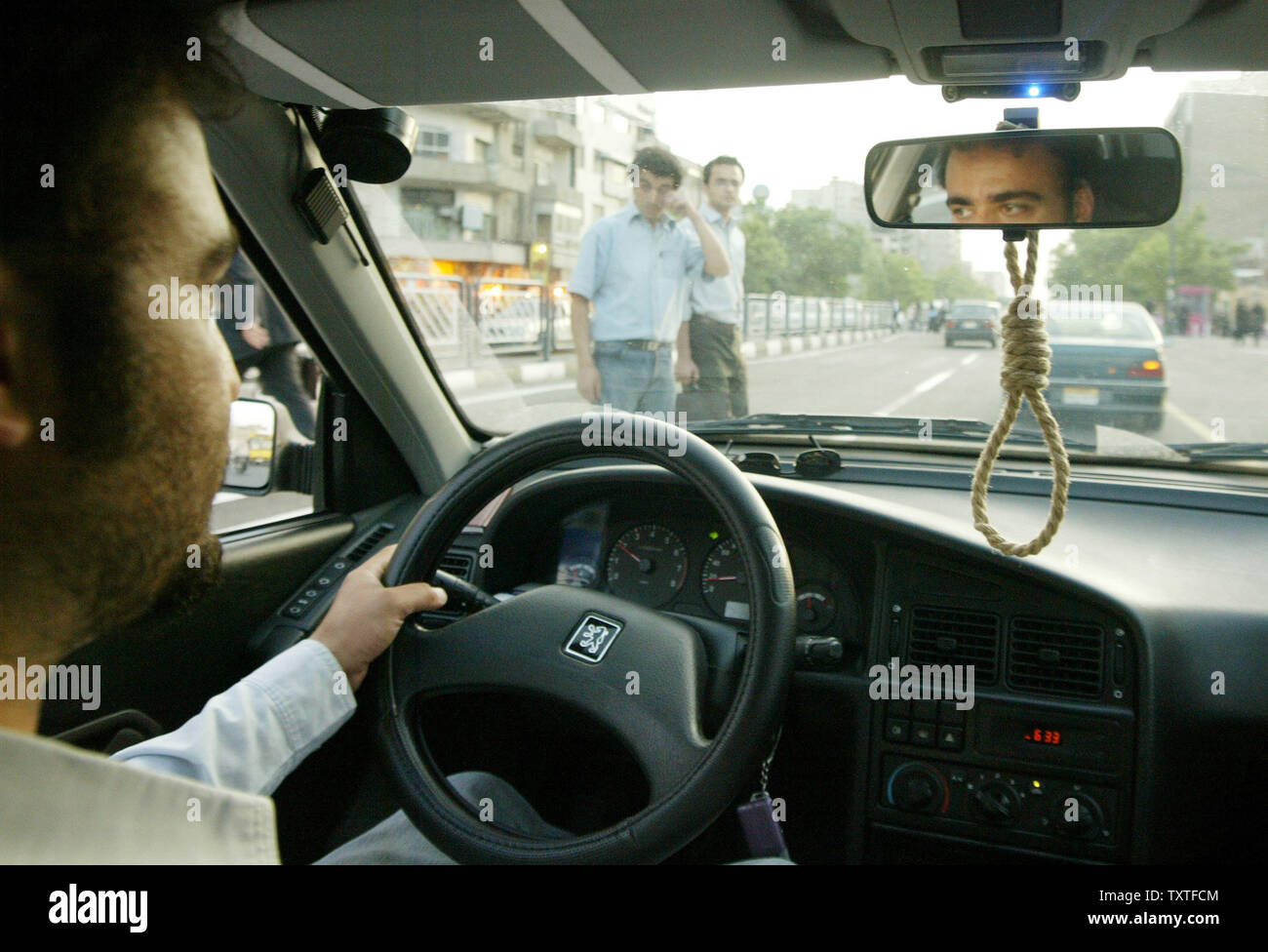
Iran has executed another prisoner accused of collaborating with Israeli intelligence, marking the sixth such hanging since the regional conflict ignited last October. The execution, carried out in a prison in the western province of Kermanshah, underscores a desperate escalation in the shadow war between Tehran and the Mossad. While the official judiciary reports present these cases as straightforward espionage trials, the timing and frequency suggest a much grimmer reality. These are not merely legal proceedings. They are public signals meant to project strength while the Iranian security apparatus struggles to plug internal leaks that have led to high-profile assassinations on its own soil.
The latest individual to face the gallows was convicted of providing sensitive information to Israeli agents, specifically targeting Iranian military installations and personnel. In the rigid ecosystem of the Islamic Republic’s judicial system, the distance between an accusation of "Moharebeh"—war against God—and an execution is often short and paved with closed-door hearings. By maintaining a steady rhythm of executions, the regime is attempting to create a psychological deterrent for its own citizens, many of whom are increasingly disillusioned by the economic collapse and the tightening grip of the morality police.
The Intelligence Breach Paranoia
Tehran is currently haunted by a ghost it cannot catch. For years, the Iranian intelligence community has been embarrassed by a series of precise, surgical strikes. From the remote-controlled assassination of nuclear scientist Mohsen Fakhrizadeh to the theft of a massive atomic archive in 2018, the message from Israel has been clear. We are inside your house.
This internal compromise has triggered a purge. The Ministry of Intelligence and the IRGC’s Intelligence Organization are in a frantic race to prove their competence to the Supreme Leader. When a spy is "caught" and hanged, it serves as a temporary balm for the bruised ego of the security services. However, veteran observers of Middle Eastern intelligence circles argue that these executions rarely involve high-level "moles." Instead, they often target low-level informants or individuals caught in the dragnet of general dissent, rebranded as foreign assets to justify the ultimate penalty.
The "sixth man" is a statistic that points to a specific strategy. By linking internal executions directly to the ongoing war in Gaza and the broader tensions with Israel, the Iranian government is framing all domestic opposition as treason. If you speak out against the state, you are not a protester. You are an agent of the Zionist entity.
A Judicial Weapon in a Regional War
The Iranian judiciary does not operate in a vacuum. It is a vital limb of the state's defense strategy. Since the October 7 attacks and the subsequent Israeli response, the regional temperature has reached a boiling point. Iran’s "Axis of Resistance"—comprising Hezbollah, the Houthis, and various militias in Iraq—is engaged in a coordinated effort to stretch Israeli resources. But while Iran fights through proxies abroad, it is terrified of the friction within its own borders.
Execution serves as a low-cost, high-impact tool of domestic control. It requires no sophisticated technology or international diplomacy. It only requires a rope and a narrative. The Iranian state media outlets, such as IRNA and Fars News, meticulously detail the alleged crimes of the accused, often including "confessions" that human rights organizations claim are extracted under immense physical and psychological pressure. These broadcasts are intended for a domestic audience, a reminder that the eyes of the state are everywhere, even if those eyes failed to prevent the bombing of an embassy annex in Damascus.
The Mossad Strategy of Attrition
On the other side of the veil, Israel’s intelligence strategy has shifted. While the Mossad traditionally focused on long-term deep-cover assets, the digital age has allowed for a "gig economy" of espionage. Through social media recruitment, encrypted messaging apps, and shell companies, intelligence agencies can hire locals for small, seemingly innocuous tasks. A photograph of a street corner. The license plate of a specific vehicle. A report on the timing of a convoy.
Individually, these acts are minor. Collectively, they build a high-resolution map for kinetic strikes. Iran’s response to this "distributed espionage" is a policy of zero tolerance. By hanging the sixth person in as many months, the state is trying to tell its population that the "gig" isn't worth the price. Yet, the sheer volume of arrests suggests that the recruitment pool remains deep, driven by a combination of financial desperation and genuine political animosity toward the ruling clerics.
Foreign Policy by Execution
The international community often views these executions through the lens of human rights, which is valid but incomplete. From a geopolitical standpoint, these hangings are a form of communication with the West. Iran is signaling that it will not be intimidated by the tightening web of sanctions or the threat of direct military confrontation. Each execution is a defiant middle finger to the Western liberal order that demands due process and the abolition of the death penalty.
Furthermore, these moves complicate any potential back-channel negotiations. When Tehran executes individuals it labels as Western or Israeli spies, it narrows the room for diplomatic maneuver. It hardens the stance of hardliners within the Iranian parliament who view any engagement with the "Great Satan" or the "Little Satan" as a betrayal of the revolution's foundational principles.
The Internal Cost of the Shadow War
The real victim of this escalatory cycle is the Iranian social contract. The state is increasingly reliant on fear rather than legitimacy. When a government must execute its own people to prove it is winning a war against a foreign power, it admits a fundamental weakness. The security forces may be able to clear the streets and fill the prisons, but they cannot execute their way out of a systemic intelligence failure.
The focus on "spies" also distracts from the pressing domestic crises. Inflation is rampant. The rial is in freefall. Water shortages are sparking localized riots. By focusing the public’s attention on the "Zionist threat" lurking in every shadow, the regime hopes to redirect the anger that would otherwise be aimed at the presidential palace. It is a classic diversionary tactic, but it is one that leaves a trail of bodies in its wake.
The Cycle of Retaliation
We are witnessing a feedback loop that shows no signs of slowing down. Israel continues its campaign of targeted assassinations and sabotage. Iran responds with drone swarms and executions. Each side believes it is establishing deterrence, yet both are only succeeding in raising the stakes. The execution of the sixth "spy" is not an ending. It is a milestone in a marathon of violence.
The Iranian security apparatus is now trapped in a cycle where they must produce "wins" to justify their massive budgets and their failure to protect key assets. This creates an environment where the quality of evidence matters less than the speed of the verdict. For those caught in the middle, the Iranian legal system is not a place of justice, but a stage for a deadly theater of national security.
The rope in Kermanshah did not make Iran safer. It did not stop the Mossad from operating, nor did it fix the holes in the IRGC's communication networks. It simply ended a life and added another chapter to a conflict that has moved beyond the battlefield and into the very cells of Iran's prisons. The shadow war is no longer in the shadows. It is being broadcast on the evening news, one execution at a time.
The most dangerous aspect of this trend is the normalization of the extraordinary. Six executions in six months related to a single conflict point to a permanent shift in judicial policy. The state has moved from a defensive posture to a proactive, terminal one. As long as the regional war persists, the gallows will remain occupied, serving as a grim barometer of Tehran's internal anxiety.
The regime's reliance on the death penalty is a confession of its inability to secure its borders through traditional means. A confident state protects its secrets through superior counter-intelligence and technological prowess. A failing state protects its secrets with a noose. The sixth hanging is a message, but it is one that screams of vulnerability, not strength.
Stop looking at these executions as isolated criminal justice events. They are tactical maneuvers in a regional chessboard where the pawns are the lives of the citizenry. The next execution is likely already being prepared, the "confession" already written, and the outcome already decided by a state that has forgotten how to govern without a weapon in its hand.