The air in Islamabad during the monsoon transition carries a heavy, expectant stillness. It is the kind of heat that makes clothing stick to skin and turns the horizon into a blurry, shimmering line. Inside the Ministry of Foreign Affairs, the air conditioning hums a monotonous rhythm, a stark contrast to the quiet panic vibrating through the corridors.
A career diplomat sits at a polished mahogany desk, rubbing his temples. Before him lies a map of Southwestern Asia. To the west sits Iran, a neighbor wrapped in sanctions and ideological defiance. To the east, India, a permanent strategic headache. To the south, the Arabian Sea, opening up toward the Gulf. And thousands of miles away, across an ocean, sits Washington, where a volatile administration has just signaled that the time for patience has ended.
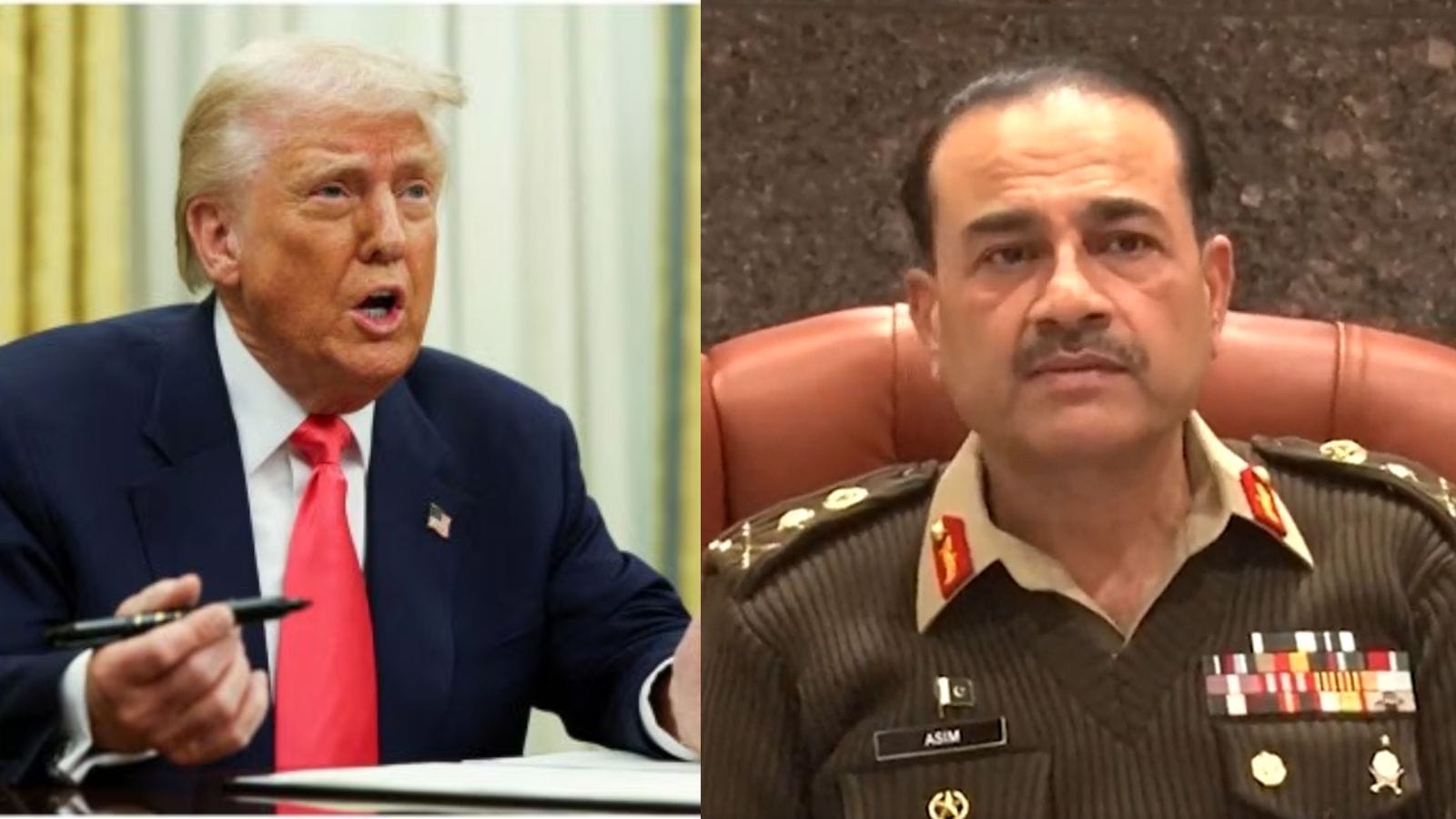
He looks at a red folder. It contains intelligence briefs detailing the latest troop movements, satellite imagery of the Persian Gulf, and the transcripts of a late-night phone call from the white houses of power in America. Donald Trump is threatening renewed military action against Tehran.
If Washington pulls the trigger, Pakistan catches the shrapnel.
This is not a theoretical exercise in geopolitical chess. It is a matter of national survival. For Pakistan, playing the mediator between Iran and the United States is not a noble pursuit of global peace. It is an act of desperate self-preservation. When giants fight, the grass gets trampled. Pakistan is the grass.
The Geography of Anxiety
Consider a hypothetical shopkeeper in Quetta, a city operating as a gateway near the Afghan and Iranian borders. Let us call him Tariq. Tariq sells diesel, smuggled fruits, and Iranian carpets. His livelihood relies entirely on the porous, fragile peace of the borderlands. If American missiles begin to fall on Iranian military installations just a few hundred miles away, Tariq’s world collapses.
Refugees will pour across the dry hills of Balochistan. Sectarian tensions, never truly asleep in the region, will ignite like dry tinder. The black-market economy that keeps millions of families fed in Pakistan’s poorest province will evaporate overnight.
This is the human face of a border that spans over nine hundred kilometers. It is a stretch of land defined by dust, kinship, and deep vulnerability.
Pakistan cannot afford an unstable Iran. It already shares a chaotic, blood-soaked border with Afghanistan to the northwest and faces a heavily militarized frontier with India to the east. Adding a third active conflict zone on its western flank would place the country in a catastrophic chokehold. The Pakistani military, already stretched thin fighting internal insurgencies and maintaining deterrence elsewhere, views a US-Iran war as an absolute nightmare scenario.
So, the diplomats pack their bags. They fly to Tehran. They fly to Washington. They whisper in the ears of kings in Riyadh, trying to cool a boiling pot with nothing but words.
The Ghost of 2020 and the Shadow of Return
To understand why Islamabad is moving with such frantic urgency today, we have to look back to the cold mornings of early 2020. When an American drone strike killed Iranian General Qasem Soleimani in Baghdad, the entire Middle East held its breath. Pakistan found itself caught in a terrifying vice.
At the time, the leadership in Islamabad received urgent, backchannel demands from both sides. Washington wanted assurance that Pakistani airspace would not be used against them, while Tehran subtly warned that harboring American assets would make Pakistan a target. The pressure was suffocating.
Now, that same pressure is back, magnified by a renewed American presidency that views maximum pressure not as a temporary tactic, but as the only acceptable strategy.
The rhetoric coming out of Washington is sharp, jagged, and unpredictable. The threat of renewed military strikes against Iran’s nuclear facilities or its proxy networks is no longer just campaign bluster. It is a distinct policy option resting on the desk in the Oval Office.
For Pakistan, the memory of past conflicts dictates its current panic. During the post-9/11 era, the country aligned itself tightly with the American war effort, a decision that cost Pakistan tens of thousands of civilian lives and billions of dollars in economic devastation due to the resulting internal backlash. The scars of that alliance have not healed. The collective psyche of the nation remains deeply traumatized by the era of drone strikes, suicide bombings, and social fracturing.
Islamabad has learned a bitter lesson: when you help America fight its wars in Asia, you pay the bill in blood.
The Impossible Math of Neutrality
How do you stay neutral when your economy is on life support?
Pakistan’s financial reality is a fragile construct built on loans, bailouts, and foreign aid. The International Monetary Fund holds the keys to the country’s immediate economic survival, and Washington holds the loudest voice at the IMF table. If Pakistan offends the United States by appearing too cozy with Iran, the economic consequences could be lethal. A single pen stroke in Washington could freeze credit lines, send the Pakistani rupee into a freefall, and trigger hyperinflation that would empty grocery store shelves from Karachi to Peshawar.
Yet, turning its back on Iran is equally dangerous.
Pakistan faces a structural, chronic energy crisis. Power outages are a routine part of daily life, shutting down factories and leaving families in the dark during scorching summer months. For decades, the dream of an Iran-Pakistan gas pipeline has promised a cheap, permanent solution to this agony. The pipes on the Iranian side are already laid, stretching right up to the border, waiting. But the project remains a ghost, stalled by the terrifying specter of American sanctions.
If Pakistan completes the pipeline, Washington punishes its economy. If Pakistan abandons the pipeline, it loses its best chance at energy independence and faces billions of dollars in legal penalties from Tehran.
It is a choice between a bullet and poison.
The Secret Envoys
Behind the formal press releases and the sterile language of international diplomacy lies a world of midnight flights and unrecorded meetings.
Pakistani officials do not travel to Tehran to talk about grand alliances. They go to talk about limits. They act as a postman for two enemies who refuse to look each other in the eye.
The message from Islamabad to Tehran is simple: Do not miscalculate. Do not give the Americans an excuse to launch a campaign that will break the back of the region.
The message from Islamabad to Washington is equally urgent: A war with Iran will not remain contained. It will spill over, destabilize a nuclear-armed Pakistan, and create a vacuum that extremist groups will fill within weeks.
It is a terrifyingly delicate message to deliver. The diplomats know that a single misstep, an leaked memo, or an over-aggressive statement could ruin months of quiet backdoor diplomacy. They are trying to build a bridge out of smoke.
The True Stakes
We often discuss geopolitics in terms of grand strategy, statecraft, and balance of power. These words are too clean. They mask the raw human terror underlying these decisions.
If mediation fails, the cost will not be measured in diplomatic points. It will be measured in the price of bread in Islamabad. It will be measured in the frequency of blackouts in Lahore. It will be measured in the security of children walking to school in the border towns of Balochistan.
Pakistan is a nation of over two hundred and forty million people, trying to navigate its way through an economic crisis while surrounded by geopolitical fires. It cannot afford to be a hero, and it cannot afford to be a villain. It merely wants to survive the day.
The diplomat in Islamabad closes the red folder. The sun is setting, casting long, dark shadows across the manicured lawns of the diplomatic enclave. He reaches for his phone to secure a secure line to a counterpart across the border. There is no time to celebrate small victories, because there are none. There is only the next call, the next meeting, and the desperate hope that tonight, the bombs stay on the wings of the planes.