Donald Trump didn't always care about fixing up Washington, DC. During his first term, he largely viewed the city the way his base did, a hostile swamp packed with bureaucratic enemies. He spent his weekends escaping to Mar-a-Lago or Bedminster. But during his campaign to reclaim the White House, something flipped. An adviser who traveled with him noted that during a late-night drive through the district, Trump looked out the window and saw a city he deemed degraded, dirty, and structurally second-rate.
To a lifelong real estate developer, a city isn't just a collection of people. It's a portfolio of properties. That single car ride sparked an obsession that is currently turning the capital into the largest construction zone on earth.
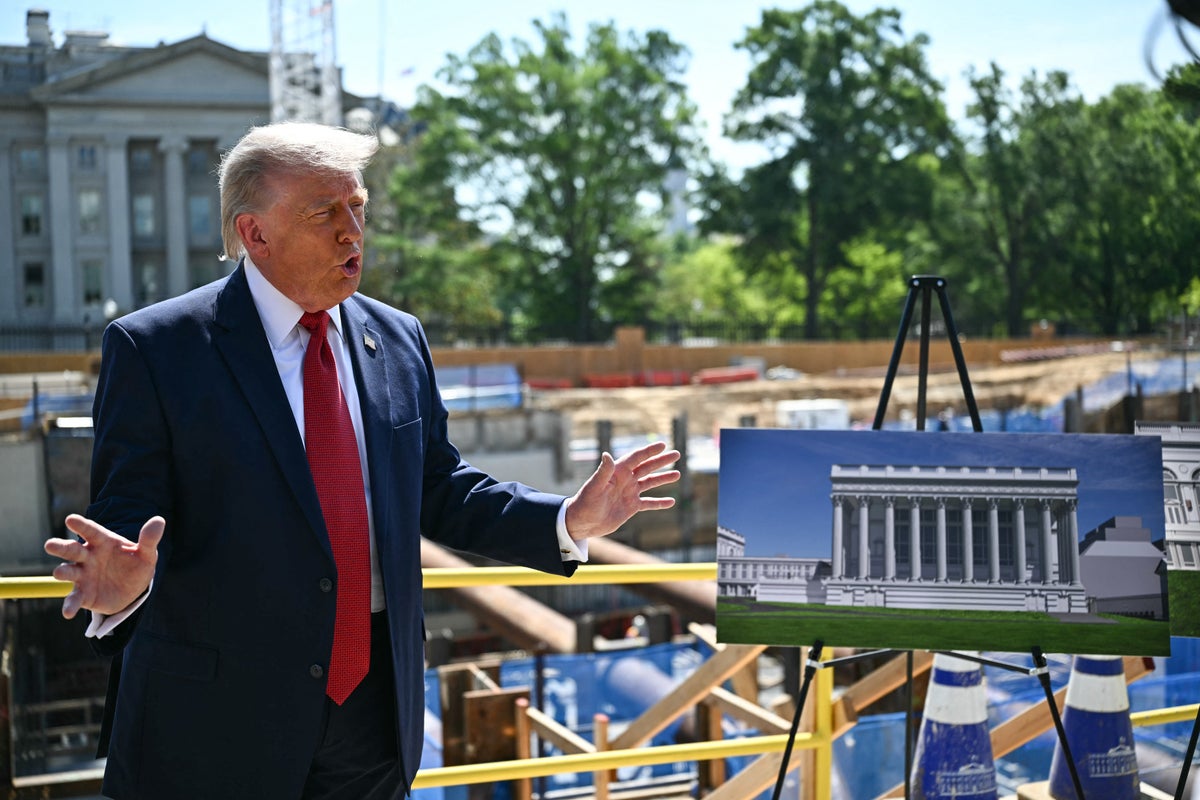
If you visit Washington right now, you won't see the classic, low-key imperial capital. You'll see chain-link fences, black tarpaulins, and scaffolding. Trump is treating the city like a fixer-upper hotel, imposing his personal design aesthetic on historic structures. It's not a subtle shift. It is a aggressive rewriting of the American aesthetic, timed perfectly for the nation's 250th anniversary celebrations.
The Secret Scale of the Capital Construction Project
Most presidents leave Washington quietly. They build a library in their home state and stay out of the local architecture. Trump is doing the exact opposite. He signed an executive order titled "Making the District of Columbia Safe and Beautiful," which redirected billions of federal dollars toward a massive physical overhaul.
Look at the sheer scale of what's happening on the ground:
- The East Wing Ballroom: Workers demolished part of the White House East Wing to make room for a massive, $600 million ballroom. Taxpayers are reportedly picking up at least half of that bill.
- The South Lawn UFC Claw: A temporary yet massive 92-foot structural pavilion dubbed "The Claw" was erected right on the South Lawn to host a UFC fight.
- The National Mall State Fair: A massive 16-day Great American State Fair has taken over the National Mall, transforming the historic green space into a crowded midway.
- The Triumphal Arch: Plans are moving forward for a 250-foot neoclassical triumphal arch near Arlington National Cemetery, completely upending the city's traditional low-rise skyline.
Local preservation groups are furious. Rebecca Miller of the DC Preservation League noted that the city feels entirely different right now. Tourists who saved up for a once-in-a-lifetime trip are finding iconic views blocked by construction barriers.
What the Mainstream Media Gets Wrong About the Makeover
Critics like to paint this construction boom as simple vanity. They see a billionaire putting his name on things. While personal branding is definitely part of the equation, the reality is much more tactical.
Trump discovered that changing a city's physical appearance is way easier than passing laws through a divided Congress. He faces endless legal battles over policy, but changing the paint color of the Lincoln Memorial Reflecting Pool just requires an administrative signature. He wanted the pool coated in an "American-flag blue." Workers spent weeks painting it, though local algae quickly turned the water a murky green anyway.
This is about creating a visual legacy. By changing the physical landmarks that tourists photograph, he ensures his aesthetic imprint outlasts his administration.
The War Over National Identity and Currency
The makeover isn't stopping with concrete and marble. The administration has pushed to inject this new visual identity into national symbols, documents, and even currency. Plans have surfaced to feature the president's name or likeness on passports, dollar bills, and official documents.
This has triggered immense institutional pushback. A federal judge recently stepped in, ordering the removal of Trump's name from Washington’s famous opera house at the Kennedy Center. Legal battles are also brewing over the proposed triumphal arch, with Vietnam veterans groups filing lawsuits claiming the massive structure disrespects the somber tone of Arlington National Cemetery.
Still, the administration isn't backing down. Trump mentions these construction projects constantly, bringing them up in nearly four out of five press appearances. For him, the construction noise isn't a nuisance, it's the sound of progress.
How the Local Crime Crackdown Tied It Together
You can't separate the physical makeover from the aggressive security policies implemented over the last year. The aesthetic push went hand-in-hand with a heavy federalized policing strategy. National Guard troops started patrolling downtown streets, and federal agencies formed a specialized task force to clean up public spaces.
Surprisingly to critics, the security side of the experiment showed immediate results. Data analyzed by the Niskanen Center showed a substantial drop in property crimes, opportunistic offenses, and carlockings compared to the previous year.
Local opinion is deeply fractured. Bikers and joggers admit that local fountains and parks look cleaner and more beautiful than they have in decades. But the heavy security presence and continuous road closures make residents feel like they're living under a military occupation.
If you want to see how this experiment ends, keep your eyes on the National Mall over the coming months. The construction zones aren't going away before the midterms, and the administration is already planning its next round of structural permits. The best way to track the transformation is to watch the federal budget reallocations within the National Park Service, where the money for these massive infrastructure shifts is actually hidden.